
Repair or Replace? How to Decide on Pipes and Fixtures.
The short answer
Repair wins for single, accessible, recent problems — a dripping faucet, one pinhole leak, a running toilet. Replace wins when the system is old, problems keep recurring, or damage is widespread. The question is never just “what costs less today” but “what costs less over the next few years.”
If the water heater is part of the question, price that side of it with the water heater replacement cost calculator:
The decision comes down to three things: the pipe material and its age, the pattern of failures, and what a full replacement would disrupt.
The real question is what’s behind the wall
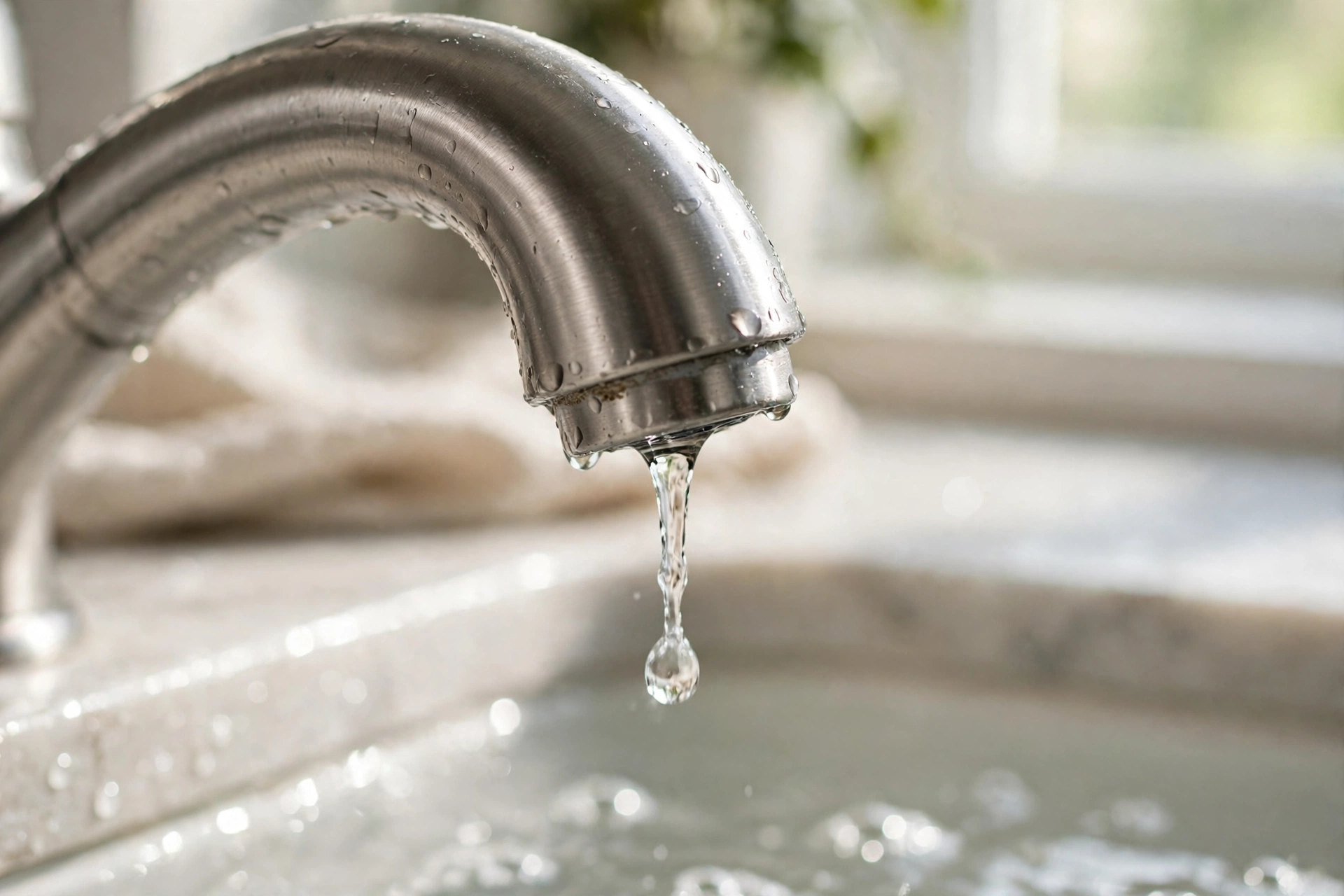
A dripping faucet is a fixture problem — visible, accessible, and cheap to fix. A corroded supply line inside a wall is a system problem — hidden, spreading, and expensive. Most repair-or-replace anxiety comes from confusing the two.
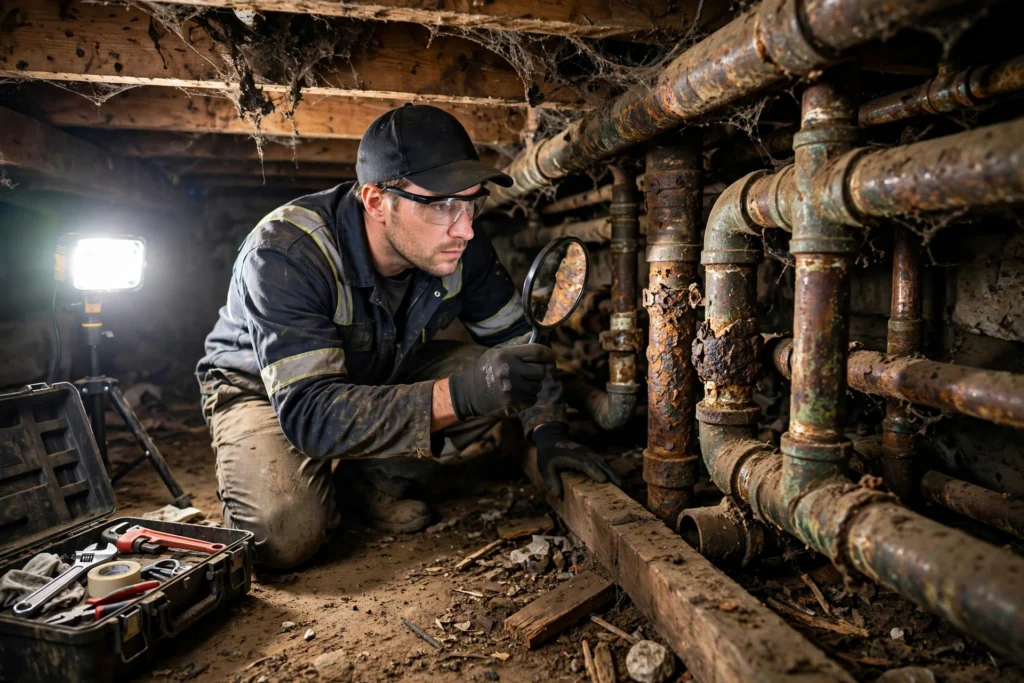
Fixtures wear out on the surface: washers, cartridges, handles, finishes. They’re designed to be serviced or swapped. Pipes fail structurally: corrosion, scale buildup, pinhole leaks, root intrusion in sewer lines. When the pipes themselves are failing, replacing fixtures is redecorating a sinking ship.
So start every decision by identifying which one you’re dealing with. If the problem is at the fixture and the pipes are sound, repair. If the pipes are failing, no fixture upgrade will save you.
The decision framework
Run every plumbing problem through these factors before you decide.
| Factor | Repair usually wins | Replace usually wins |
|---|---|---|
| Age of the system | Relatively new | Near or past expected lifespan |
| Frequency of problems | First or rare issue | Recurring leaks or failures |
| Extent of the problem | One spot, easily accessible | Widespread or hidden damage |
| Water quality signs | Clear water, normal pressure | Rust color, sediment, low pressure |
| Cost trajectory | One cheap fix | Cumulative repairs approaching replacement |
| Disruption tolerance | You can live with another fix later | You want it done once, properly |
Pipe materials age differently
Not all pipes are on the same clock. Knowing what your home is plumbed with tells you how much life is left.
| Material | General lifespan guidance | Common failure mode |
|---|---|---|
| Galvanized steel | Often 40–50 years; many systems are past it now | Internal corrosion and rust restricting flow |
| Copper | Can last 50+ years in good water conditions | Pinhole leaks from acidic or aggressive water |
| PEX | Modern material; long expected life | Fitting failures more often than pipe failures |
| PVC / CPVC | Decades for drains and supply lines | Brittle cracking with age and heat exposure |
| Cast iron (drains) | 50+ years but many are aging out | Internal scaling and rust-through |
These are general ranges, not guarantees — water chemistry decides. Aggressive water eats copper young; gentle water lets galvanized steel outlive expectations. A plumber can scope your lines with a camera and tell you where you actually stand.
Pipes — repair or repipe?
A single accessible leak is a repair job. A pattern of leaks is a repipe conversation.
| Situation | Usually repair | Usually repipe |
|---|---|---|
| Single pinhole leak in accessible copper | Yes — cut out and replace the section | No |
| Recurring leaks in the same area | No — the material is failing | Yes |
| Galvanized steel or polybutylene piping | Temporary fixes only | Yes — plan the repipe |
| Discolored water or low pressure house-wide | No — systemic issue | Yes |
| One bad section, rest of system sound | Yes | No |
Fixtures — repair or replace?
Fixtures are cheaper to replace than pipes, so the bar for replacement is lower — but many “broken” fixtures just need a small part.
| Fixture | Repair | Replace |
|---|---|---|
| Dripping faucet | New washer or cartridge | Corroded body, worn finish, no parts available |
| Running toilet | New flapper or fill valve | Cracked tank, outdated inefficient model |
| Showerhead | Clean or descale it | Corroded, clogged beyond cleaning |
| Water heater | Element or thermostat on a younger unit | Tank leaking, unit old, frequent repairs |
Warning signs that point to replacement
- Water that runs rust-colored or carries sediment
- Water pressure dropping across the whole house
- Multiple leaks within a year or two
- Visible corrosion or flaking on exposed pipes
- A water heater tank that is leaking or rusting at the base
Any pattern here means get a plumber’s assessment rather than another patch.
Fixture decisions are simpler
Fixtures are the easy half of this guide. A faucet that drips, a toilet that runs, a showerhead with no pressure — these are usually inexpensive parts and an hour of work, not replacement decisions.
Replace a fixture when repair parts are discontinued, when the finish is destroyed, or when you’re remodeling anyway. Don’t replace a fixture to fix a pipe problem — low pressure throughout the house is a supply issue, not a faucet issue, and no new faucet will fix it.
One exception: very old toilets and showerheads waste enormous amounts of water. Upgrading them pays back through lower water bills even when the old ones still work.
Sewer lines: repair or replace?
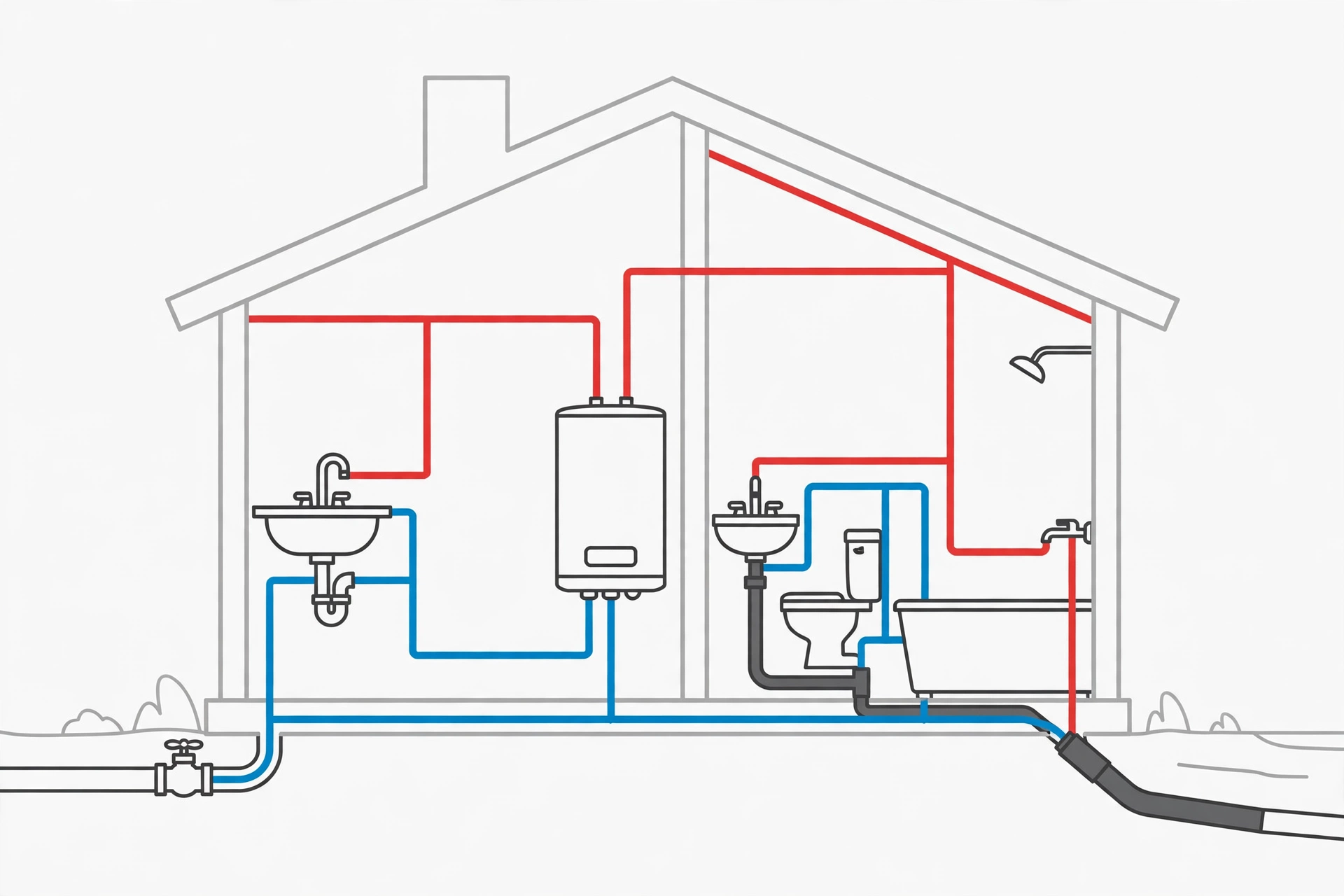
The sewer lateral — the pipe carrying waste from your house to the street — is the one part of your plumbing you never see until it fails. The warning signs are drains slowing throughout the house, toilets gurgling when another fixture drains, sewage smells in the garden, or persistently soggy patches over the line’s route. Because the pipe is buried, the usual logic shifts: access is the expensive part of the job, so a cheap fix that means digging twice is no bargain.
A spot repair makes sense for a single, localised problem — one cracked section, a separated joint, or a small root intrusion — especially when a camera inspection shows the rest of the line in good condition. Trenchless sectional lining can rehabilitate one bad stretch from the inside, without excavating the garden or driveway. If the pipe is otherwise young and sound, there is no reason to replace the whole run for one fault.
Full replacement is usually the right call when the line has collapsed or bellied sections, widespread root intrusion at several joints, or the pipe itself is past its working life — clay tile, Orangeburg fibre pipe, or badly scaled cast iron. Trenchless methods such as pipe bursting or full-length lining can renew the whole line with minimal digging in many cases, but a severely collapsed, back-pitched, or badly misaligned line may still need open excavation. Either way, you are paying mainly for access, so doing the whole job once beats returning to the same trench.
Never decide blind on a buried pipe: a camera inspection turns guesswork into evidence, and it usually costs far less than a single unnecessary dig. Check your paperwork too — responsibility for the lateral is often split between homeowner and utility at the property boundary, and some water companies or insurers offer cover for that section. Know which metres are yours before you pay to fix all of them.
Frequently asked questions
How do I know if my pipes need replacing?
Look for patterns, not single events: recurring leaks, discolored or rusty water, noticeably low water pressure, and very old piping materials like galvanized steel or polybutylene. One accessible leak is a repair; a pattern is a repipe conversation.
Is it cheaper to repair or replace old plumbing?
A single repair is almost always cheaper than replacement — once. When repairs keep coming, add up what you have spent and what the next fix will cost; replacement often wins on total cost and peace of mind within a few years.
Should I repair or replace a leaking faucet?
Most dripping faucets are fixed with a new washer or cartridge — a cheap repair. Replace the faucet when the body is corroded, the finish is failing, parts are unavailable, or you are remodeling anyway.
When should a water heater be replaced instead of repaired?
Repair makes sense for a failed heating element or thermostat on a relatively young unit. Replace when the tank itself leaks, the unit is near the end of its expected life, or repairs are becoming frequent.
Can I replace plumbing fixtures myself?
Simple swaps like a showerhead or faucet are common DIY jobs if you can shut off the water and follow the instructions. Anything involving supply-line rerouting, soldering, or permit-required work belongs to a licensed plumber.
How long do residential pipes last?
It depends on the material and your water: copper often lasts 50 years or more, galvanized steel typically 40 to 50, PEX and PVC are modern materials with long expected lives, and cast-iron drains can exceed 50 years. Water chemistry is the wild card — have a plumber assess your specific system rather than guessing from age alone.
Is repiping worth it in an older home?
If you have galvanized steel past its prime with recurring leaks and discolored water, usually yes — you’re paying for leaks one at a time instead of solving the problem once. A full repipe is disruptive and it’s a real project, but it resets the clock for decades and it’s often required before a major remodel anyway.
Next step
Walk your house with the framework above and be honest about whether you are looking at one problem or a pattern. For a single fix, handle it promptly before water damage spreads. For a pattern, get a plumber’s assessment and plan the replacement. And if a water heater is anywhere in the picture, run the water heater replacement cost calculator linked at the top of this guide first. If your home still has galvanized steel, get a plumber’s assessment before the next leak decides for you.
