
Plumbing Maintenance Guide: Preventing Leaks, Clogs, and Damage.
The short answer
Most plumbing emergencies are preventable. A little scheduled attention — checking for leaks, caring for drains, flushing the water heater, and knowing where your shut-offs are — stops small issues from becoming water damage. This guide is the full routine.
Water heater upkeep is part of the routine — if yours is aging, price its eventual replacement with the water heater replacement cost calculator.
Plumbing maintenance is mostly about catching small problems before they become water damage — and water damage is the most expensive kind.
What neglect costs you
Plumbing doesn’t fail loudly — it fails quietly, inside walls and under floors. A supply line with a slow drip, a water heater tank corroding from the inside, a washing machine hose bulging toward rupture: none of them announce themselves until the damage is done.
Water damage is uniquely expensive because water travels. A leak under a sink doesn’t just ruin the cabinet — it soaks the subfloor, wicks up the drywall, and feeds mold in places you’ll never see. The repair bill is never just the plumbing fix; it’s the plumbing fix plus everything the water touched.
Every item on a maintenance checklist exists to find these failures while they’re still cheap. A five-minute inspection beats a five-figure restoration, every time.
The plumbing maintenance checklist
Work through this checklist on the schedule shown. Most items take minutes.
| Task | How often | What to do |
|---|---|---|
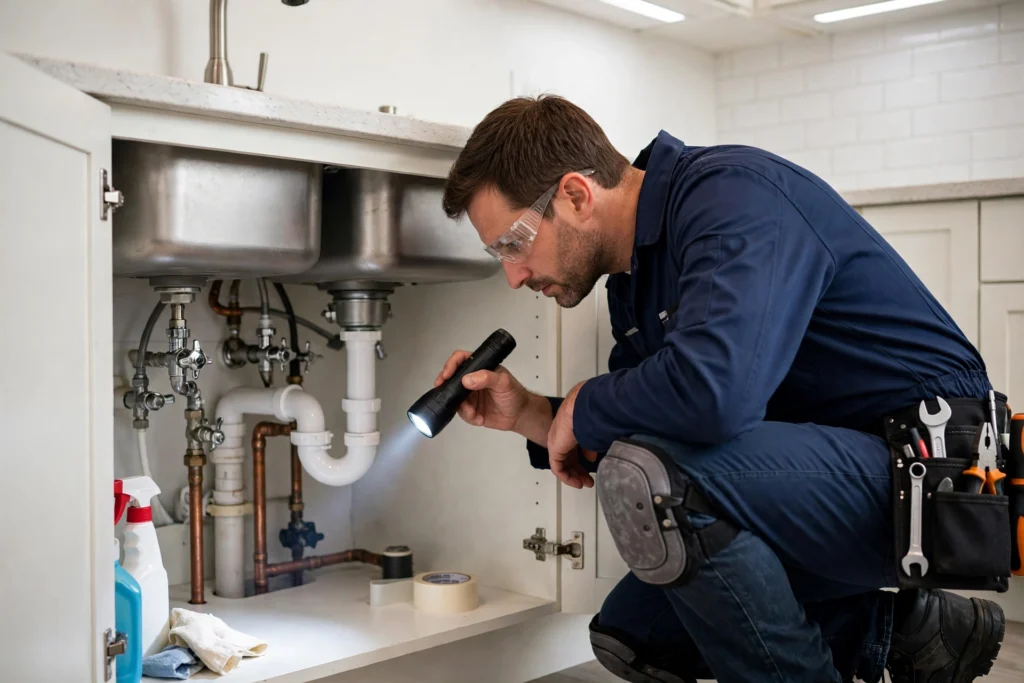
| Check under sinks for leaks | Every few months | Look for dampness, stains, or musty smells |
| Test fixture shut-off valves | Twice a year | Turn each one off and on so it does not seize |
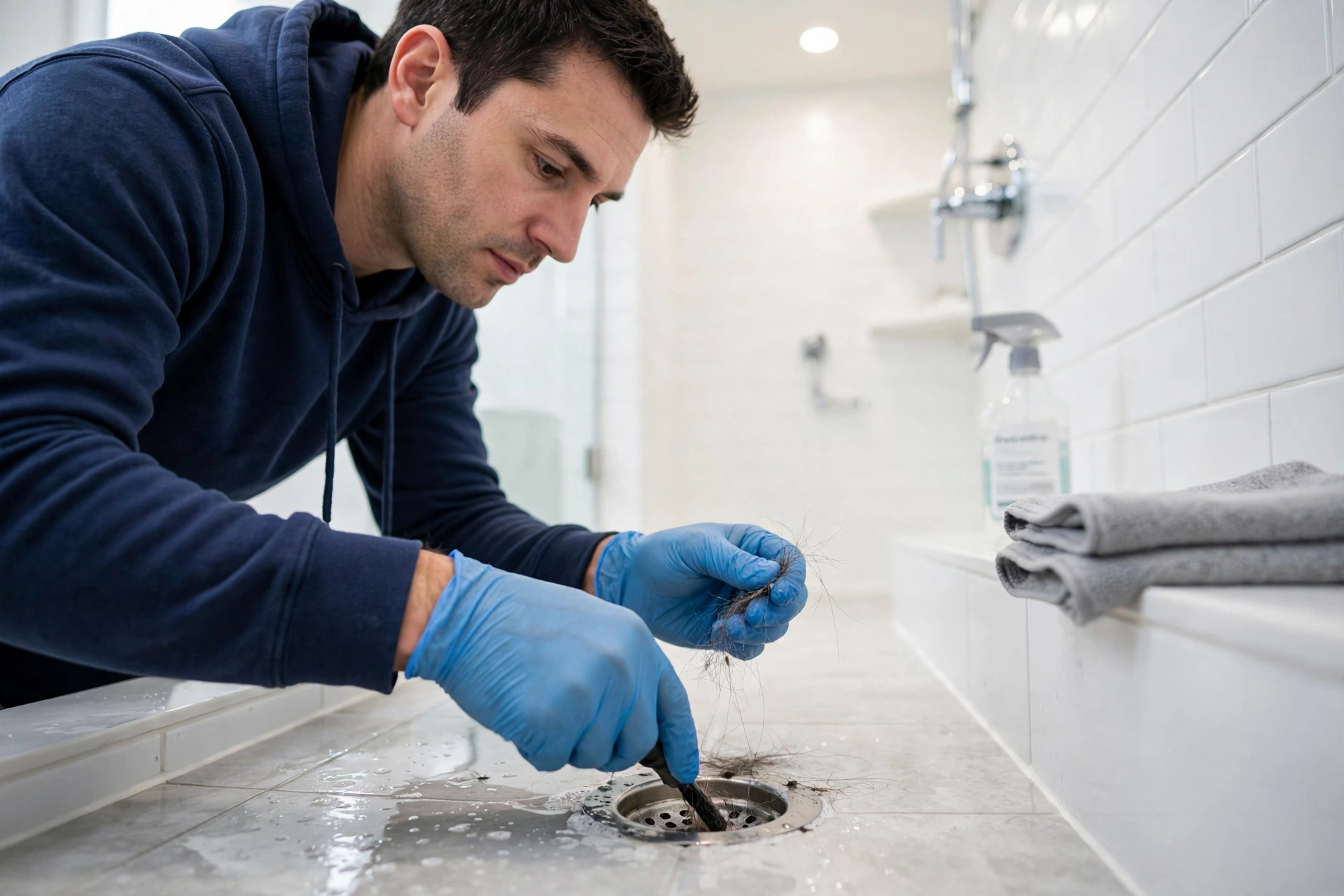
| Clean drain stoppers and traps | Quarterly | Remove hair and buildup before it clogs |
| Flush the water heater | Once a year | Drain sediment, especially in hard-water areas |
| Inspect washing machine hoses | Once a year | Look for bulges, cracks, or loose connections |
| Check water pressure | Once a year | Abnormally high pressure strains pipes and fixtures |
| Look over exposed pipes | Once a year | Corrosion, flaking, or damp spots |
| Test the sump pump | Before the rainy season | Pour water in the pit and confirm it pumps out |
Know where your shutoffs are
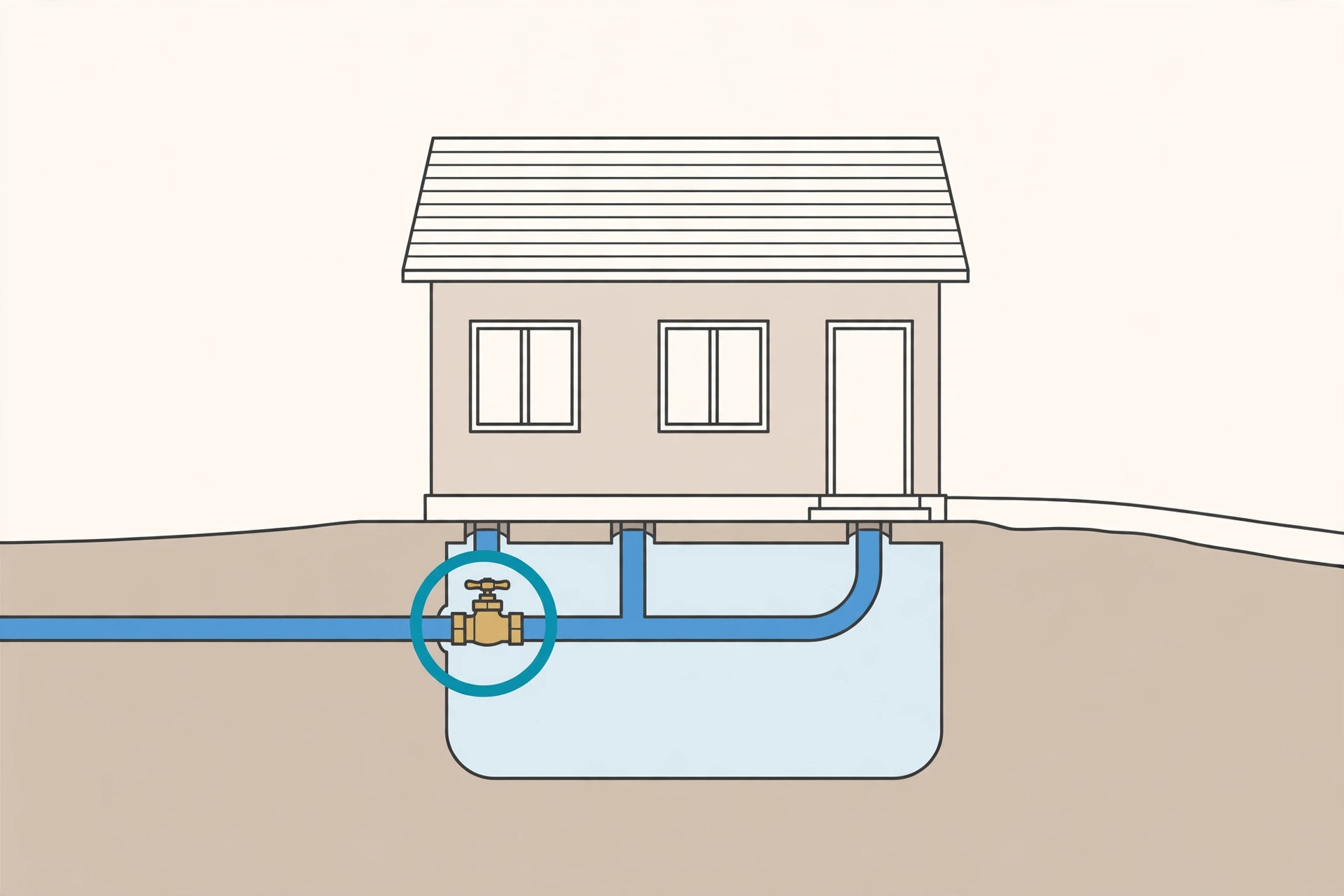
The single most valuable piece of plumbing knowledge in your home isn’t a skill — it’s a location. When a pipe bursts, the difference between a mop-up and a disaster is how fast you can stop the water.
Find your main shutoff valve now, before you need it — usually near where the water line enters the house, in a basement, crawlspace, or utility closet. Turn it once to make sure it actually works; old valves seize up from disuse. Then find the fixture shutoffs under every sink and behind every toilet, and the shutoff on your water heater.
Label them all with a tag or a piece of tape. In an emergency, nobody’s reading a manual — and the person home might not be you. A labeled valve is a gift to your future panicked self.
Drain care — the do’s and don’ts
Drains clog from what goes into them. These habits keep them flowing.
| Do | Don’t |
|---|---|
| Use strainers in sinks and showers | Pour grease or oil down the drain |
| Flush drains with hot water regularly | Rely on chemical drain cleaners routinely |
| Clean pop-up stoppers often | Flush wipes, even ones labelled flushable |
| Call a plumber for recurring slow drains | Ignore a drain that keeps slowing down |
Know your shut-offs before an emergency
In a burst-pipe emergency, every minute of flowing water is damage. Find these now, not during a flood.
- The main water shut-off — usually where the water line enters the house or at the meter; label it so everyone in the house can find it.
- Fixture shut-offs under each sink and behind each toilet.
- The water heater’s cold-water shut-off.
- If a pipe bursts: shut the main valve, turn off the water heater, open faucets to drain the lines, then call a plumber.
Warning signs to act on
- A musty smell or damp spot under a sink.
- Water stains on ceilings or walls.
- A toilet that rocks or a floor that feels soft near it.
- Gurgling drains or sewer odors.
- The water meter spinning when no water is running.
Any of these deserves prompt attention — not next month.
Drain habits that prevent clogs
Most drain clogs aren’t bad luck — they’re bad habits, repeated daily. The kitchen sink takes grease, coffee grounds, and starchy foods that swell in the pipes. The bathroom takes hair, soap scum, and wipes that don’t break down the way the label promises.
The fixes are boring and they work: scrape plates into the trash before rinsing, pour grease into a container (never the drain), use drain strainers in showers and tubs, and run hot water after each sink use. Enzyme-based drain cleaners used monthly keep buildup from hardening — skip the harsh chemical openers, which can damage pipes and rarely fix the real blockage.
And teach the household. One person pouring bacon grease down the drain undoes everyone else’s good habits. The cheapest drain maintenance is a five-minute conversation.
Seasonal plumbing checks for winter
Winter is the hardest season on plumbing, and most of the damage comes from freezing. When water freezes inside a pipe it expands, and that pressure can split copper, PEX, and fittings alike — often in walls or crawlspaces where the leak goes unnoticed until the thaw.
Before the first hard freeze, disconnect garden hoses and shut off exterior taps from the inside valve if you have one, then open the outside tap to drain the line. Insulate exposed pipes in unheated areas like garages, crawlspaces, and attics with foam sleeves. Know where your main shutoff is (see above) in case a pipe does burst.
If you’ll be away in cold weather, don’t turn the heating off entirely — keep the thermostat at a steady temperature so interior pipes stay warm, and consider opening cabinet doors under sinks on exterior walls so warm air reaches the pipes. A trusted neighbour checking in can catch a problem while it’s still small.
After a freeze, check for trouble before assuming all is well: run every tap briefly and watch for reduced flow or sputtering, which can signal a cracked pipe; look under sinks and around the water heater for new dampness; and listen for hissing inside walls. Catching a split pipe early keeps the repair to the pipe itself instead of the ceiling below it.
Water heaters work harder in winter too, since incoming water is colder. Check the temperature setting — the manufacturer’s recommended setting is the safe baseline — and look around the base of the tank for rust or moisture, which are early signs the tank is failing. A yearly flush before winter, as the checklist above recommends, clears the sediment that makes cold-weather strain worse.
The holiday season adds its own strain: house guests mean more showers, more laundry, and more cooking grease heading for the drains. Spread out hot-water use so the water heater recovers between showers, scrape plates thoroughly before the extra dishwashing, and remind guests that only toilet paper goes in the toilet — wipes, cotton pads, and hygiene products belong in the bin. A little crowd management keeps the busiest plumbing weeks of the year uneventful.
Frequently asked questions
How often should I check my plumbing for leaks?
Give under-sink cabinets a quick look every few months and check visible pipes once a year. Catching a slow leak early is the difference between a wiped-up puddle and a ruined cabinet or subfloor.
Do I really need to flush my water heater every year?
Annual flushing removes sediment that reduces efficiency and shortens tank life, especially in hard-water areas. If your water heater is aging, the water heater replacement cost calculator can help you plan for its eventual replacement.
Are chemical drain cleaners safe for my pipes?
Occasional use is usually fine, but regular use can damage pipes and rarely fixes the real problem. A drain snake or a plumber’s auger clears clogs more effectively; recurring clogs mean something deeper needs attention.
What should I do if a pipe bursts?
Shut off the main water valve immediately — know where it is before an emergency. Then shut off the water heater, open faucets to drain the lines, and call a plumber. Mopping up can wait until the water stops flowing.
How can I prevent clogged drains?
Use strainers in sinks and showers, never pour grease down the drain, and don’t flush wipes even if the package says flushable. A drain that keeps slowing down despite care needs a plumber, not another bottle of cleaner.
How often should I flush my water heater?
Once a year is the standard advice — sediment builds up in the tank, reducing efficiency and shortening its life. If you have hard water, twice a year is better. If the drain valve hasn’t been touched in years, have a plumber do the first flush — forcing a seized valve can break it.
What should I never put down the garbage disposal?
Grease and oil (they solidify in pipes), coffee grounds (they pack into sludge), starchy foods like pasta and rice (they swell), fibrous vegetables like celery (they tangle the blades), and anything non-food. When in doubt, trash it — disposals are for small scraps, not waste management.
Next step
Walk the checklist this weekend — start under the sinks, then find and label your main shut-off if you haven’t already. Small habits now prevent the emergencies that cost the most. And if your water heater is getting old, run the water heater replacement cost calculator linked at the top of this guide to plan ahead. Walk your house this weekend and find every shutoff valve — it’s the highest-value fifteen minutes in home maintenance.
