
How Much Does Kitchen Cabinet Painting Cost?
Direct answer
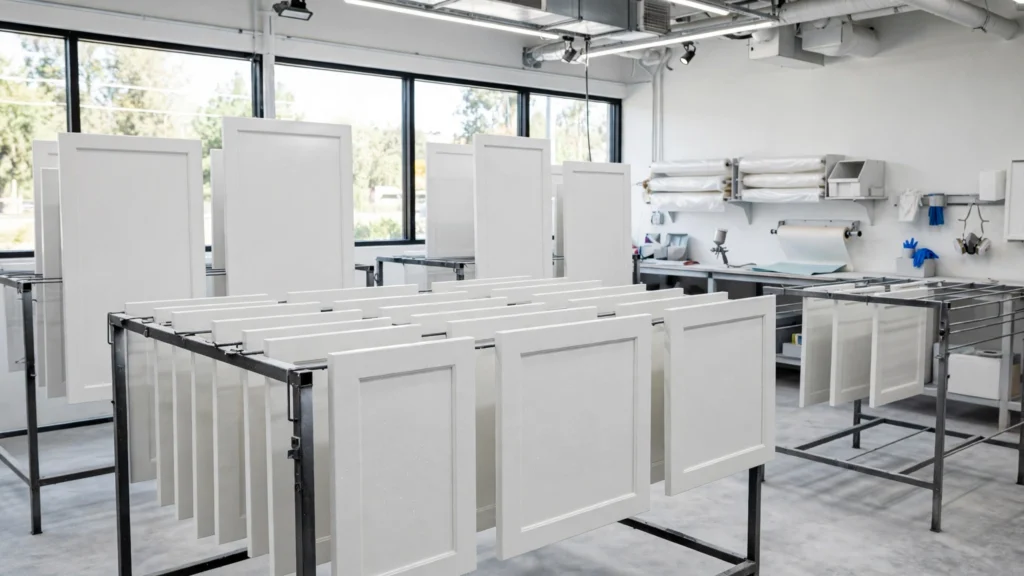
The cost to paint kitchen cabinets depends mainly on how many cabinets you have, how much preparation they need, the paint and primer used, and whether the doors and drawer fronts are sprayed or brushed. A small kitchen with a few cabinets in good condition will usually cost less than a large kitchen with many doors and drawers or heavy grease buildup. Because labor rates, cabinet condition, and project scope vary so much across the United States, there is no single national price that fits every kitchen. The most reliable way to budget is to work through the main cost drivers below, then use the Kitchen Cabinet Painting Cost Calculator to build an estimate for your own kitchen, and compare detailed written quotes from qualified local painters.
What cabinet painting actually involves
Painting kitchen cabinets is not the same as painting a wall. The surfaces are handled every day, exposed to cooking grease, steam, and water, and the doors and drawers move on hinges and slides. A durable result depends on preparation and the right products, not just on the color chosen.
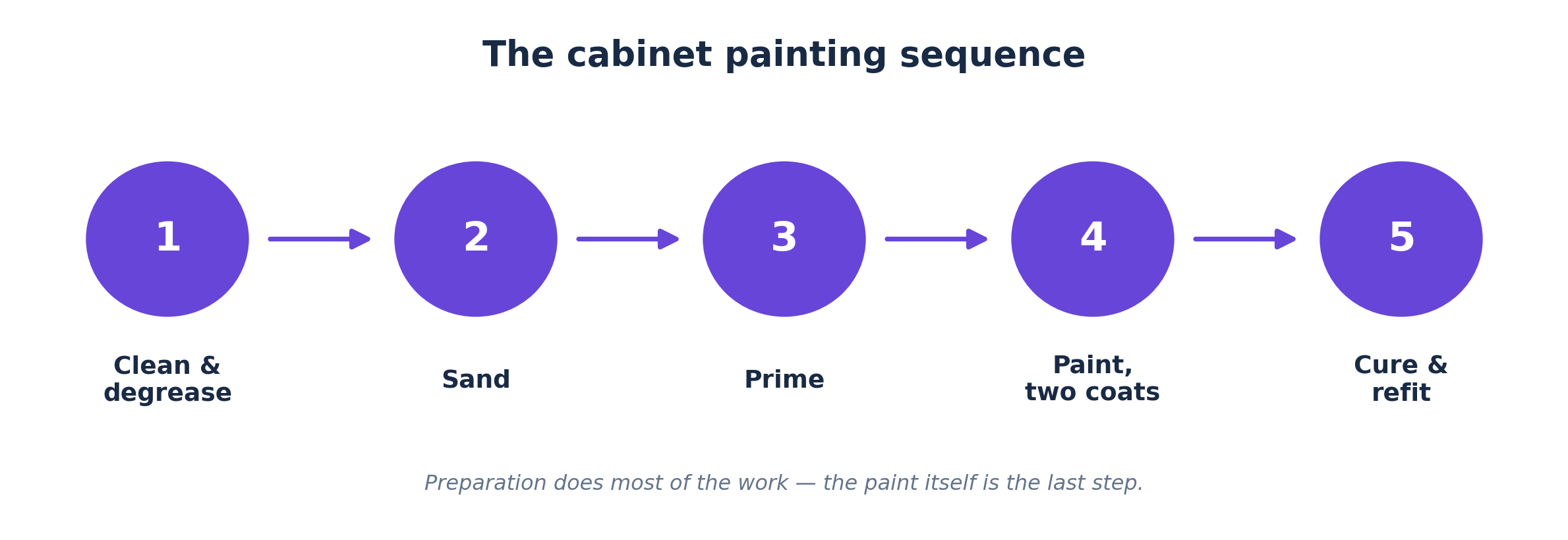
A typical professional job includes emptying the cabinets, removing doors, drawer fronts, and hardware, cleaning and degreasing every surface, sanding, repairing minor damage, priming, painting, letting coats cure, and then reinstalling everything. Most of the labor is in the work you do not see in the finished photos: cleaning, sanding, masking, and drying time between coats take far longer than the final coat itself.
How the price is measured: cabinets, doors, or linear feet
Painters price cabinet work in different ways, and understanding the method helps you compare quotes fairly. Some price by the number of cabinets, doors, and drawer fronts. Others price by linear foot of cabinetry, measured along the wall where the cabinets run. Others price the project as a whole, based on the kitchen size, the number of pieces, and the condition of the surfaces. Counting doors and drawer fronts reflects the real work, because every door is removed, cleaned, sanded, primed, painted on both sides, and reinstalled. A whole-project price can be clearest, provided the quote lists exactly what is included — how many doors, drawers, and cabinet boxes, which surfaces are painted, and how many coats are planned.
When you ask for a quote, count your cabinets the way a painter would. Note the number of doors, the number of drawer fronts, any tall pantry or oven cabinets, open shelves, and any end panels or trim that will be painted. Note whether you want the inside of the cabinets painted as well, because most standard quotes cover the outside faces and the cabinet boxes, not the interiors.
Preparation: cleaning, degreasing, and sanding
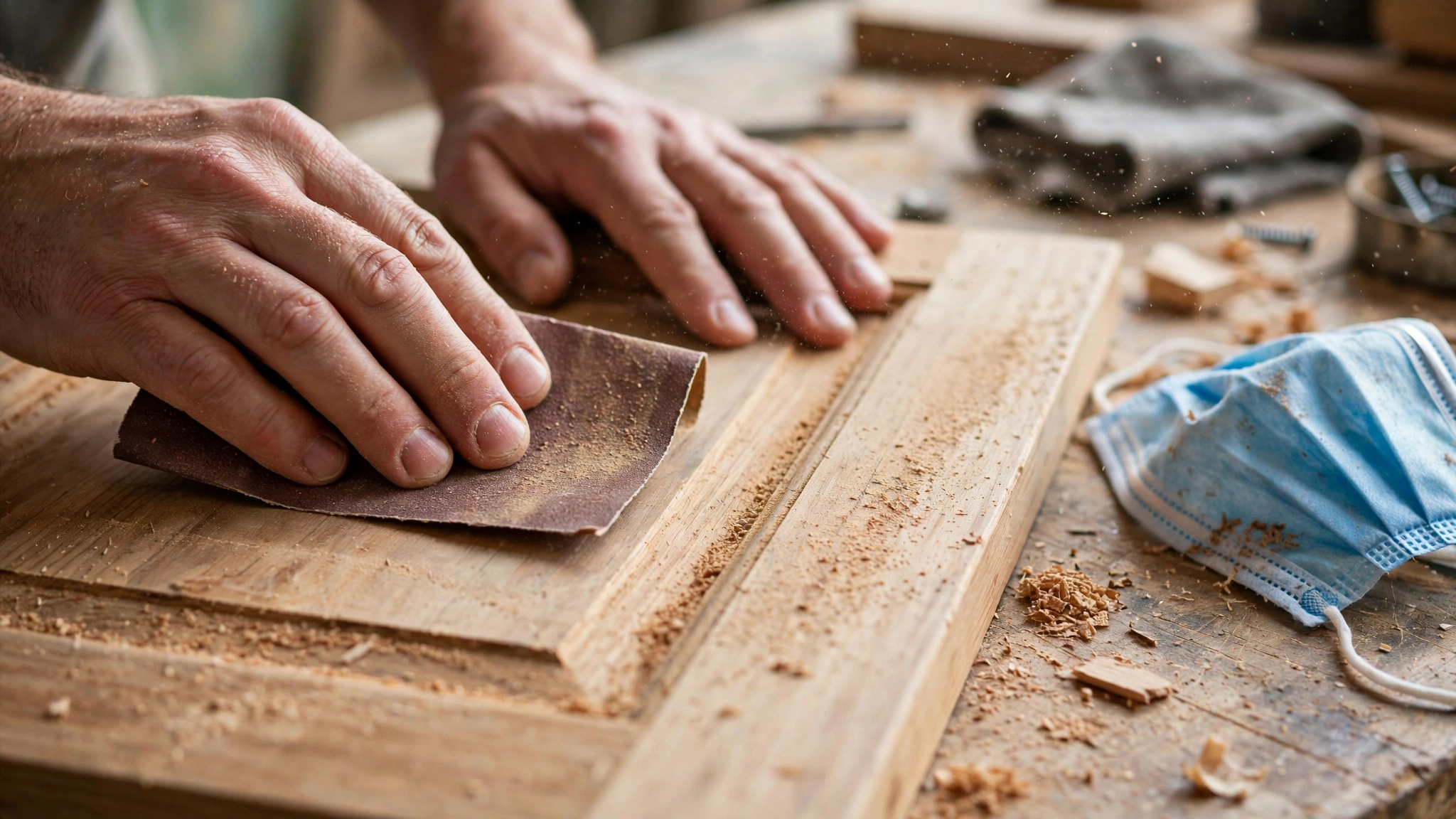
Preparation is where a cabinet paint job succeeds or fails, and it is also where a large share of the labor goes. Kitchen cabinets collect a thin film of cooking grease, even in a clean kitchen. Paint will not bond well to a greasy surface, so the first step is a thorough degreasing clean. Cabinets near the stove and around handles usually need the most attention. After cleaning comes sanding, which roughens the existing finish so the primer can grip. A smooth factory finish may need only a light scuff sand, while a peeling or glossy finish needs more work. Sanding creates fine dust, so the work area should be masked off and the dust removed before primer goes on. Small dents, chips, and holes from old hardware are usually filled, sanded smooth, and primed.
Cabinet condition and material
The condition and material of your cabinets shape both the preparation and the products used. Solid wood cabinets are generally the most straightforward to paint, because they sand and prime well and take paint evenly. Cabinets made from medium-density fiberboard, known as MDF, also paint well, but damaged or swollen edges need repair and sealing first. Laminate and thermofoil cabinets are smoother and less absorbent, so they need a primer made to bond to slick surfaces, and any peeling laminate should be repaired or removed before painting. Cabinets with heavy oak grain will show that grain through the paint unless the grain is filled and sanded. A painter who inspects the cabinets in person can spot these issues; a quote based only on a photo may miss them, so expect the price to be confirmed after a visit.
Primer and paint quality
Primer is not an optional extra on cabinets. It seals the surface, helps the paint bond, blocks stains and tannins from bleeding through — particularly on wood — and gives an even base for the topcoat. The right primer depends on the cabinet material and the existing finish, and a stain-blocking primer is often used where the wood may bleed color through a light topcoat. Paint quality matters more on cabinets than on walls, because the surface is touched, wiped, and knocked far more often. Paints made for cabinets, trim, and doors are usually harder-wearing and more resistant to scuffs and moisture than standard wall paint. A matte finish hides small imperfections but can be harder to clean, a satin or semi-gloss finish is easier to wipe down and is a common choice for kitchens, and a gloss finish is the most wipeable but shows every brush mark. Most professional jobs use a primer coat plus two topcoats, with a third sometimes needed when going from a dark color to a light one.
Spraying vs brushing and rolling
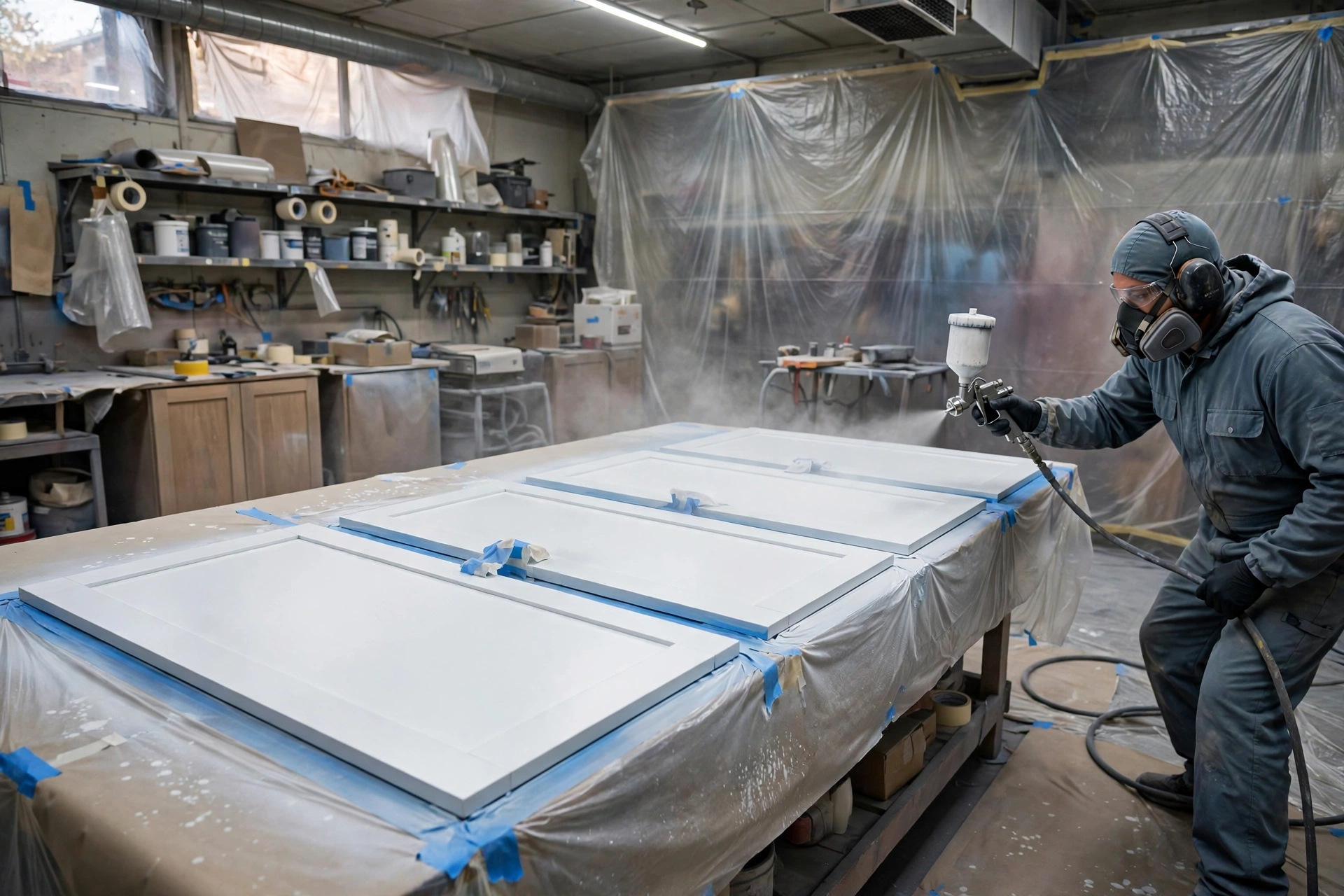
How the paint is applied changes the finish, the time needed, and the price. Spraying gives the smoothest, most even finish, with no brush marks, and it is the method most professional cabinet painters prefer for doors and drawer fronts. Spraying is usually done in a controlled space, with the doors laid flat so the paint levels evenly. Brushing and rolling can also give a good result, particularly on the cabinet boxes that stay in place, but it is harder to avoid brush marks on large flat doors. Some painters spray the doors and brush or roll the boxes. Ask each painter how they will apply the paint to the doors and to the boxes, and what finish you can expect.
Hardware, hinges, and extras
Hardware is a small item that can make a large difference to the final look and to the price. Removing the existing handles, knobs, hinges, and drawer pulls is part of the job, and the painter should label every piece so each door goes back on the same cabinet. If you are fitting new hardware, the painter needs to know before the quote: new handles may need different screw holes, old holes may need filling, and the doors may need drilling. Worn hinges can make a freshly painted door sag or rub, so ask whether hinge adjustment or replacement is included. Other extras to clarify include painting the cabinet interiors, open shelves, a kitchen island in a different color, and end panels or trim.
Labor, time, and kitchen disruption
Labor is usually the largest part of a cabinet painting project, because the work is slow, detailed, and spread over several days. The kitchen cannot be used normally while the doors are off and the boxes are being painted, so plan for disruption: you will need to empty the cabinets, clear the counters, and keep food, dishes, and cooking equipment out of the work area. The painter should explain the schedule — how many days the work will take, when the kitchen will be out of use, when the doors will be removed and returned, and how long the paint needs to cure before the cabinets can be used normally again. Paint may feel dry within hours, but it can take days to harden fully, particularly in cool or humid conditions.
Additional costs to watch for
A few costs are easy to miss when budgeting. New hardware is the most common: handles, knobs, hinges, and drawer pulls are usually bought separately, and their price varies widely by style and finish. Repairs beyond minor filling — replacing a damaged door, fixing a warped frame, or replacing worn drawer slides — may be charged separately. If the cabinets need grain filling for a smooth finish, or extra coats for a dark-to-light color change, that adds labor and materials. Protecting the rest of the kitchen, including masking floors, counters, and appliances, is part of the job and should be included in the quote, not added later.
Painting vs refacing vs replacing
Painting is not the only way to refresh kitchen cabinets. Refacing means keeping the cabinet boxes and fitting new door and drawer fronts. It gives a new look, but it costs more than painting and does not change the layout or the inside of the cabinets. Replacing the cabinets entirely means new boxes, doors, and hardware, and it is the most expensive option, but it is the right choice when the boxes are damaged, the layout needs to change, or the storage no longer works for the household. Painting usually makes most sense when the cabinet boxes are sound, the layout works, and the doors and drawers are in reasonable condition.
How to compare painter quotes
Do not compare quotes on the headline total alone. Ask each painter for an itemized written quote that lists the number of doors and drawer fronts, whether the interiors are included, the cleaning and sanding steps, the primer and paint by name, the number of coats, the application method, and the hardware work. Check that each quote covers the same scope — a cheaper quote that leaves out primer, skips sanding, or paints only one coat is not cheaper, it is incomplete. Useful questions to ask every painter: How will you clean and degrease the cabinets? What primer and paint will you use, and why are they suited to cabinets? Will the doors be sprayed or brushed, and where? How many coats are included? What hardware work is included, and who supplies new handles or hinges? How long will the kitchen be out of use, and what warranty covers the paintwork? A good painter will answer these directly and in writing.
Planning checklist before you book
- Count your doors, drawer fronts, tall cabinets, and open shelves.
- Decide whether the cabinet interiors, island, pantry, or trim are included in the scope.
- Note the cabinet material and condition: wood, MDF, laminate, or thermofoil, and any damage or peeling.
- Choose whether you want the grain to show or a completely smooth finish, and say so before the quote.
- Decide whether you are keeping the existing hardware or fitting new handles, knobs, or hinges.
- Empty the cabinets and clear the counters before work starts.
- Agree the schedule, the curing time, and the care instructions in writing.
- Use the Kitchen Cabinet Painting Cost Calculator to build an estimate for your kitchen before you compare quotes.
FAQs
How much does it cost to paint kitchen cabinets?
It depends on the number of doors and drawer fronts, the condition of the cabinets, the preparation needed, the primer and paint used, and whether the doors are sprayed or brushed. There is no single national price. Use the Kitchen Cabinet Painting Cost Calculator to build an estimate for your kitchen, then compare itemized quotes from qualified local painters.
How is cabinet painting priced — per door, per cabinet, or per linear foot?
Painters use all three methods. Pricing per door and drawer front reflects the real work on each piece. Pricing per linear foot is a shorthand for the size of the run. A whole-project price can be clearest, provided the quote lists the number of pieces, the surfaces included, and the number of coats.
How much does it cost to paint kitchen cabinets per door?
A per-door figure depends on the door size, its condition, the preparation it needs, and whether it is sprayed or brushed. A door that needs filling, sanding, and extra coats will take more work than a door in good condition. Ask painters how they count doors and drawer fronts, and whether their figure includes removal, priming, painting both sides, and reinstallation.
How long does it take to paint kitchen cabinets?
It depends on the number of cabinets, the preparation needed, and the drying time between coats. Most professional jobs take several days, including cleaning, sanding, priming, painting, curing, and reinstallation. Ask each painter for a written schedule that includes drying and curing time, not just the painting days.
Is it cheaper to paint cabinets or replace them?
Painting is usually less expensive than replacing cabinets, because the boxes stay in place and the layout does not change. Refacing sits between the two, with new doors and drawer fronts on the existing boxes. Replacing is the most expensive option, but it is the right choice when the boxes are damaged or the layout needs to change.
Should kitchen cabinet doors be sprayed or brushed?
Spraying usually gives the smoothest, most even finish with no brush marks, and it is the method most professional cabinet painters prefer for doors and drawer fronts. Brushing and rolling can give a good result, particularly on cabinet boxes, but it is harder to avoid brush marks on large flat doors.
Do I need to empty my kitchen cabinets before painting?
Yes. The cabinets should be emptied, and the counters cleared, before work starts. The painter needs access to every surface, and your dishes and food need to be out of the work area while cleaning, sanding, and painting are under way. Plan for the kitchen to be out of normal use while the doors are off and the paint is curing.
Conclusion
Painting kitchen cabinets is a preparation-led project: the cleaning, sanding, priming, and application method matter more than the color on the tin. The number of doors and drawer fronts, the condition and material of the cabinets, the paint and primer chosen, and whether the doors are sprayed or brushed all shape the final cost. Work through the cost drivers above, build an estimate with the Kitchen Cabinet Painting Cost Calculator, and compare itemized quotes from qualified painters who can explain their preparation and their scope in writing.
