
How Much Does Heat Pump Installation Cost?
Direct answer
Heat pump installation cost depends mainly on the system type you choose, the size your home needs, and how much supporting work the job requires, such as ductwork changes, electrical upgrades, and permits. An air-source system fitted to existing ductwork usually costs less to install than a geothermal system or a multi-zone ductless setup.
A heat pump moves heat instead of creating it: in summer it pulls heat out of your home, and in winter it pulls heat from the outside air or the ground and moves it indoors. One system handles both seasons, which is why homeowners often compare it with a furnace plus a separate air conditioner.
Use the Heat Pump Installation Cost Calculator early in your planning. It shows how system type, home size, and efficiency choices change the estimate before you invite installers to quote.
What “heat pump installation” means
A heat pump installation is the complete job of fitting a working system: the outdoor unit, the indoor equipment, the connections between them, and the controls, plus everything needed to make it run safely and pass inspection. Depending on your home, that can also mean ductwork changes, electrical work, a pad or brackets for the outdoor unit, refrigerant piping, a condensate drain, and a new thermostat.
A heat pump is not a furnace and not an air conditioner, though it shares parts with both. A furnace creates heat by burning fuel or using electric resistance elements; an air conditioner only cools. A heat pump does both jobs by moving heat in either direction. If you only need cooling, a central air conditioner may be the simpler comparison; if you want one system that heats and cools, or you are replacing both a furnace and an air conditioner, a heat pump is the option to price. Replacing an existing heat pump usually means swapping equipment and reusing some ductwork and wiring, which keeps heat pump installation cost down, while a first-time installation in a home heated by baseboard heaters, a boiler, or window units can involve considerably more work.
If you are weighing a heat pump against replacing your existing air conditioner, our guide to AC replacement cost covers the cooling-only side of the decision, including system size and efficiency.
Types of heat pumps
The type of system is the single biggest influence on heat pump installation cost. Two decisions matter: where it gets its heat from, and how it delivers air to your rooms.
Air-source heat pumps
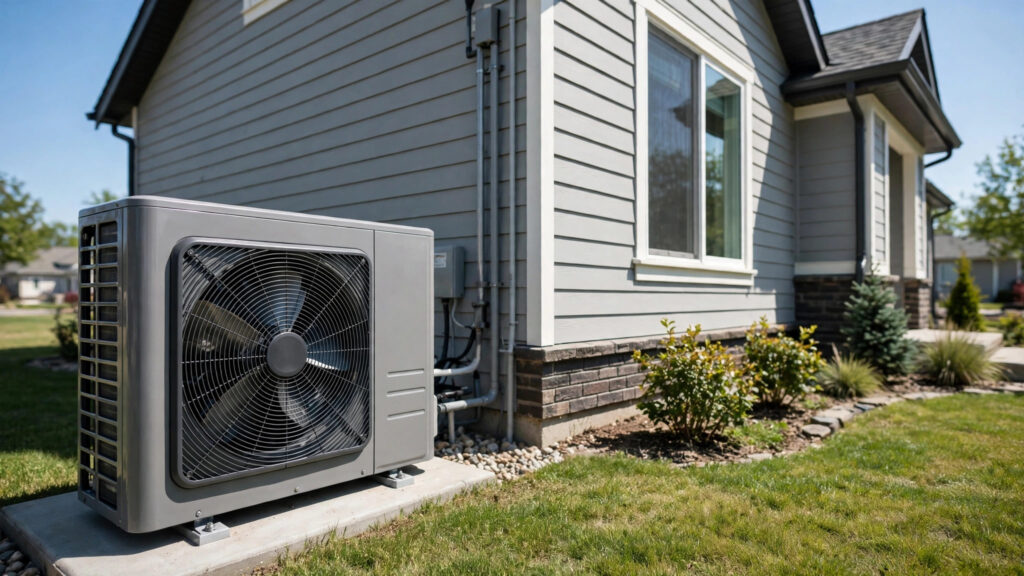
An air-source heat pump exchanges heat with the outdoor air. It is the most common type for homes and usually the simplest to install, which keeps heat pump installation cost lower than the alternatives: an outdoor unit sits on a pad or brackets beside the house, with refrigerant lines running to the indoor equipment. Modern cold-climate models keep heating at much lower temperatures than older designs.
Ground-source (geothermal) heat pumps
A ground-source heat pump exchanges heat with the ground through buried loops of piping. The ground stays at a steadier temperature than the air, so these systems can be very efficient. The trade-off is the installation work: the loops must be buried by drilling or trenching, and that ground work is a large part of heat pump installation cost. Geothermal suits homes with enough land for the loop field and owners planning a long stay.
Ducted vs ductless mini-split systems
A ducted heat pump uses an indoor air handler and ductwork to heat and cool each room. If your home already has ductwork in good condition, it can be a straightforward fit. If the ducts are leaky, undersized, or absent, the ductwork becomes a significant part of heat pump installation cost.
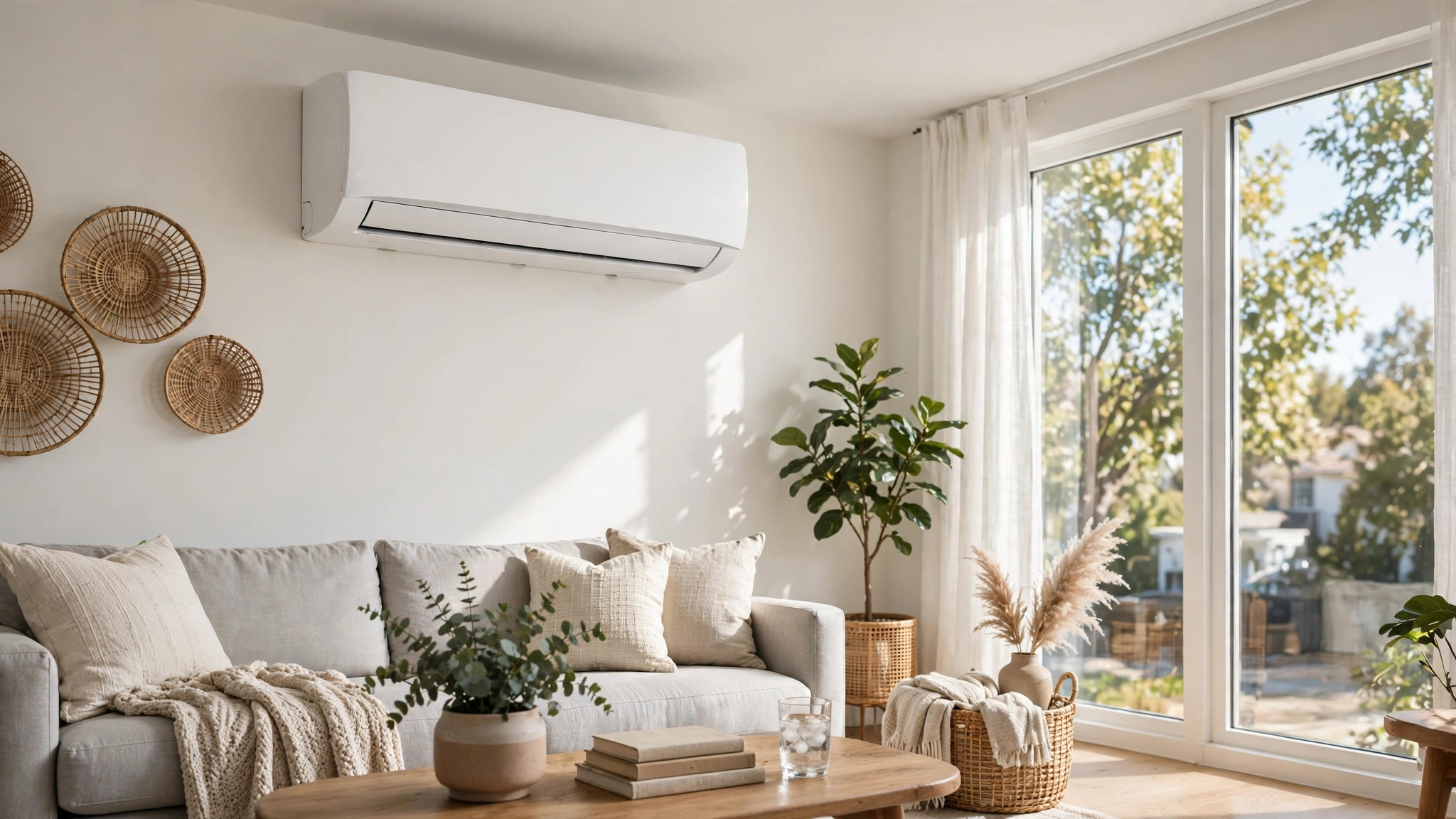
A ductless mini-split has no ductwork. One outdoor unit connects to one or more compact indoor units mounted in the rooms they serve. A single-zone system serves one room; a multi-zone system serves several, each controlled separately. Mini-splits suit homes without ducts, additions, and converted spaces. The number of zones is a major driver of heat pump installation cost: each additional zone means another indoor unit, more piping, more wiring, and more time.
| System type | How it works | Best suited to | Main cost considerations |
|---|---|---|---|
| Air-source, ducted | Outdoor unit exchanges heat with the air; indoor air handler uses existing ductwork | Homes with sound ductwork | Equipment size, efficiency, ductwork condition, electrical supply |
| Air-source, ductless mini-split | Outdoor unit serves wall-mounted indoor units, no ducts | Homes without ducts, room-by-room control | Number of zones, piping runs, mounting and access |
| Ground-source, ducted | Buried loops exchange heat with the earth; indoor unit uses ductwork | Homes with enough land | Loop drilling or trenching, loop field size, equipment |
| Ground-source, ductless | Ground loops feed indoor units without ductwork | Homes without ducts wanting geothermal efficiency | Ground loop work plus multiple indoor units |
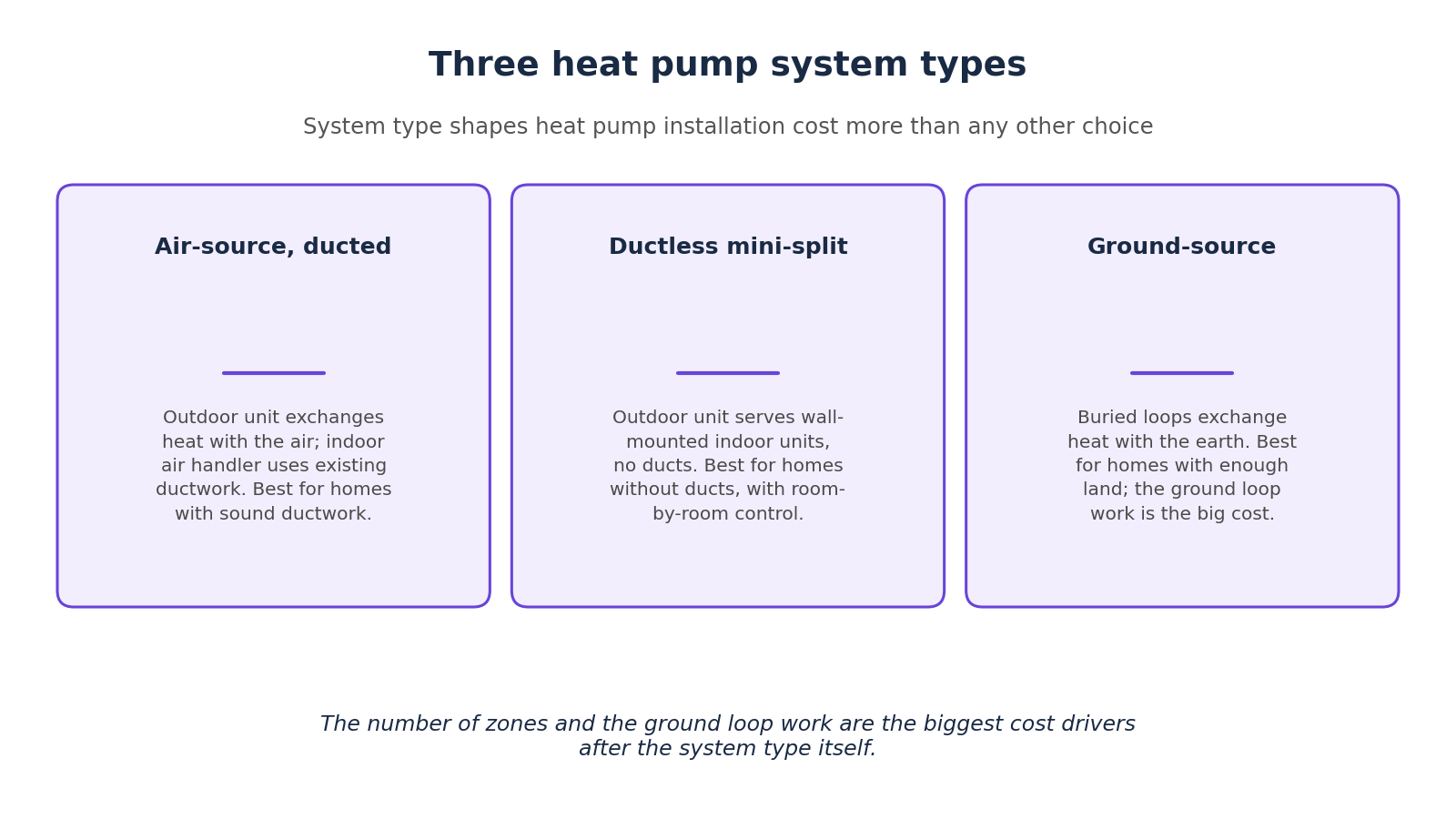
ENERGY STAR’s clean heating and cooling guide explains the main types of heat pump systems — ducted air-source, ductless mini-split, and geothermal — and what to look for when choosing between them, which is a useful second opinion before you settle on a system type, since that choice shapes heat pump installation cost more than any other decision.
What Affects Heat Pump Installation Cost
No two heat pump jobs have the same heat pump installation cost, because the price is built from several moving parts. These are the ones that matter most.
System size and the load calculation
Heat pump size is measured by heating and cooling capacity, usually in tons for cooling and British thermal units per hour (BTU/h) for heating. One ton of cooling equals 12,000 BTU/h. The right size comes from a load calculation — commonly called a Manual J calculation — that accounts for your home’s size, insulation, windows, ceiling height, air leakage, and the coldest and hottest temperatures your area is designed for.
Sizing matters more for a heat pump than for many other systems because one unit does both jobs, and the size your home needs shapes heat pump installation cost directly. A system that is too small may struggle on the coldest days; one that is far too large can short-cycle, leaving rooms humid in summer and wearing components. An installer who sizes from square footage alone is cutting a corner — ask how the size was calculated and whether the heating load or the cooling load drove the choice.
Efficiency ratings: SEER2 and HSPF2
Heat pumps carry two efficiency ratings. SEER2 (Seasonal Energy Efficiency Ratio 2) measures cooling efficiency over a season; HSPF2 (Heating Seasonal Performance Factor 2) measures heating efficiency. Higher numbers mean more heating or cooling for each unit of electricity used.
Higher-efficiency equipment usually adds to heat pump installation cost. The premium buys better components — often variable-speed compressors and fans that adjust output smoothly — and can mean lower running costs over the system’s life. Federal minimum standards that took effect in 2023 require new split-system heat pumps to meet at least 14.3 SEER2 and 7.5 HSPF2. Above that bar, the choice is a trade-off between purchase price and running cost, depending on your climate, your heating and cooling use, and local electricity prices.
Ductwork: existing, repaired, or new
For a ducted system, the ductwork can matter as much as the equipment. Leaky, poorly insulated, or undersized ducts waste conditioned air and can leave rooms uncomfortable no matter how good the heat pump is. A careful installer inspects the ducts before quoting, and the quote may include sealing, insulating, resizing, or replacing sections.
If your home has no ductwork, a ducted installation means adding it — running ducts through attics, basements, or crawl spaces and cutting in registers. That is a large part of heat pump installation cost, and a main reason a ductless mini-split appeals in a home without ducts. When comparing quotes, make sure each covers a complete job, including whatever ductwork it needs.
Electrical work, refrigerant lines, and access
A heat pump needs dedicated circuits for the outdoor unit, the indoor unit, and any auxiliary heat. Many homes need a new circuit or a disconnect box near the outdoor unit; some need a panel upgrade if the existing panel is full or too small. Your installer should check the panel early and include any electrical work in the quote.
Refrigerant lines — the copper piping between the outdoor and indoor units — must be run, insulated, and charged correctly. Long runs or difficult routes through finished walls add labor and materials to heat pump installation cost. The outdoor unit needs a level base, clear airflow, and room for service access, and in snowy climates it may need raising above the expected snow level. Labor rates vary widely across the United States, and a straightforward installation in a home with an open basement and easy outdoor access takes less time than the same system in a home with a cramped crawl space or finished walls to work through.
Labor and installation work
The equipment is only part of heat pump installation cost. The rest is the work of fitting it properly, and the scope of that work is what makes one installation straightforward and another complex.
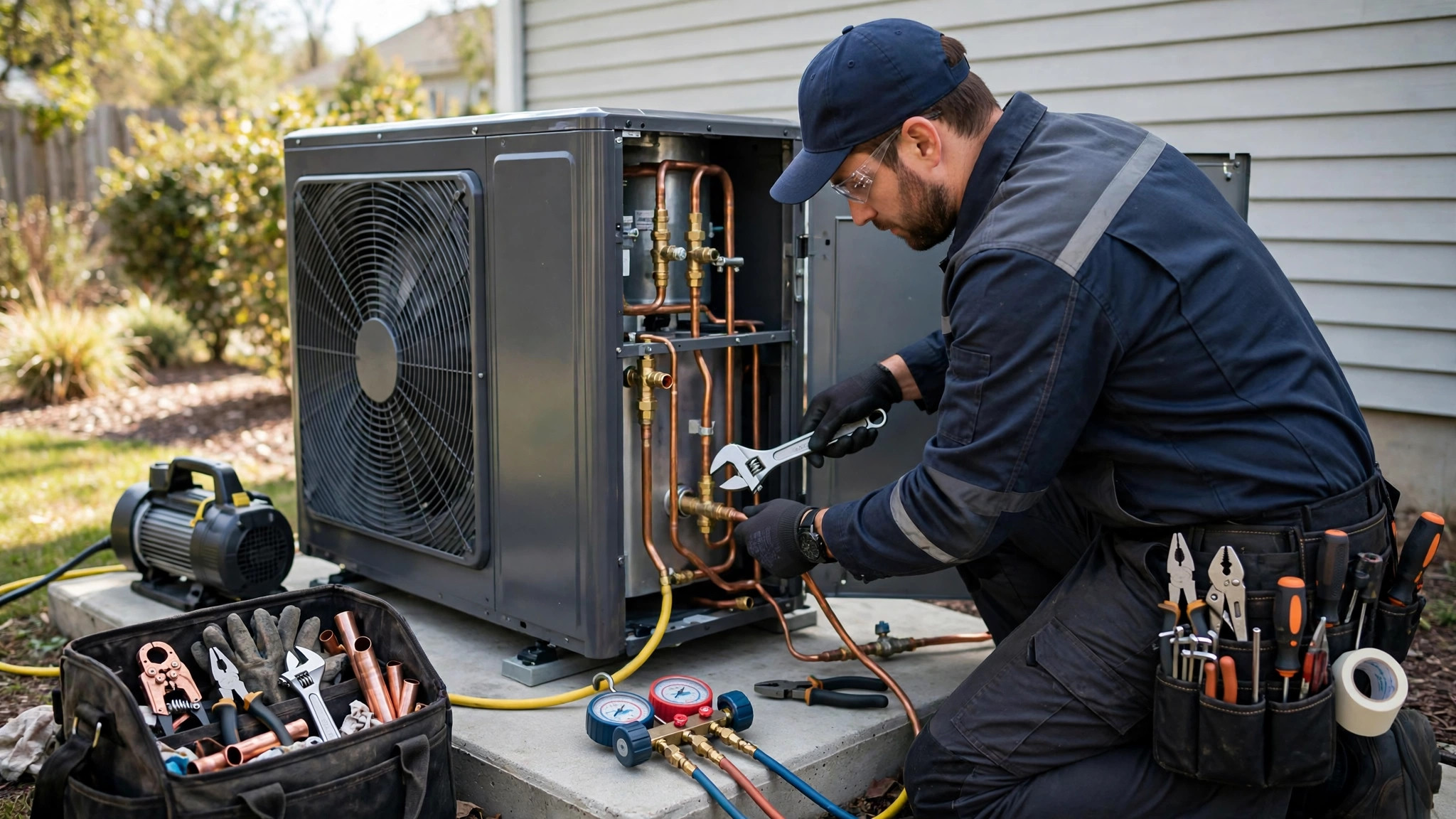
A typical air-source installation follows a clear sequence: site assessment and load calculation, then agreement on the equipment, unit locations, and the route for refrigerant lines and wiring. On installation day, the crew sets the outdoor unit on its pad or brackets, mounts the indoor unit, runs and insulates the refrigerant lines, connects the power and thermostat wiring, installs the condensate drain, and pressure-tests the circuit before charging it. Then the system is started, tested in both heating and cooling modes, and commissioned.
A ductless mini-split installation is often quicker per zone, because there is no ductwork, but a multi-zone system still means mounting several indoor units, running a line set to each, and routing the condensate drains. A geothermal installation is a different kind of project: a drilling or excavation crew installs the ground loops first — vertical boreholes or horizontal trenches, depending on the land and geology — and the loops are pressure-tested, buried or grouted, and connected to the indoor unit. The quote should separate the ground loop work from the equipment and indoor work, so you can see which part of heat pump installation cost is the ground loop.
Old equipment removal is part of the labor too. If you are replacing a furnace, an air conditioner, or an older heat pump, the old equipment must be disconnected, removed, and disposed of properly — including recovering any refrigerant, which must be handled by a qualified technician. Ask whether removal and disposal are included, and whether the quote covers patching holes left by removed equipment or old flues.
Cold-climate performance
One of the most common questions about heat pumps is whether they work in cold weather. Modern air-source heat pumps are designed to heat at much lower outdoor temperatures than the models of a generation ago, but cold-climate performance is still something to plan for rather than assume.
As the outdoor temperature falls, an air-source heat pump has less heat to draw from the air, so its heating capacity and efficiency drop. Cold-climate models use larger coils, variable-speed compressors, and other design changes to keep delivering useful heat at low temperatures. Even so, in very cold weather the heat pump alone may not cover the home’s full heating load. That is where auxiliary or backup heat comes in — usually electric resistance heat built into the indoor unit, which covers the coldest hours. Backup heat costs more to run than the heat pump itself, so how often it switches on matters, and it is worth asking your installer how the system handles the coldest days in your area.
Sizing for a cold climate is a balancing act that shapes heat pump installation cost: a system sized only for cooling may be too small to heat the home in winter, while one sized for the coldest day may be oversized for summer. A careful installer works through both loads and explains the trade-off, including whether a cold-climate model or a dual-fuel setup — a heat pump paired with a gas furnace for the coldest days — makes sense. Ground-source systems avoid most of this problem, because ground temperature stays steady through winter.
Permits, incentives, and making good
Most heat pump installations need a permit, and the work is usually inspected afterward. Requirements and fees vary by city and county, and some areas require separate permits for the electrical work or, for geothermal systems, for the drilling. Your installer normally handles the application, but the fee is part of heat pump installation cost. If a quote does not mention permits, ask whether they are included.
Incentive programs change, and what is available depends on where you live and when the system is installed. The federal energy efficient home improvement credit (Section 25C) ended for heat pumps placed in service after December 31, 2025, so do not assume a federal credit applies. State programs, utility rebates, and manufacturer promotions may still be available, and some are tied to specific efficiency ratings. Check what is currently offered in your area before you budget, since an incentive can change the heat pump installation cost you actually pay, and confirm the eligibility rules yourself rather than relying on a sales claim.
Making good is the work of putting your home back together after the installation: patching holes cut for refrigerant lines and wiring, repairing drywall, repainting, and tidying the area around the outdoor unit. For a ductless installation, the line-set covers that hide the piping on the outside wall are part of the finished look and should be included. Ask what making good is in the quote, so you are not left arranging a separate repair job.
How to compare heat pump quotes
Because heat pump installation cost varies so much with scope, the only way to compare quotes fairly is to make sure each one covers the same work. A lower quote that excludes the electrical upgrade, the ductwork repairs, or the permits is not cheaper — it is incomplete.
Before you invite installers, gather the basics: your home’s size, the age and type of your current equipment, your ductwork and its condition, your electrical panel’s size and spare capacity, and any rooms that are hard to heat or cool. Then check that each quote names the equipment (brand, model, SEER2 and HSPF2 ratings), the system size and how it was calculated, the ductwork and electrical work included, the controls, removal of old equipment, permits, and making good.
Ask each installer the same questions: How did you size the system, and what design temperatures did you assume? How will it handle the coldest days here? What is included in the price and what is not? What warranty covers the equipment, and what covers the installation work? A thorough installer who explains the sizing and the scope is usually a safer choice than a lower quote with no explanation.
For more on choosing the installer themselves, see our guide to how to hire an HVAC contractor.
Use the Heat Pump Installation Cost Calculator to build an estimate for your own home before you compare quotes. It gives you a realistic starting point, so you can spot a quote that is missing major scope — or one that includes work your home does not need.
FAQs
How much does heat pump installation cost?
Heat pump installation cost depends on the system type, the size your home needs, and how much supporting work the job requires, including ductwork, electrical upgrades, and permits. An air-source system fitted to existing ductwork usually costs less to install than a geothermal system or a multi-zone ductless setup. Use the Heat Pump Installation Cost Calculator for a tailored estimate, and compare detailed quotes from qualified local installers.
Is a heat pump cheaper to install than a furnace and air conditioner?
It depends on what you are comparing. A single heat pump replaces both a furnace and an air conditioner, so one installation covers heating and cooling. A ducted air-source heat pump fitted to existing ductwork is often comparable in scope to a furnace and air conditioner combination, while a geothermal system or a multi-zone ductless system is a larger project. Compare the complete installed job for each option, including ductwork, electrical work, and permits, not the equipment alone.
Do I need ductwork for a heat pump?
Not necessarily. A ducted heat pump uses ductwork to carry conditioned air to each room and suits homes that already have ducts in good condition. A ductless mini-split needs no ductwork at all — each indoor unit serves the room it is mounted in. If your home has no ducts, a ductless system avoids the cost and disruption of adding them, and it gives you room-by-room control.
Will a heat pump work in cold winters?
Modern cold-climate air-source heat pumps keep heating at temperatures well below freezing, and ground-source heat pumps are barely affected by outdoor air temperature. In very cold weather, an air-source system may use auxiliary heat to cover the coldest hours. Ask your installer how the system is sized for winter and how often backup heat is expected to run.
What size heat pump do I need?
The right size comes from a load calculation that accounts for your home’s size, insulation, windows, ceiling height, air leakage, and local design temperatures — not from square footage alone. A system that is too small may struggle on the coldest days, and one that is far too large can short-cycle and leave rooms humid in summer. Ask your installer how the size was calculated and whether the heating load or the cooling load drove the choice.
Does installing a heat pump require an electrical panel upgrade?
Sometimes. A heat pump needs dedicated circuits for the outdoor unit, the indoor unit, and any auxiliary heat. Many homes need a new circuit or a disconnect box, and some need a panel upgrade if the existing panel is full or too small for the added load. Your installer should check the panel early and include any electrical work in the quote.
Do I need a permit to install a heat pump?
In most areas, yes. A heat pump installation usually needs a permit and an inspection, and some areas require separate permits for the electrical work or, for geothermal systems, for the drilling. Your installer normally handles the application, but the permit fee is part of the project cost. Ask whether permits are included in your quote.
Conclusion
Heat pump installation cost is shaped by the system you choose, the size your home needs, and the supporting work the job requires. An air-source system on existing ductwork is usually the simplest project; a geothermal system or a multi-zone ductless setup involves more work and more decisions. A good installer will work through the details that move the price — ductwork, electrical capacity, efficiency, cold-climate design, and permits — with you before quoting.
Start with the Heat Pump Installation Cost Calculator to build an estimate for your own home, then compare detailed quotes from qualified local installers, checking that each one covers the same scope. A heat pump is a long-term investment in how your home heats and cools — the time spent getting the sizing, the system type, and the scope right is time well spent.
