
AC Replacement Cost: System Size, Efficiency, and Installation Factors.

The short answer
The biggest mistake in AC replacement is comparing only the price of the outdoor unit. A condenser-only job, a condenser plus coil job, and a full system job are different scopes, and a system that is too large or too small for the home will cost more to run and feel less comfortable. Size the system to the home, choose efficiency for how long you plan to stay and how much you cool, then compare complete scopes, not just totals.
Start with the AC replacement cost calculator to estimate your own scope.
The figures in this guide come from the AC replacement cost calculator — run it with your home’s details for the most accurate estimate.
What drives AC replacement cost
Five factors decide your quote more than everything else combined.
| Factor | Why it matters |
|---|---|
| System size (tonnage) | Must match your home’s load — bigger isn’t better |
| Efficiency rating (SEER2) | Higher efficiency costs more upfront, less to run |
| System configuration | Condenser-only vs full system changes the scope completely |
| Ductwork condition | Leaky or undersized ducts must be fixed for the new system to perform |
| Electrical and permits | Panel capacity, disconnects, and local permit requirements |
Two identical houses can get very different quotes when their ductwork differs. That’s why phone quotes are guesses — a contractor needs to see the system.
What is actually being replaced
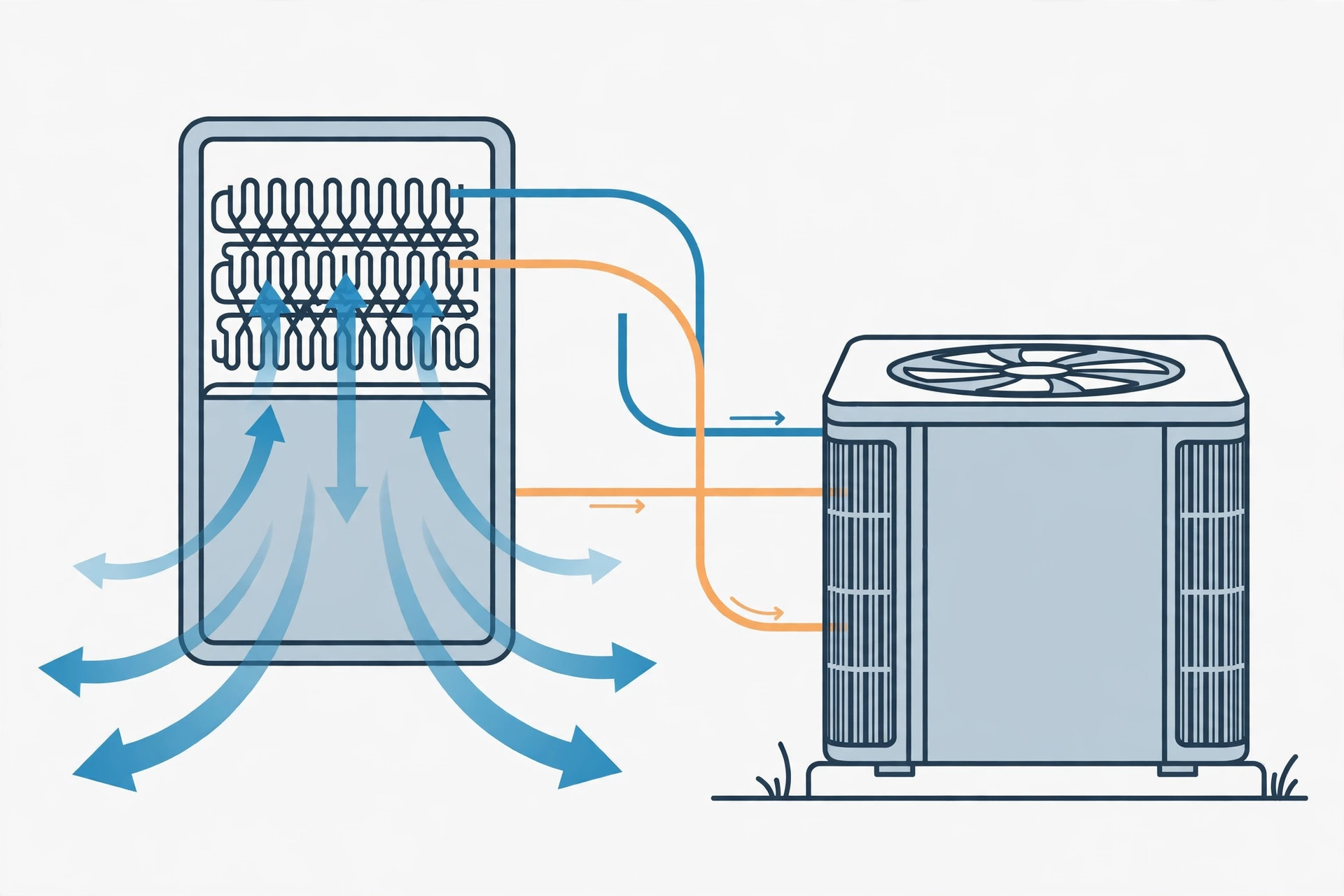
A split AC system has parts indoors and outdoors, and quotes differ in which parts they include. Ask every quote to name its parts in writing.
| Part | Where it is | Replacing it matters when |
|---|---|---|
| Condenser (outdoor unit) | Outside the home | The outdoor unit has failed, is very old, or no longer matches the indoor coil |
| Evaporator coil (indoor coil) | Inside, with the air handler or furnace | The coil is leaking, corroded, or mismatched to the new condenser |
| Air handler or furnace blower | Inside the home | Airflow is poor, the blower is failing, or the full system is being renewed |
| Refrigerant lines and pad | Between indoor and outdoor units, and under the outdoor unit | Lines are damaged, undersized, or the pad and location must change |
| Thermostat and controls | Inside the home | Controls are outdated, or a new system needs compatible controls |
Worked examples, same home, different scopes
The table below is from the AC replacement calculator page, for one stated example: a 3-ton system in a 2,000 to 2,500 square foot home. Do not present these figures as a quote for every home. Home size, system size, efficiency, and installation scope will change your total. The four rows are different scopes for that same example home, not four prices for the same job.
| Scope | Budget | Standard | Premium |
|---|---|---|---|
| Condenser only | $3,345 | $5,230 | $8,505 |
| Condenser + new coil | $4,315 | $6,630 | $10,650 |
| Condenser, coil and air handler | $5,610 | $8,570 | $13,730 |
| Package AC unit (ground pad) | $5,220 | $7,920 | $12,525 |
That table shows why scope matters: for the same example home, condenser only at Standard is $5,230, while condenser, coil and air handler at Standard is $8,570. A lower quote is not a better deal if it leaves out parts the higher quote includes.
What drives the price
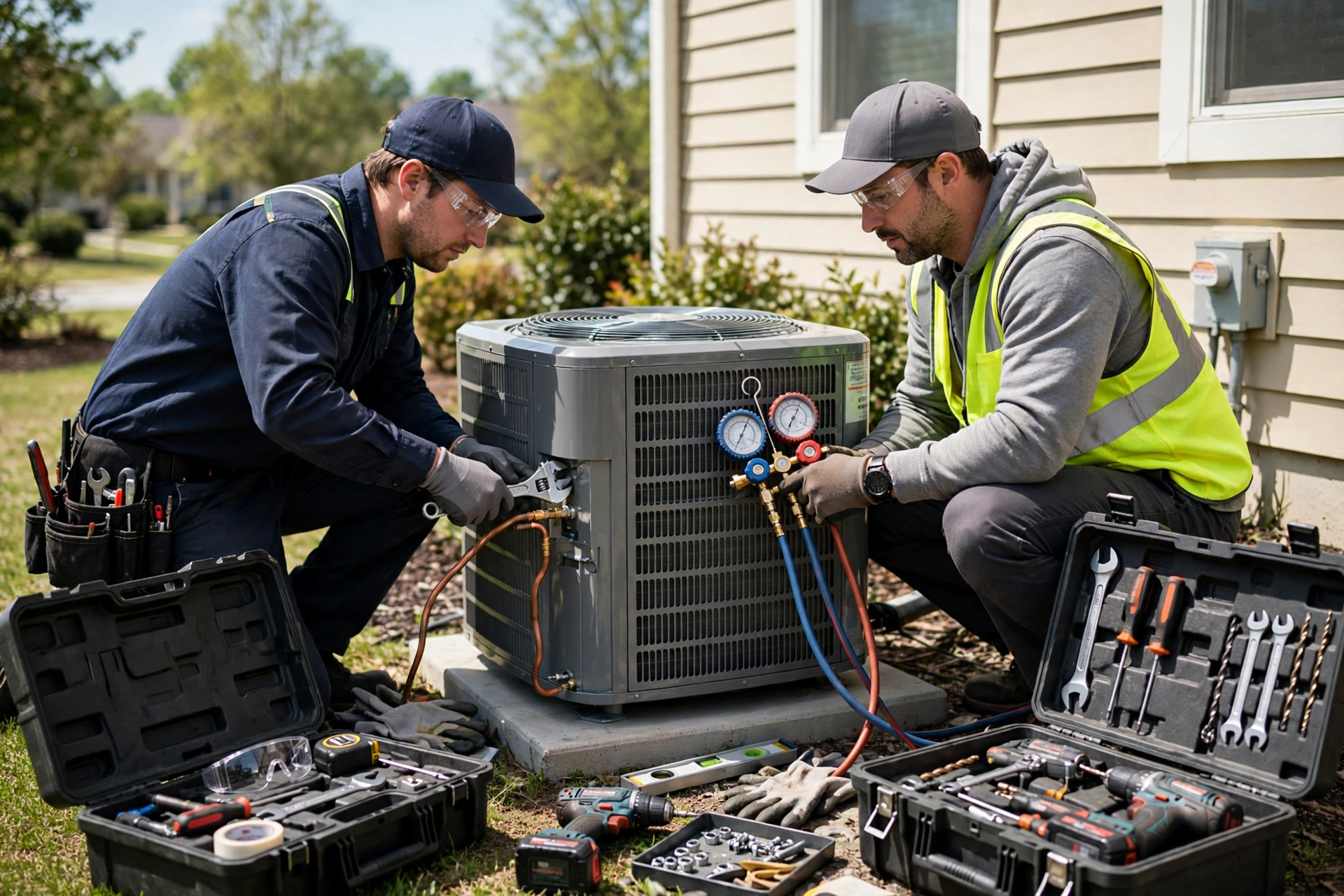
Size, efficiency, and scope are the main drivers, but ductwork, electrical work, refrigerant, permits, and access also change the total. A quote that hides those items in a lump sum is hard to compare.
| Cost driver | How it affects the price | What to check in your quote |
|---|---|---|
| System size in tons | Larger systems cost more to buy, but the right size depends on the home, not just floor size | Size in tons and how it was sized |
| Efficiency rating | Higher-efficiency equipment usually costs more up front and may cost less to run | Efficiency rating named, not just “higher efficiency” |
| Scope of replacement | Condenser only costs less than condenser, coil and air handler | Every part included or excluded, named |
| Ductwork condition | Leaking, undersized, or damaged ducts reduce comfort and | Duct inspection and any duct work listed |
| Electrical and refrigerant work | New disconnect, wiring, line set, or refrigerant handling adds work | Electrical and refrigerant items listed |
| Location and access | Pad, clearance, attic, closet, or tight access changes labor time | Location, pad, and access noted |
| Permits and disposal | Permit and old-unit disposal rules vary by location | Permit and disposal included or separate |
Understanding the system configurations
AC quotes confuse homeowners because ‘replacement’ means different things. A condenser-only swap reuses your indoor coil and air handler — cheapest, but only sensible when the indoor components are young and healthy.
A condenser-plus-coil replacement pairs the new outdoor unit with a new indoor coil while keeping the existing air handler or furnace. A full system — condenser, coil, and air handler — replaces everything, which is the right call when the whole system is old.
Package units combine everything in one outdoor box, common where there’s no indoor space for an air handler. Make sure every quote names its configuration — comparing a condenser-only price against a full-system price is meaningless.
Size and efficiency, without the guesswork
Size is not a guess from floor area alone. Insulation, windows, ceiling height, climate, duct condition, and heat gain all affect the right size. A too-small system runs constantly and still feels warm on hot days. A too-large system cools quickly, cycles on and off, and can leave humidity high. Ask how the size was calculated, and whether a load calculation was done.
Efficiency is a trade-off, not a race to the highest rating. Higher efficiency usually means a higher purchase price and lower running cost, and the payback depends on how much you cool, local energy prices, and how long you will keep the system. Compare purchase price plus expected running cost over the years you plan to stay, not purchase price alone.
How to compare quotes
- Ask every quote to list the same scope: condenser, coil, air handler, line set, pad, thermostat, electrical, permits, and disposal.
- Ask how the system size was chosen, and what efficiency rating is being quoted.
- Ask what is excluded, and what would be charged extra if ductwork, electrical, or line work is needed.
- Ask about warranties in writing: equipment warranty and workmanship warranty are different, and both should be named.
- Ask what testing is included after installation: airflow, refrigerant charge, thermostat setup, and a walkthrough of controls.
Timing your AC replacement
The worst time to replace an AC is during the first heatwave, when every contractor is booked and you’re choosing under pressure. The best time is the shoulder season — spring or fall — when schedules are open and crews are unhurried.
Don’t wait for a total failure either. A system that’s limping through summer on hard starts and weak cooling is telling you its plans. Replacing on your timeline means three thoughtful quotes instead of one desperate decision.
And consider the refrigerant factor. Older systems use refrigerants being phased out, making recharges expensive. If your tech mentions refrigerant availability, treat it as a countdown.
Frequently asked questions
Should I replace the coil with the condenser?
Usually yes, if the old coil is mismatched, leaking, or old. A mismatched coil can reduce efficiency and comfort, and may affect warranty coverage. If the coil is recent and correctly matched, an installer should explain why it can stay.
Is a bigger AC always better?
No. An oversized system cools fast but cycles off quickly, which can leave humidity high and comfort uneven. The right size is the one matched to the home’s cooling load.
Is the most efficient system always worth it?
Not automatically. It depends on cooling use, energy prices, purchase price difference, and how long you will keep the system. Compare total cost over your expected ownership, not just the headline rating.
Can I replace only the outdoor unit to save money?
Sometimes, but only if the indoor coil and air handler are compatible, in good condition, and correctly matched. A condenser-only quote should state that compatibility check clearly.
Should I repair or replace?
It depends on age, repair cost, refrigerant type, efficiency, and how often it breaks down. If repairs are frequent, major parts are failing, or the system is very old and inefficient, replacement is often the better long-term choice. Get both options priced on the same scope before deciding.
How long does AC installation take?
A straightforward like-for-like replacement usually takes one day; full system changes with ductwork modifications can take two to three. Electrical upgrades or permit inspections add time. Your contractor should give you a written timeline with the quote.
Should I replace my AC before it dies?
If it’s over 12–15 years old, inefficient, and needing frequent repairs — yes, on your schedule rather than the weather’s. A planned replacement gets you three quotes, shoulder-season scheduling, and time to choose the right system instead of whatever’s available during a heatwave.
Next step
Note your home size, current system size and type, what parts are failing, and whether you want a condenser-only job or a fuller system replacement. Then use the AC replacement cost calculator linked at the top of this guide for a starting estimate, and take that estimate plus the checklist in this guide into contractor conversations, so you compare complete scopes, not just totals. Get three quotes on the same configuration — the line items will tell you who’s thorough and who’s guessing.
