
Metal Roof vs Shingles: Best 2026 Cost & Lifespan Comparison
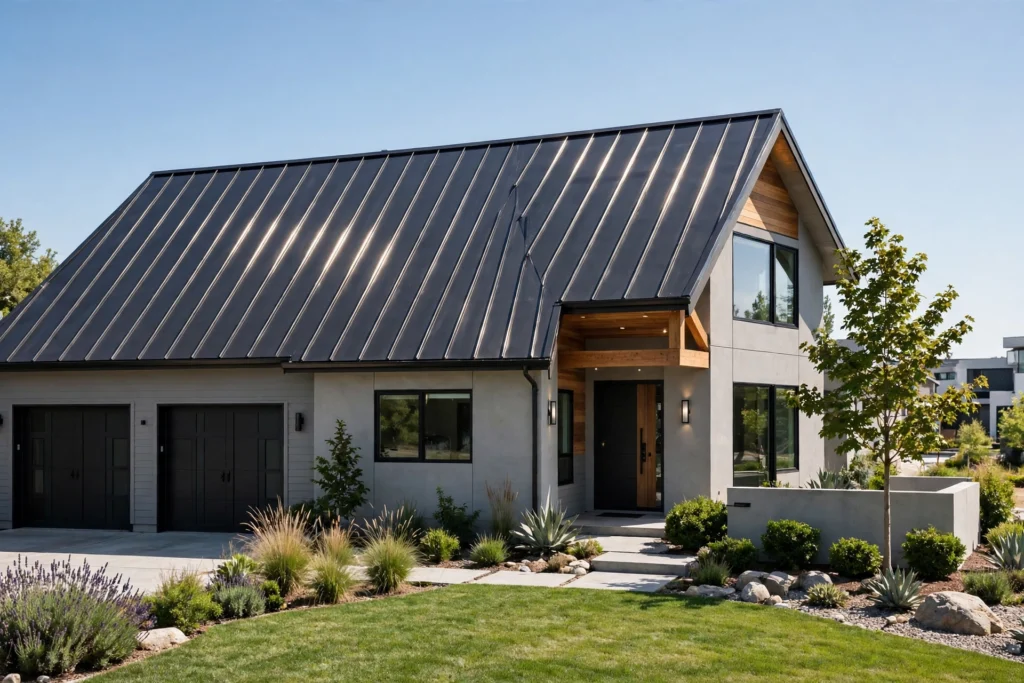
Metal roof vs shingles is the biggest material decision in residential roofing, and it is really two decisions in one: what you pay now, and how many times you pay it. Metal costs two to three times as much upfront and lasts two to three times as long. Shingles cost less, look familiar, and need replacing sooner. Both are good roofs. The right choice depends on how long you will own the house, what your climate throws at it, and what your budget allows today. This guide compares metal roof vs shingles on cost, lifespan, weather, energy, and lifetime value, with real figures from our calculators for the same 2,000 sq ft house.
The short answer: on a 2,000 sq ft house, architectural shingles run about $9,800 to $12,200 at standard pricing, steel R-panel metal about $24,700 to $28,400, and standing seam steel about $44,200 to $50,800. Steel roofs last roughly 40 to 70 years against about 20 to 30 for shingles — so over a 60-year horizon, one metal roof can outlast two or three shingle roofs. Metal wins on lifetime cost if you stay; shingles win if you sell within a few years or need the lowest payment today.
What metal offers
A metal roof is a system of panels or shingles in steel, aluminum, copper, or zinc. The common types are exposed-fastener steel (R-panel), stone-coated steel, standing seam steel, standing seam aluminum, and copper or zinc standing seam. Prices span the widest range in roofing: about $5.80 to $50 per square foot for materials and installation, with exposed-fastener steel lowest, standing seam in the middle to upper range, and copper at the top. Including tear-off, disposal, deck repair, and permits, many homeowners budget roughly $10 to $21 per square foot for steel and stone-coated systems, and more for aluminum and copper.
Metal’s headline advantage is lifespan. Steel roofs are commonly expected to last roughly 40 to 70 years when properly installed and maintained, and copper and zinc can last longer. Metal also handles severe weather well: impact- and fire-rated systems exist, and some insurers offer discounts for them, although savings vary. Reflective coatings may reduce cooling costs in hot climates. And metal can sometimes be installed over a single layer of sound shingles, which saves tear-off and disposal — in the calculator’s example, roughly $1,800 to $2,100 on a standing seam roof — though hidden deck problems stay hidden when you do that. Those are the strengths metal brings to the metal roof vs shingles comparison.
What shingles offer
Architectural (dimensional) shingles are the default roof on most American homes, and the metal roof vs shingles comparison starts from their strengths: low cost, familiar looks, easy repairs, and a contractor on every corner who knows how to install them. An architectural shingle roof typically costs about $4.10 to $9.50 per square foot for materials and installation, or $410 to $950 per roofing square, depending on the product line. With tear-off, disposal, deck repair, and permits included, an all-in budget commonly runs around $7.50 to $11 per square foot.
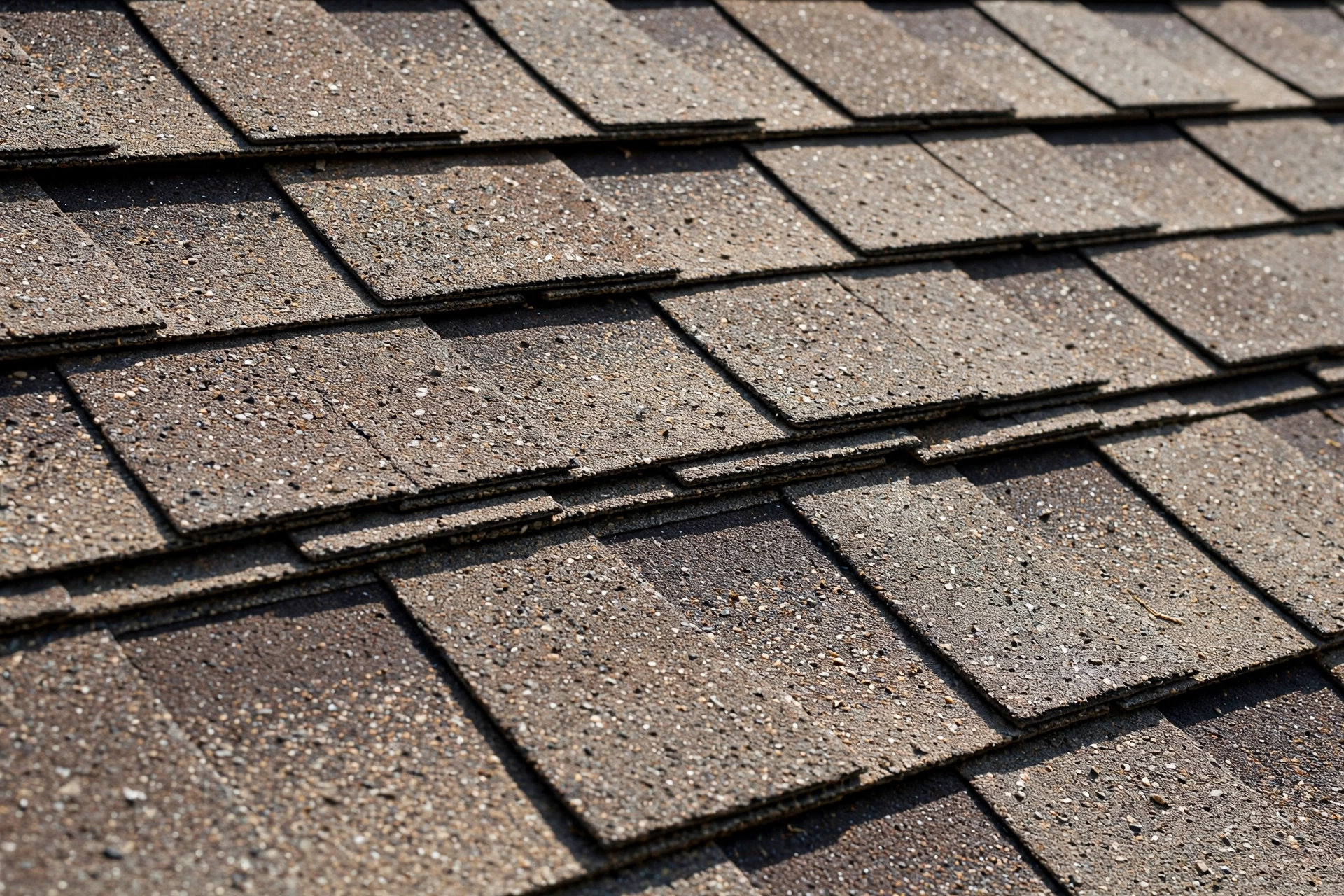
Architectural shingles typically last around 20 to 30 years, depending on climate, attic ventilation, roof slope, and installation quality. Hot climates, poor ventilation, and severe storms can shorten that range. Three lines cover the market: standard, heavyweight (thicker, often with higher wind ratings, popular in windy or storm-prone regions), and premium designer lines. At standard pricing, architectural shingles cost about $1.15 more per square foot installed than 3-tab shingles — roughly $115 more per roofing square, or about $2,800 more on a 2,400-square-foot roof surface — and for that premium you typically get a thicker shingle, a more textured look, and a longer warranty. One warranty warning from the calculator page: a “limited lifetime” shingle warranty usually covers manufacturing defects, often with prorated coverage after an initial period, and may require matched accessories for the strongest coverage. Read the terms before comparing quotes. That warranty fine print is easy to miss in the metal roof vs shingles debate, and it matters when the roof is 15 years old.
Metal roof vs shingles: cost compared
The table below prices both sides of the metal roof vs shingles comparison on the same house — a 2,000 sq ft footprint, about 2,400 to 2,440 sq ft of roof surface — using our calculators’ standard scenarios.
| Architectural shingles | Steel R-panel metal | Standing seam steel | |
|---|---|---|---|
| Standard total, 2,000 sq ft house | $9,800–$12,200 | $24,700–$28,400 | $44,200–$50,800 |
| Materials + install (per sq ft) | $4.10–$9.50 | $5.80+ (steel range to $50 for copper) | Mid to upper range |
| All-in budget (per sq ft) | ~$7.50–$11 | ~$10–$21 (steel systems) | ~$10–$21+ |
| Expected lifespan | ~20–30 years | ~40–70 years (steel) | ~40–70 years (steel) |
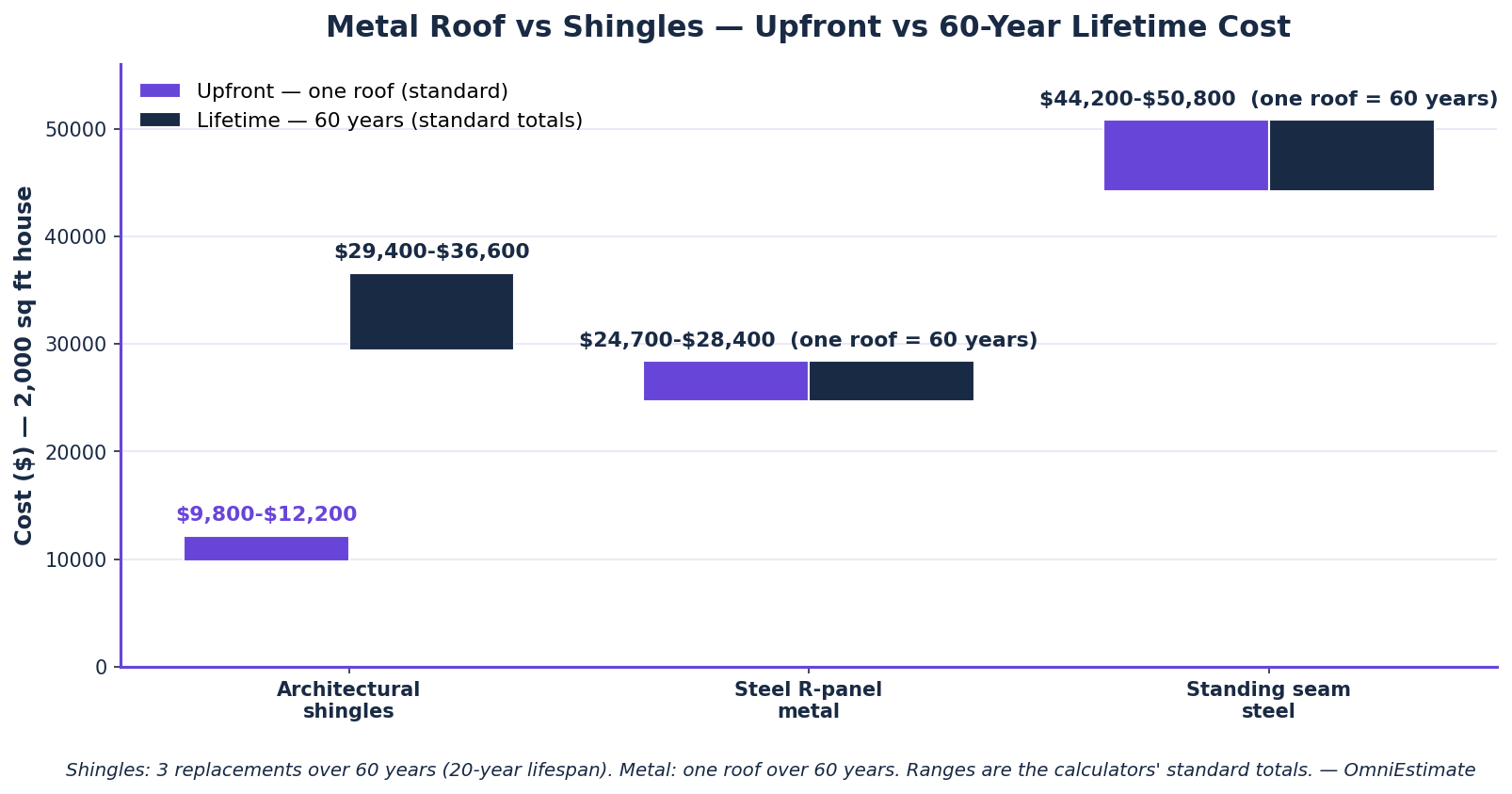
Two ratios from the metal calculator page sum up the metal roof vs shingles cost gap: at standard pricing, exposed-fastener steel costs about 35 to 40 percent more than architectural shingles to install, while standing seam steel costs roughly two and a half to three times as much. On the same house, that works out to shingles at roughly a third of the price of a standing seam roof. To price your own metal roof vs shingles decision, run the Metal Roof Cost Calculator and the Architectural Shingle Roof Cost Calculator with your roof size, slope, and options — and the Roof Replacement Cost Calculator for the shingle baseline.
Metal roof vs shingles: lifetime cost
Upfront cost is only half the metal roof vs shingles story. The other half is how many roofs you buy. A steel roof lasting 40 to 70 years against shingles at 20 to 30 means one metal roof can outlast two or three shingle roofs over a 60-year horizon. Put the standard totals side by side: three shingle replacements at $9,800 to $12,200 each come to roughly $29,400 to $36,600 across 60 years, against one standing seam roof at $44,200 to $50,800 or one R-panel roof at $24,700 to $28,400. On those numbers, the metal roof vs shingles lifetime ranking puts R-panel metal cheapest over a lifetime, standing seam most expensive, and shingles in the middle — but the ranking flips with the assumptions. If shingles last 30 years rather than 20, you buy two roofs instead of three, and shingles win. If metal lasts 70 years, it wins by a wide margin. The honest conclusion of the metal roof vs shingles lifetime comparison is that lifetime cost is close enough that it should not decide the question alone — climate, ownership horizon, and budget matter at least as much.
One cost both sides share: the contingency. The metal calculator page advises adding 10 to 15 percent for hidden deck damage and detail work, and the same applies to shingles. Deck problems are usually found only after tear-off, and they are the most common reason a final invoice exceeds the estimate.
Metal roof vs shingles: weather, energy, and noise
Weather is where the metal roof vs shingles comparison gets practical rather than financial:
Storms and fire. In the metal roof vs shingles weather comparison, metal’s impact and fire ratings are a genuine advantage in hail country and wildfire zones, and the insurance discounts some carriers offer for rated roofing reflect that. Heavyweight architectural shingles close part of the gap — they are thicker, often carry higher wind ratings, and are popular in storm-prone regions — but they do not match metal’s fire resistance.
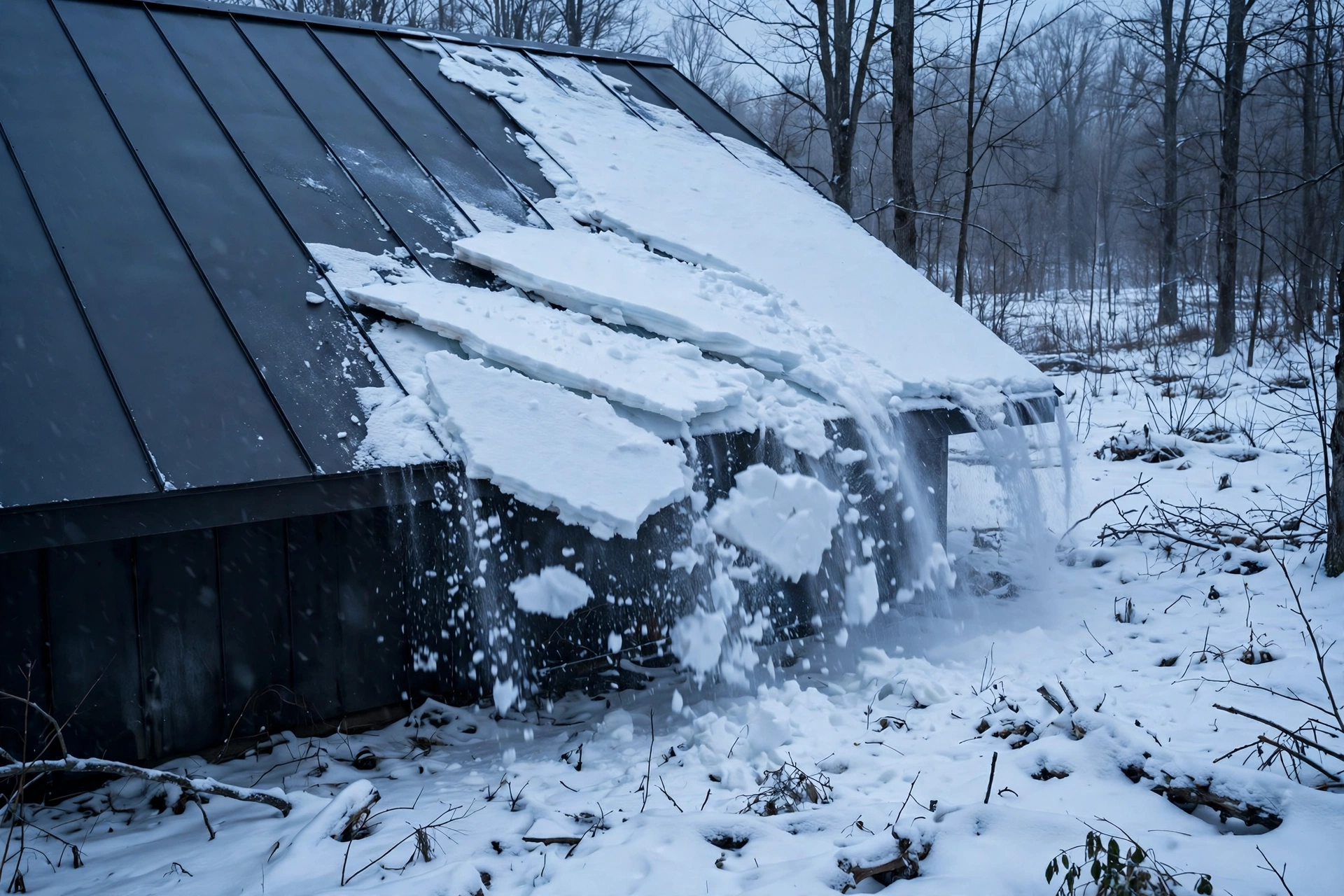
Heat and cold. On heat, the metal roof vs shingles comparison favors metal: reflective coatings may reduce cooling costs in hot climates, which is a real saving on air-conditioned homes. Shingles absorb more heat, which is a small advantage in cold climates. In snow country, metal sheds snow readily, which reduces load; shingles hold it longer.
Noise. Rain on a metal roof is louder than rain on shingles — the one comfort point where the metal roof vs shingles comparison favors shingles — but how much louder depends on the installation. A metal roof over solid decking with proper underlayment is far quieter than the barn-roof stereotype, and most homeowners report the difference as noticeable but not bothersome. If you are sensitive to noise, ask your contractor about underlayment and decking options that dampen sound, and ask to hear a finished installation before you commit.
Which should you choose?
Choose metal if: you plan to own the house for decades, your climate brings hail, wildfire risk, or heavy snow, you want the lowest lifetime maintenance, or cooling costs matter. Metal is the long-ownership roof, and its lifespan is the reason to pay the premium in the metal roof vs shingles decision.
Choose shingles if: you plan to sell within a few years, your budget is tight, you want the widest choice of contractors, or you prefer the traditional look. A high-quality architectural shingle roof is often more economical in the metal roof vs shingles value comparison when selling within a few years or on a tight budget, with a shorter expected lifespan than metal — the calculator page says so directly, and it is honest advice.
Either way: get at least three written quotes from contractors experienced with the specific system you are considering, and compare like for like — the same panel type, gauge, finish, underlayment, and warranty for metal; the same shingle line and warranty terms for shingles. Check both the paint finish warranty and the contractor’s workmanship warranty on metal, and read the “limited lifetime” terms carefully on shingles. The National Roofing Contractors Association (NRCA) is a good starting point for finding qualified contractors. For the wider material picture, see our roofing materials compared guide and the metal roof cost guide, and for the size-based numbers behind this comparison, our 2000 sq ft roof replacement cost breakdown.
Frequently asked questions
Is a metal roof worth the extra cost over shingles?
It depends on how long you keep the house. Steel roofs last roughly 40 to 70 years against about 20 to 30 for architectural shingles, so one metal roof can outlast two or three shingle roofs. If you stay for decades, metal’s lifetime cost is competitive; if you sell within a few years, shingles are usually the better value.
How much more does a metal roof cost than shingles?
At standard pricing, exposed-fastener steel costs about 35 to 40 percent more than architectural shingles to install, and standing seam steel costs roughly two and a half to three times as much. On a 2,000 sq ft house, shingles run about $9,800 to $12,200 standard, steel R-panel about $24,700 to $28,400, and standing seam steel about $44,200 to $50,800.
How long does a metal roof last compared to shingles?
Steel roofs are commonly expected to last roughly 40 to 70 years when properly installed and maintained; copper and zinc can last longer. Architectural shingles typically last around 20 to 30 years. Climate, installation quality, and maintenance affect both.
Are metal roofs noisy in the rain?
They can be louder than shingles, but a metal roof over solid decking with proper underlayment is far quieter than the barn-roof stereotype. Most homeowners find the difference noticeable but not bothersome. Ask your contractor about underlayment and decking options that dampen sound.
Can a metal roof go over existing shingles?
Sometimes. Installing over a single layer of sound shingles can save tear-off and disposal costs — in the calculator’s example, roughly $1,800 to $2,100 on a standing seam roof. Hidden deck problems stay hidden, however, so the deck must be sound and the installation must comply with local code.
Do metal roofs save on energy bills?
Reflective coatings may reduce cooling costs in hot climates, which is a real saving on air-conditioned homes. The effect is smaller in mild or cold climates. Some insurers also offer discounts for impact- or fire-rated roofing, although savings vary.
How do I get an exact price for my roof?
Run your roof size, slope, and options through the Metal Roof Cost Calculator and the Architectural Shingle Roof Cost Calculator, then get written quotes from at least three licensed local roofers experienced with the system you are considering.
The bottom line
Metal roof vs shingles is a choice between paying once and paying less more often. Metal costs two to three times as much and lasts two to three times as long; shingles cost less, look familiar, and need replacing sooner. For a house you will keep for decades, metal earns its premium. For a house you will sell soon, or a budget that needs the lower number today, shingles are the sensible choice. Either way, price both on the same house, get your quotes in writing, and check the warranties before you sign.
