
How Much Does a Metal Roof Cost?
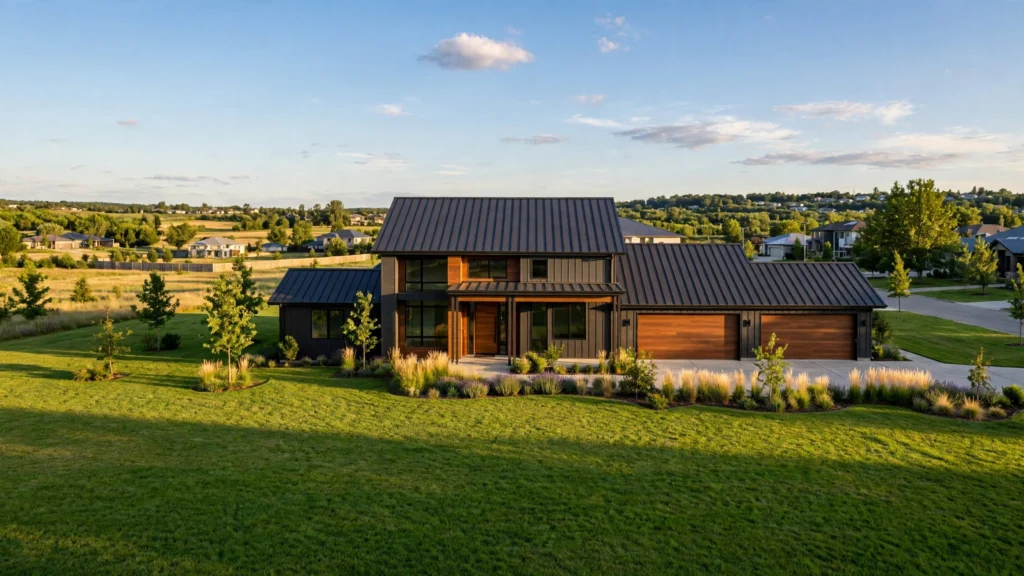
Metal roof cost depends mainly on the panel profile, the metal, and the complexity of your roof. Standing seam steel is the most common choice for homes, while corrugated panels cost less and copper costs far more. Labor, roof pitch, old roof removal, and permits all add to the total, so get a detailed estimate for your roof.
That short answer hides a wide range: two houses of the same size can end up with very different metal roofing bills. A simple ranch with a low-pitch roof is a straightforward job; a steep, multi-gabled house with dormers and a chimney is not. Before you compare numbers, it helps to understand what drives metal roof cost and what you are actually paying for.
For a quick estimate based on your own roof, use the Metal Roof Cost Calculator — then read on for every factor that moves the price.
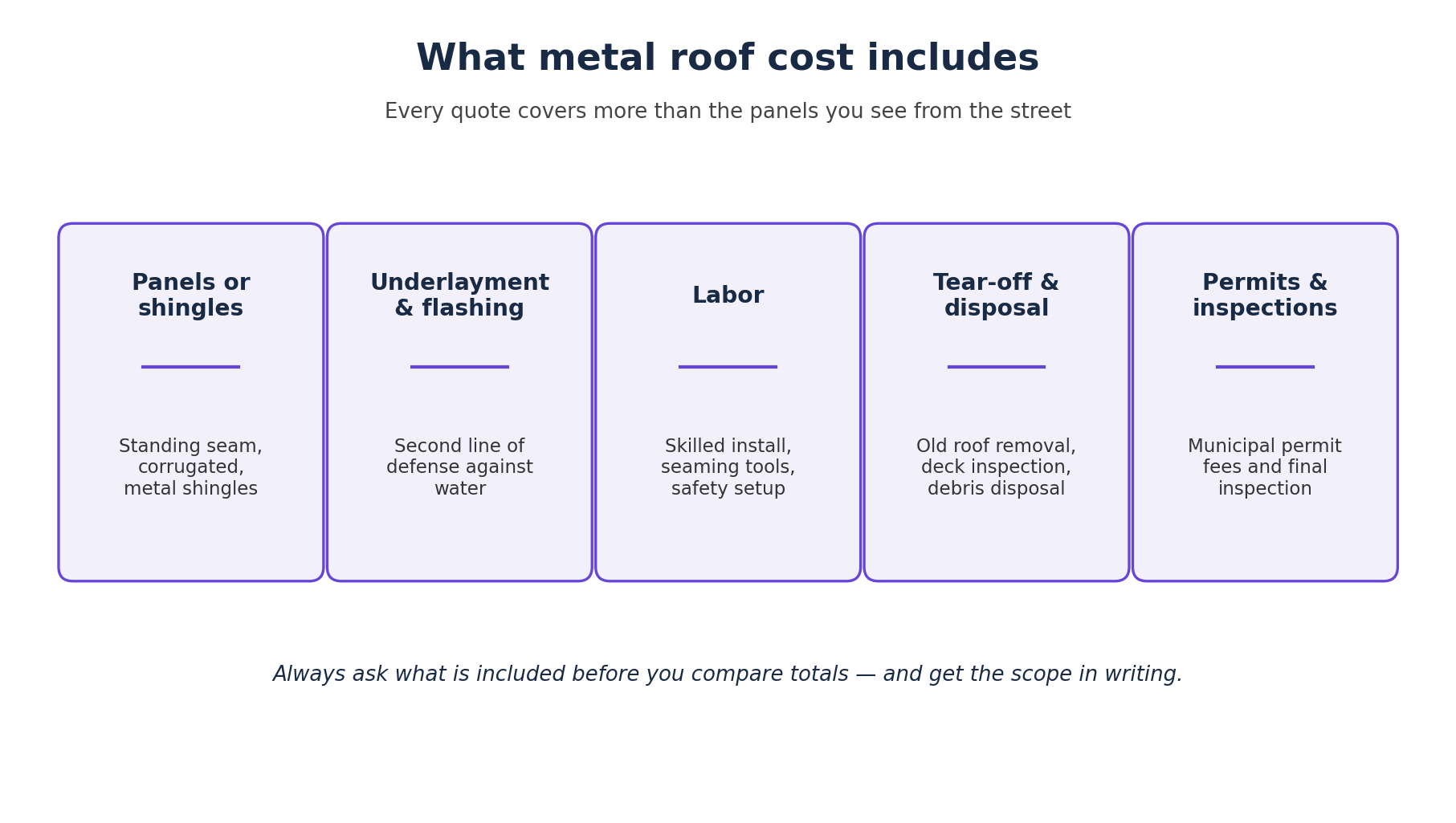
What metal roof cost actually includes
When a contractor quotes a metal roof, the metal roof cost covers more than the panels you see from the street: the metal panels or shingles, underlayment, fasteners and clips, flashing around every penetration, ridge caps, trim, ventilation parts, labor, removal and disposal of the old roof, and permits.
That matters because two quotes can look very different while describing the same roof — one may include tear-off and disposal while the other assumes the new roof goes over the old one. Always ask what is included before you compare totals, and get the scope in writing.
Standing seam vs corrugated vs metal shingles
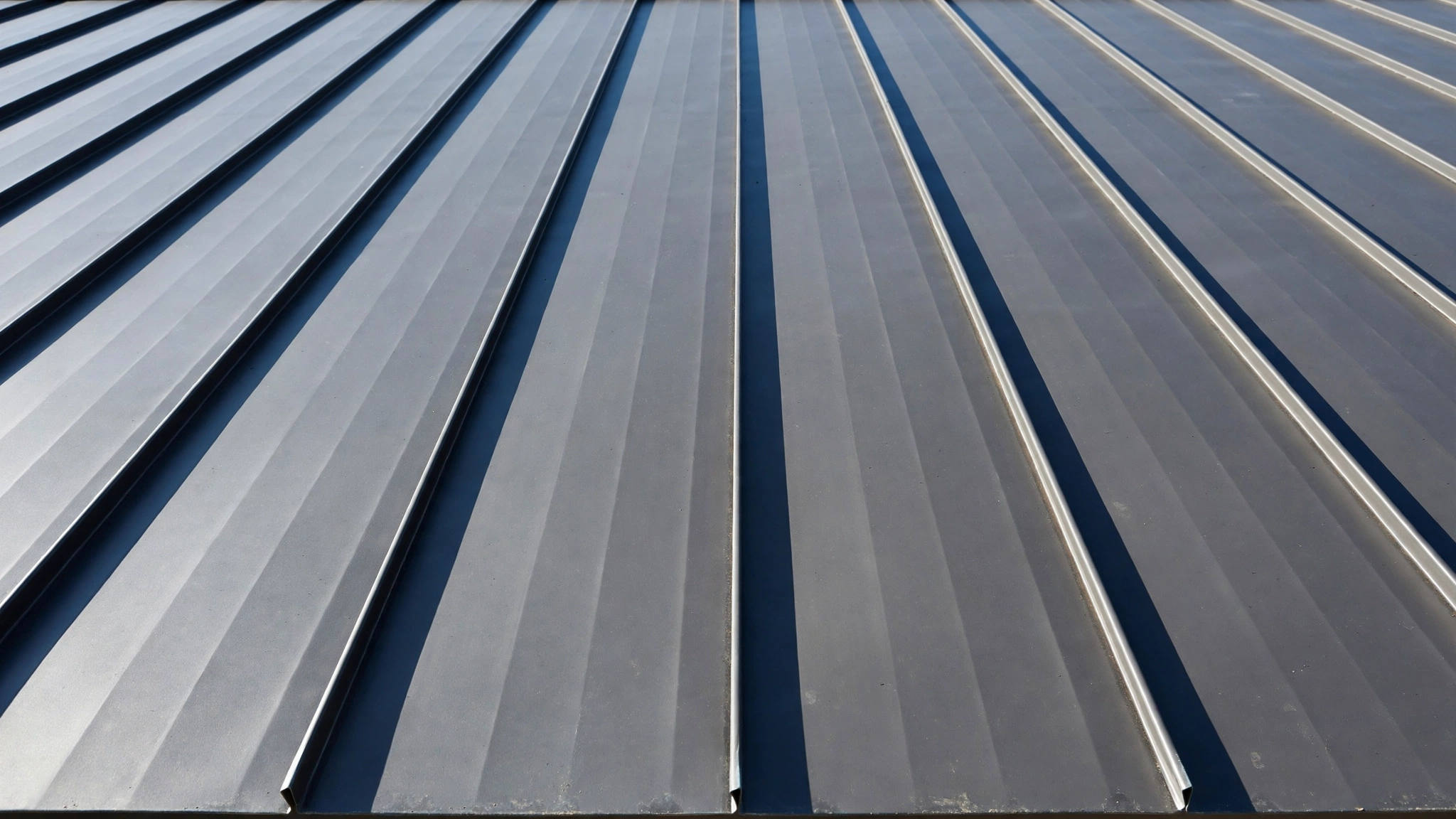
Standing seam is the profile most homeowners picture when they think of a modern metal roof: long, flat panels with raised seams running from ridge to eave, and fasteners hidden beneath the seams, so there are no exposed screw heads to work loose or leak.
Standing seam usually carries the highest metal roof cost of the common profiles: the panels cost more than corrugated sheets, installation takes more skill, and the concealed-fastener system adds clips and labor. In return you get a clean appearance, strong weather resistance, and a long service life, and it is the profile most often recommended for a full residential re-roof.
Corrugated and ribbed panels
Corrugated panels are the wavy or ribbed sheets long used on barns and workshops, increasingly used on homes with a rustic or industrial style. They are fastened with exposed screws through the panel into the deck or battens, which makes installation faster and simpler than standing seam.
Corrugated generally has the lowest metal roof cost of the common profiles. The trade-off is the exposed fasteners: the screws and their rubber washers are the parts most likely to need attention over the years. For a shed, garage, or budget-conscious home, corrugated is often a sensible choice; for a primary residence, most roofers will steer you toward standing seam.
Metal shingles and tiles
Metal shingles are smaller panels stamped and shaped to look like asphalt shingles, wood shakes, slate, or clay tile — the appearance of a traditional roof with the durability of metal, and a good option when a homeowners association expects a conventional look.
Metal shingles usually sit between corrugated and standing seam on metal roof cost, though premium stone-coated steel shingles can cost more than either. Installation is slower than laying long panels because each piece is handled individually, but the result can be very attractive on homes where a standing seam look would feel out of place.
| Profile | Typical relative cost | Fasteners | Best for |
|---|---|---|---|
| Standing seam | Higher | Concealed | Primary homes, long service life, clean modern look |
| Corrugated / ribbed | Lower | Exposed screws | Budget jobs, garages, rustic styles |
| Metal shingles / tiles | Mid-range to higher | Concealed or interlocking | Traditional looks, HOA requirements, shake or tile appearance |
Steel vs aluminum vs copper and zinc
Most residential metal roofs are steel or aluminum; copper and zinc are premium options.
The Metal Roofing Alliance, an industry association for metal roofing manufacturers, offers homeowner resources on metal roofing that are worth a look before you choose a material.
For a broader look at how roofing materials compare on durability, appearance, and upkeep, see our guide to roofing materials compared.
Steel
Steel is the workhorse of residential metal roofing: strong, widely available, and the most affordable of the common metals. Roofing steel is coated to resist rust — galvanized steel has a zinc coating, and Galvalume steel has an aluminum-zinc alloy coating — and a painted finish adds color choice on top.
Aluminum
Aluminum is lighter than steel and does not rust, which makes it popular near the coast and in regions with heavy rain or snow. It is softer than steel, so it can dent more easily, and thicker panels are often specified to compensate.
Aluminum typically adds more to metal roof cost than steel for the same profile, and homeowners often choose it for its corrosion resistance and lighter weight.
Copper and zinc
Copper and zinc are the premium end of metal roofing. Copper starts bright and weathers to a distinctive green patina; zinc develops a soft gray-blue patina and can heal small surface scratches as its protective layer reforms. Both are commonly seen on accent roofs — bay windows, porches, dormers — rather than entire houses, because full copper or zinc roofs cost substantially more than steel or aluminum.
| Metal | Typical relative cost | Key strengths | Things to know |
|---|---|---|---|
| Steel | Lower | Strong, widely available, affordable | Needs a quality coating to resist rust |
| Aluminum | Mid-range | Will not rust, light, good near the coast | Softer than steel, so it can dent; thicker panels often used |
| Copper | Premium | Very long life, distinctive patina | High material cost; often used for accents |
| Zinc | Premium | Very long life, self-healing surface layer | High material cost; needs experienced installers |
Gauge, coatings, and finishes
Gauge describes the thickness of the metal, and the system runs counterintuitively — a lower gauge number means thicker metal. Thicker panels resist denting and oil-canning, and they generally raise metal roof cost.. Going thinner to save money can cost you in appearance and durability.
Coatings and finishes are the other variable. A basic painted finish adds less to metal roof cost than a premium multi-layer coating system, and the difference shows up in how long the color holds and how well the surface resists chalking and fading — a cheaper quote may simply be a thinner finish.
Underlayment and the parts you don’t see
Underlayment is the layer between the roof deck and the metal, and one of the most important parts of the system: your second line of defense if water gets past the panels, and a slip surface that lets the metal expand and contract with temperature changes.
Standard felt underlayment costs less than synthetic underlayment, and synthetic costs less than a self-adhering ice-and-water membrane, which is commonly used along eaves and valleys in cold climates where ice dams can force water uphill. A quote that skimps here is not a bargain — the underlayment is cheap insurance compared with the cost of a leak.
What drives metal roof cost up or down
Roof size and shape
Roofing is priced by area, and the area that matters is the roof surface — not the square footage of the house. A two-story home with the same footprint as a single-story home has roughly the same roof area. Roofers measure in squares, and every square adds material and labor.
Shape matters as much as size. A simple gable roof is fast to panel and wastes little material; a roof with hips, valleys, dormers, and multiple levels needs more cutting, more flashing, more trim, and more time — and leaves more offcuts that cannot be reused.
Pitch and access
A steep roof is slower and more demanding to work on: crews move carefully, materials are harder to stage, and safety equipment adds time. Access matters too — a narrow driveway, heavy landscaping, or no place to stage a delivery truck adds handling time, and multi-story homes need more setup for getting panels to the roof.
Location and labor market
Labor rates vary widely by region, and local labor is a large share of metal roof cost — in areas where few contractors install metal, you may pay more and wait longer.
Installation labor: why metal roofing costs more to install
Metal roofing labor is skilled work, and it adds more to metal roof cost than asphalt shingle labor for good reasons: panels are long and awkward to handle, cuts must be precise, and flashing details demand experience. Standing seam installation requires specialized seaming tools, and a crew that does it every day will be faster and more reliable than one that does it occasionally.
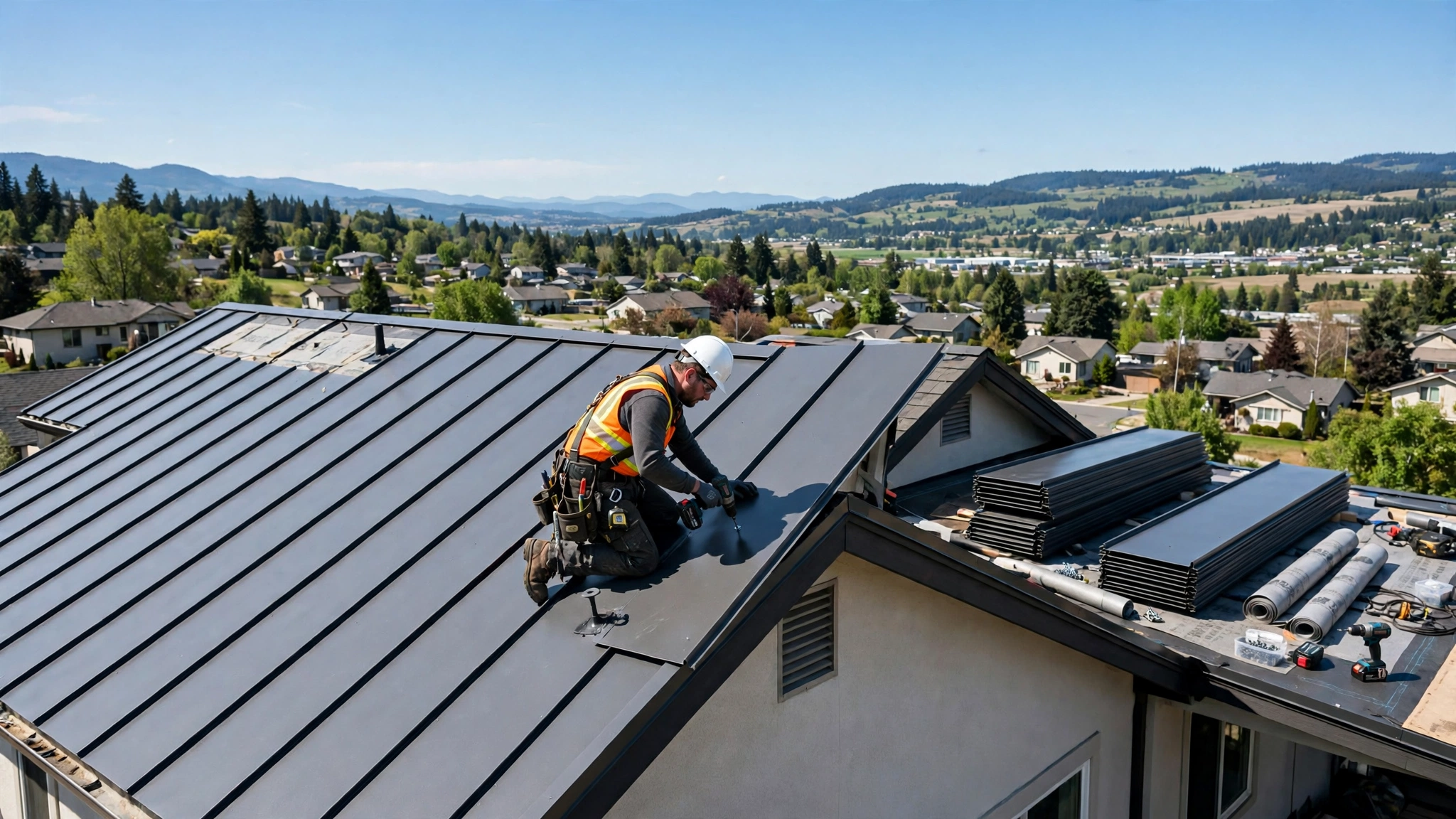
A straightforward roof may take a small crew a few days, while a large or complex roof can take a week or more, and metal work cannot safely proceed in high wind or on wet panels. When you compare quotes, ask how long the job is expected to take and what happens if weather interrupts the work.
If you want a sense of how these factors combine for your own home, the Metal Roof Cost Calculator lets you adjust roof size, material, and profile to see how each choice changes the estimate.
Old roof removal and disposal
Removing the old roof is a significant part of metal roof cost on many jobs: tear-off means stripping the existing roofing down to the deck, disposing of the debris, and inspecting the deck for rot or damage. If the deck needs repairs, that work is added to the job — the new roof is only as sound as the deck beneath it.
Some metal roofs can be installed over an existing shingle roof, which saves the tear-off cost — but this is not always permitted by local code, and covering a damaged deck hides problems. Your contractor should check local requirements and inspect the deck before recommending an overlay.
Disposal fees vary by area and by the weight of the old roofing, and a second layer of old shingles doubles the debris. Ask whether disposal is included in the quote and how it is priced.
Permits and inspections
Most roofing jobs need a permit, and metal roofing is no exception. Permit fees vary by municipality and add a small but real amount to metal roof cost, and the process usually involves submitting the project details and scheduling an inspection once the work is done.
Your contractor normally handles the permit, but confirm that in writing — an unpermitted roof can cause problems when you sell the home or file an insurance claim. In a historic district or HOA neighborhood, check for material restrictions before you sign — some require a specific profile or color.
Metal vs asphalt: a brief comparison
Asphalt shingles are the most common roofing material in the United States, so the metal-versus-asphalt question comes up in almost every re-roof decision: metal roof cost is higher upfront and the roof lasts longer, while asphalt costs less upfront and needs replacing sooner.
If you are weighing a full re-roof rather than a repair, our guide to how much roof replacement costs covers the wider project.
A metal roof typically outlasts an asphalt roof by a wide margin, needs less maintenance, and handles wind, hail, and fire better. Asphalt is cheaper to install, easier to repair in small sections, and available from almost any roofer.
The right choice depends on how long you plan to stay in the home, your budget, and your local climate. If you expect to sell within a few years, the lower upfront cost of asphalt may make more sense; if this is your long-term home, the durability of metal often justifies the higher initial spend.
Longevity and maintenance
One of the strongest reasons to choose metal is how long it lasts: a well-installed metal roof can serve for decades with minimal attention, far longer than a typical asphalt roof. How long it lasts depends on the metal, the coating, the installation quality, and the climate.
Maintenance is light but not zero. Once or twice a year, clear debris from valleys and gutters, check that no fasteners have worked loose on exposed-fastener roofs, and look for damaged flashing or sealant around vents and chimneys. After a major storm, a visual check from the ground is wise. Never let anyone pressure-wash a coated metal roof — it can damage the finish.
Keep your paperwork: the manufacturer’s warranty on panels and coatings and the contractor’s warranty on workmanship are separate, and both matter if something goes wrong. Ask for both in writing.
How to compare metal roofing quotes
When quotes arrive, compare them line by line rather than by the bottom number:
- Profile and metal: standing seam, corrugated, or shingle — and steel, aluminum, copper, or zinc, with the gauge stated.
- Coating and finish: the coating system and color, with warranty details.
- Underlayment: type and coverage, including ice-and-water membrane where needed.
- Tear-off and disposal: included or not, and how the old roof will be handled.
- Flashing and penetrations: every vent, chimney, skylight, and wall junction accounted for.
- Ventilation: ridge vents or other ventilation included in the scope.
- Permits and inspections: who obtains them and whether fees are included.
- Warranties: manufacturer coverage and workmanship coverage, in writing.
Get at least three quotes from contractors who install metal roofing regularly, and ask each for recent local references, so you can compare metal roof cost on equal terms. A contractor who specializes in metal will answer questions about gauge, clips, and flashing without hesitation.
FAQs
Is a metal roof worth the extra cost over asphalt shingles?
It can be, especially if you plan to stay in the home for many years. Metal costs more upfront but lasts far longer, needs less maintenance, and handles severe weather well. If you expect to sell soon, the lower upfront cost of asphalt may suit your plans better.
What is the cheapest type of metal roof?
Corrugated steel panels are generally the most affordable metal roofing option, because the panels are simple to make and quick to install. Standing seam and metal shingles cost more, and copper and zinc sit at the premium end.
Can a metal roof be installed over existing shingles?
Sometimes, but it depends on local building code and the condition of the existing roof and deck. An overlay saves tear-off cost but can hide deck damage and adds weight, so have a contractor inspect the roof first.
How long does a metal roof last?
A well-installed metal roof can last for decades with minimal maintenance, far longer than a typical asphalt shingle roof. The exact service life depends on the metal, the coating, the quality of the installation, and the local climate.
Is a metal roof noisy in the rain?
A metal roof installed over solid decking and underlayment is usually no noisier than other roof types from inside the home.
Does a metal roof need special maintenance?
Very little: clear debris from valleys and gutters, check exposed fasteners periodically, and inspect flashing and sealant around vents and chimneys once or twice a year. Avoid pressure-washing a coated metal roof.
Do I need a permit for a metal roof?
In most areas, yes. Roofing work normally requires a permit and an inspection, and your contractor usually handles the paperwork.
Conclusion
Metal roof cost comes down to a handful of decisions: the profile you choose, the metal it is made from, the size and complexity of your roof, and the quality of the crew that installs it. Standing seam steel is the most popular choice for homes, corrugated panels offer the lowest entry price, and copper and zinc deliver a premium look. Around those choices, tear-off, underlayment, flashing, permits, and labor shape the final number.
The best way to budget is to get detailed, itemized quotes from contractors who install metal roofing every week — and to run your own numbers first. Try the Metal Roof Cost Calculator to see how roof size, material, and profile affect the estimate for your home.
