
Water Heater Installation Cost: Tank vs. Tankless and Key Price Factors.
The short answer
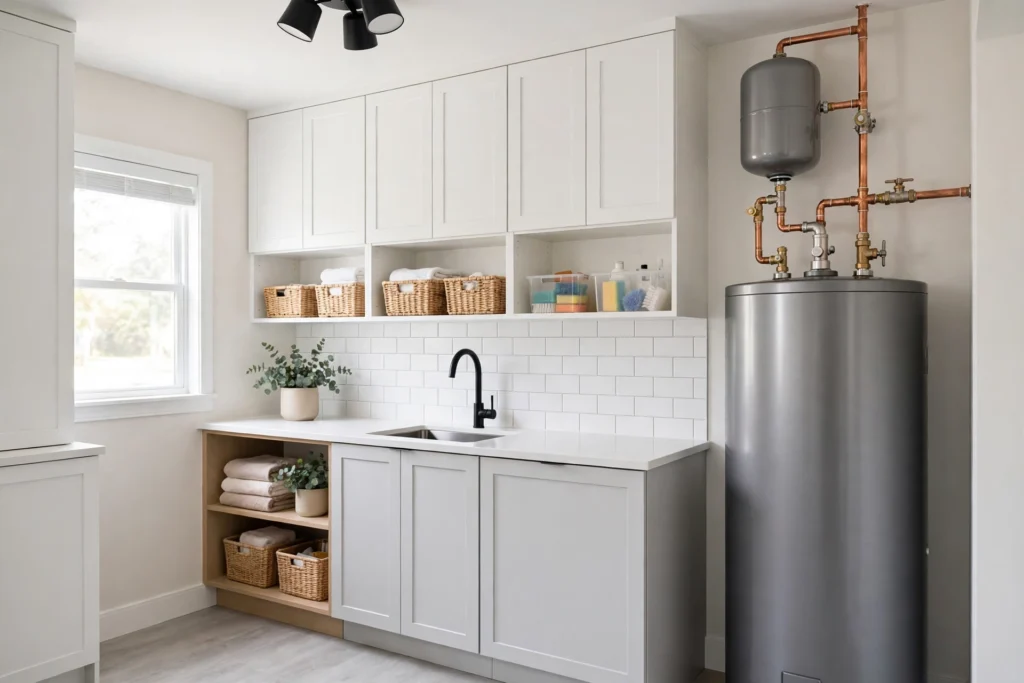
Tank water heaters usually cost less to install than tankless, because the job is often a like-for-like swap. Tankless usually costs more up front, because it may need venting changes, a larger gas line, or electrical work, and because the unit itself is different. The cheaper total on day one is not always the better value over time, and the more expensive option is not automatically right for every home. Compare like-for-like scope, fuel, size, and conversion work first.
Start with the water heater replacement cost calculator to estimate a like-for-like replacement.
The right choice depends on your household size, your hot water habits, and your home’s gas or electrical capacity.
How tank heaters actually work
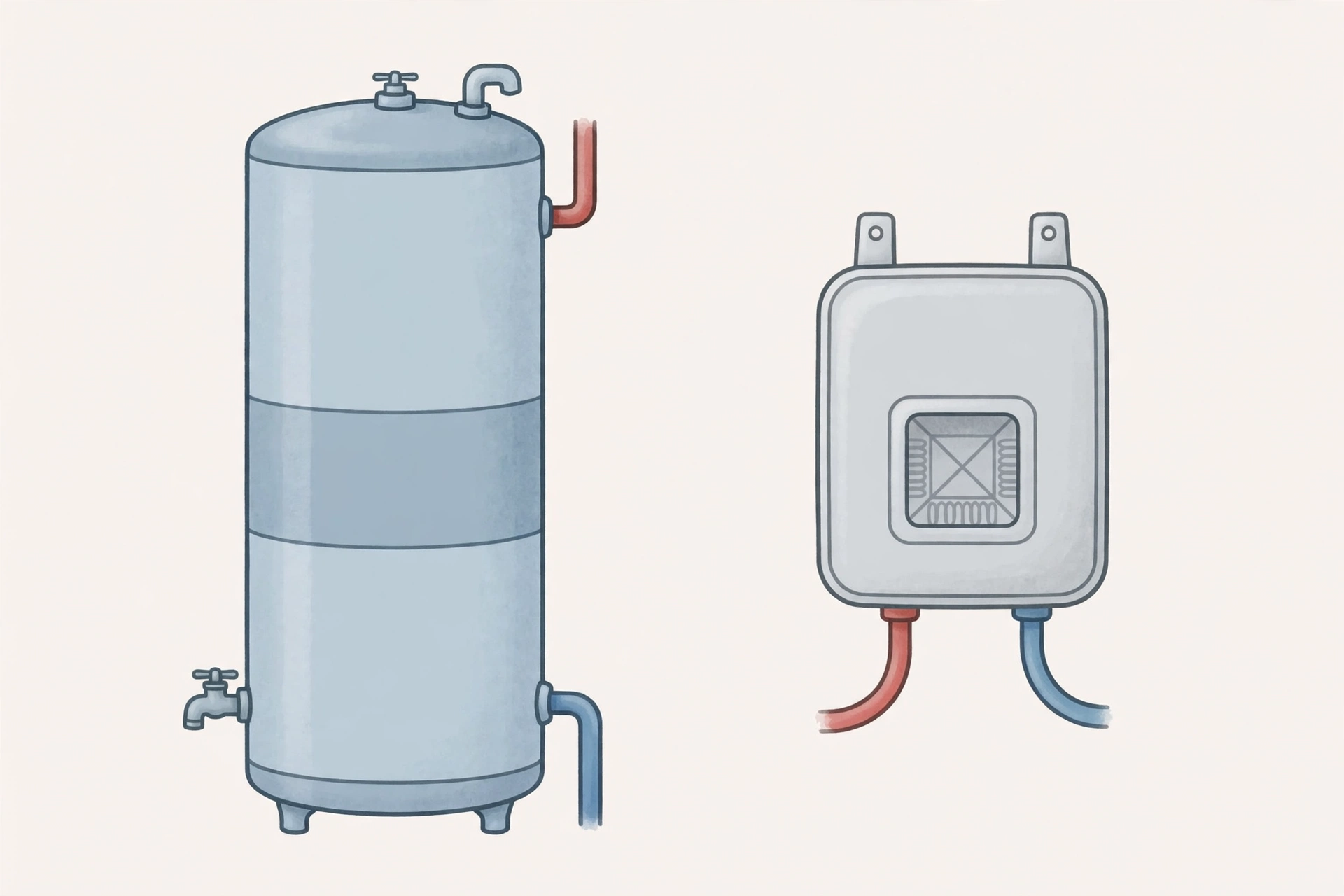
A tank heater is beautifully simple: a 40- or 50-gallon insulated tank keeps water hot around the clock, reheating as you draw from it. When you open a hot tap, hot water leaves the top and cold water enters the bottom to be heated in turn.
The weakness is standby loss — the tank burns energy keeping water hot even when nobody’s home. And capacity is finite: once the tank’s hot water is gone, you’re waiting for recovery. A household that runs the dishwasher, the washing machine, and two showers back-to-back will find the limit.
The strengths are simplicity and cost. Tank heaters are cheaper to buy and install, every plumber knows them, parts are universal, and they work with any home’s existing setup. For many households, that’s the whole decision.
How tankless heaters actually work
A tankless heater has no stored hot water at all. When you open a hot tap, water flows through a heat exchanger — gas-fired or electric — that heats it on demand, as fast as you use it. Close the tap and it shuts down.
The headline benefit is endless hot water: no tank to empty, no recovery wait. The catch is flow rate — the unit can only heat so many gallons per minute. Run two showers and the dishwasher simultaneously on an undersized unit and everyone gets lukewarm water.
Sizing is everything with tankless. The unit must match your peak simultaneous demand and your groundwater temperature — cold incoming water needs more heating power. An undersized tankless is the most common tankless regret, and it’s entirely avoidable with proper sizing.
Tank vs. tankless at a glance
A tank heater stores hot water and keeps it ready. A tankless heater heats water on demand and does not store a full tank. That difference drives size, space, hot-water flow, and installation work.
| Feature | Tank | Tankless |
|---|---|---|
| How it works | Stores and reheats water in a tank | Heats water on demand, no stored tank |
| Space | Needs floor space for the tank | Wall-mounted and compact, frees floor space |
| Hot water supply | Limited by tank size, then needs recovery time | Continuous flow, limited by unit flow rate and simultaneous use |
| Installation | Often a like-for-like swap | May need venting, gas line, or electrical upgrades |
| Maintenance | Regular flushing and anode checks as recommended | Descaling and service as recommended, especially in hard-water areas |
| Upfront cost in general terms | Usually lower for a like-for-like replacement | Usually higher, mainly when conversion work is needed |
What drives the price
Fuel, size, venting, and conversion work matter more than the brand name alone. A gas tank in a garage with existing venting is a different job from a tank-to-tankless conversion that needs a new vent route and a larger gas line. Permits, disposal of the old unit, and access also change the total.
| Cost driver | How it affects the price | What to check in your quote |
|---|---|---|
| Fuel type | Gas, electric, and other fuels need different venting and connections | Fuel and vent type named |
| Tank size or tankless flow rate | Larger tanks and higher-flow tankless units cost more and need more capacity | Size in gallons, or flow rate and bathroom count |
| Like-for-like or conversion | Conversion adds venting, gas line, electrical, or condensate work | Job type stated: like-for-like or conversion |
| Venting | Standard vent, power vent, and condensing venting differ in work and parts | Vent type and route |
| Gas line or electrical capacity | A larger gas line or a dedicated circuit adds work | Capacity check included |
| Location and access | Garage, basement, attic, or tight closet changes labor time | Location and access noted |
| Permits and disposal | Permit and old-unit disposal rules vary by location | Permit and disposal included or separate |
| Add-ons | Expansion tank, mixing valve, recirculation, and other add-ons add cost | Each add-on listed separately, not hidden in a lump sum |
Worked examples, like-for-like replacement
The table below is from the water heater replacement calculator page, for a like-for-like replacement only. Do not present these figures as a quote for every home. Fuel, size, venting, and location will change your total.
| System | 40–50 gallon or standard | Budget | th | Premium |
|---|---|---|---|---|
| Electric tank, 40–50 gallon | $875 – $1,050 | $1,450 – $1,700 | $2,350 – $2,850 | |
| Gas tank, 40–50 gallon | $1,000 – $1,200 | $1,650 – $1,950 | $2,700 – $3,250 | |
| Gas tankless, standard | $1,750 – $2,100 | $2,800 – $3,350 | $4,550 – $5,450 |
Use the tank water heater cost calculator for a tank-specific estimate. Use the tankless water heater cost calculator for a tankless-specific estimate.
Conversion example, separate from the like-for-like table above: converting from a tank to a standard two-bathroom gas tankless heater is shown on the tankless calculator page as Standard $4,200 – $5,000. That higher figure reflects conversion work, not a like-for-like swap, so do not compare it directly with the like-for-like tankless range in the table above.
How to choose
- Start with household demand: bathrooms, simultaneous showers, laundry, and peak use, not just the size of the old unit.
- Check fuel and venting first: what fuel is already available, what vent route is possible, and whether gas or electrical capacity needs an upgrade.
- Compare total scope, not just the unit price: heater, labor, venting, gas or electrical work, permits, disposal, and add-ons.
- Ask about maintenance: flushing, descaling, anode replacement, and service access, and what the installer recommends for your water hardness.
- Ask about warranties in writing: product warranty and workmanship warranty are different, and both should be named.
The household math: which one fits you
Small households with modest, spread-out hot water use are the tankless sweet spot — endless hot water, no standby waste, and the unit lasts longer. Large families with simultaneous demand need either a big tank or a properly sized (larger) tankless unit.
Your home’s infrastructure decides too. Gas tankless needs adequate gas line capacity and venting; electric tankless needs serious amperage that older panels may not have. If your home can’t support tankless without upgrades, factor those into the decision.
And be honest about how long you’ll stay. Tankless costs more upfront and pays back over years through efficiency and longevity. If you’re selling next year, the payback stays with the house — a new tank heater is the rational choice.
The maintenance routine that decides lifespan
Water heaters rarely die of old age alone — they die of neglected maintenance. In a tank heater, sediment settles on the bottom, forcing the burner or elements to work harder, while the anode rod slowly sacrifices itself to protect the steel. Once the anode is gone, the tank itself starts corroding.
For tankless units, the enemy is scale. Hard water leaves mineral deposits inside the heat exchanger, narrowing passages and insulating the heating surfaces. A scaled-up tankless runs hotter, works harder, and fails earlier — descaling with a pump and vinegar solution, typically once a year in hard-water areas, keeps it efficient.
Whatever you choose, put maintenance on the calendar: flush the tank annually, check the anode rod every few years, and descale a tankless on schedule. An hour of maintenance a year is what separates a heater that dies early from one that reaches the top of its lifespan range.
Frequently asked questions
Is tankless always cheaper to run?
Not necessarily for every home. Tankless avoids keeping a full tank hot, but total running cost depends on fuel prices, usage, efficiency, and installation. Compare the full installed scope and your usage, not just the unit type.
Can any home switch from tank to tankless?
Often yes, but not always without extra work. Venting, gas line size, electrical capacity, condensate drainage, and location must all be checked first. A conversion quote should name each change.
What size tank do I need?
It depends on household size, bathrooms, and peak simultaneous use. A too-small tank runs out during peak use, while a much larger tank costs more to buy and run. Use a calculator and installer sizing check, not just the old tank size.
Does a tankless heater give endless hot water?
It gives continuous hot water up to its flow rate. If too many showers and appliances run at once, flow or temperature can drop. Size by peak demand, not by a single shower.
Should I replace a working heater early to go tankless?
Usually only if the old unit is failing, undersized, or the conversion benefits clearly outweigh the extra installation cost. If the old unit still works well, compare repair, like-for-like replacement, and conversion on total cost and remaining life.
How long do water heaters last?
Tank heaters typically last 8–12 years; tankless units often last 15–20 or more with proper maintenance. Hard water shortens both — scale buildup is the silent killer. Annual flushing (tank) or descaling (tankless) is the maintenance that decides where in the range you land.
Can I switch from tank to tankless myself?
No — this is licensed-plumber territory. The switch involves gas line sizing, venting, electrical work, and often water line reconfiguration, plus permits and inspections in most jurisdictions. DIY water heater installs risk gas leaks, carbon monoxide, and voided insurance.
Next step
Note your fuel, current heater type and size, bathroom count, vent type, and whether you want a like-for-like replacement or a conversion. Then use the water heater replacement cost calculator linked at the top of this guide for a starting estimate, and the tank and tankless calculators linked above for type-specific estimates. Take those estimates and the checklist into contractor conversations, so you compare complete scopes, not just totals. Run the water heater replacement cost calculator linked at the top with your household details before you decide.
