
How to Hire a Roofing Contractor: Quotes, Licenses, and Red Flags
The short answer
The contractor you choose matters more than the shingle you choose. A great installer with mid-grade materials beats a bad installer with premium materials every time. Get at least three written quotes, verify license and insurance yourself, and never pay in full upfront.
Know your numbers before the quotes arrive — run the roof replacement cost calculator first.
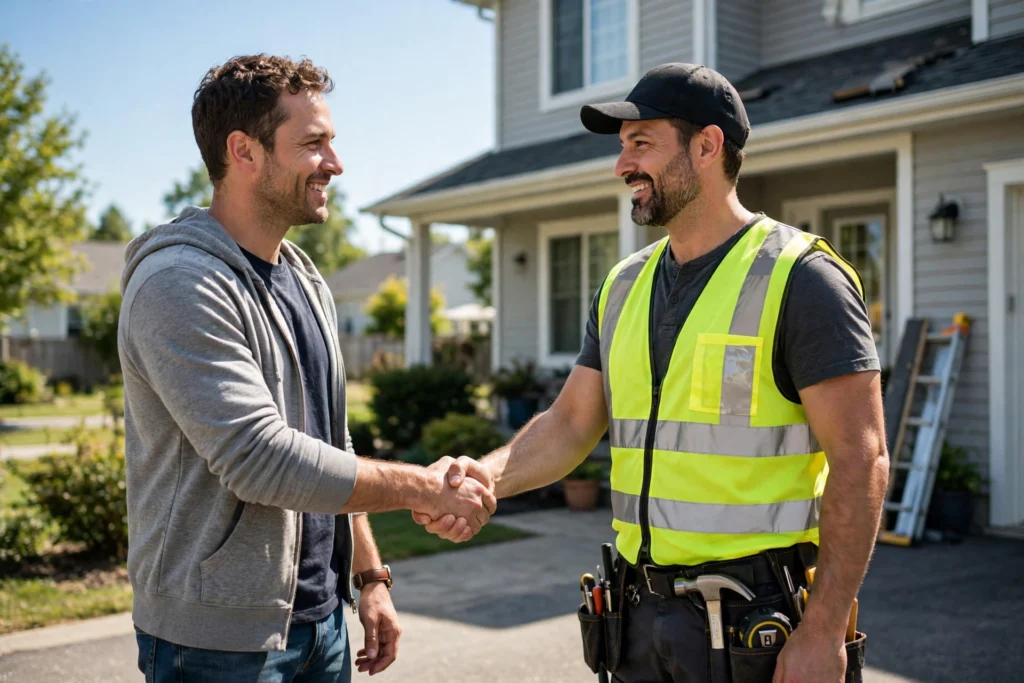
Your roof is the most exposed part of your home — the contractor matters more than the shingle brand.
Why roofer hiring mistakes are expensive
A bad roofing job doesn’t leak on day one. It leaks in year three, when the warranty is a phone number that doesn’t answer. Improper nailing, skipped underlayment, valleys flashed wrong — these mistakes hide under shingles until water finds them.
And roofing mistakes are uniquely expensive because the evidence is the damage. A leak doesn’t just mean new shingles — it means rotted decking, stained ceilings, and mold in the attic. The real price of a cheap roof includes everything the water touches.
The good news: great roofers are easy to spot. They’re licensed and insured, they explain the system (not just the shingles), their bids are itemized, and they guarantee the workmanship in writing.
The hiring checklist
Work through these steps for every contractor you consider. Anyone legitimate will expect them.
| Step | What to do | Why it matters |
|---|---|---|
| Get three written quotes | At least three, itemized the same way | Reveals the real price range and exposes outliers |
| Verify the license | Check the license number with your state or locality | An expired or borrowed license is a walk-away sign |
| Verify insurance | Ask for liability and workers’ comp certificates, then confirm | Without it, an on-site injury can become your problem |
| Check references and reviews | Past customers, photos of completed jobs, review patterns | Consistent complaints about the same issue are a pattern, not bad luck |
| Get everything in writing | Scope, materials, timeline, warranties, payment schedule | Verbal promises are worth nothing if things go wrong |
| Confirm both warranties | Manufacturer warranty plus workmanship warranty, in writing | You need to know how long each lasts and what voids them |
| Agree a payment schedule | Deposit, progress payments, final payment on completion | Protects you if the job stalls |

Licenses and insurance that actually matter
Roofing is high-risk work, which makes the paperwork more important here than in almost any other trade.
| Credential | What it proves |
|---|---|
| State roofing/contractor license | Legally allowed to do the work; verify it’s current |
| Liability insurance | Protects your property if something goes wrong |
| Workers’ comp | Critical for roofing — protects you if a worker is injured on your roof |
| Manufacturer certification | Factory-trained on the specific shingle system |
| Local references | Track record you can actually check |
Workers’ comp deserves special attention. Roofing has one of the highest injury rates in construction. If an uninsured worker is hurt on your roof, you can be liable. Always verify — don’t take anyone’s word for it.
Red flags that mean walk away
Any one of these is reason enough to cross a contractor off your list, no matter how good the price sounds.
| Red flag | What it tells you |
|---|---|
| Knocks on your door right after a storm | Storm chasers move town to town; good luck finding them later |
| No license, or won’t show it | They may not be legally allowed to do the work |
| Demands full payment upfront | Legitimate contractors never need all the money before starting |
| No written contract | Nothing is enforceable without one |
| Bid far below the others | Something is missing: materials, insurance, warranty, or all three |
| No proof of insurance | You carry the risk if someone gets hurt |
| High-pressure “today only” tactics | A good quote is still good tomorrow |
| No local references | You can’t check work you can’t see |

Comparing quotes line by line
Quotes are only comparable when they describe the same job. Ask every bidder to break theirs down the same way, then compare line by line.
| Line item | What to check |
|---|---|
| Material and product line | Exact shingle or material name, not just “architectural shingles” |
| Tear-off and disposal | How many layers removed, disposal included |
| Underlayment and flashing | Grade of underlayment, new flashing |
| Ventilation | Ridge vent or other ventilation included |
| Warranty terms | Both warranties named, with lengths, in writing |
| Timeline | Start date and completion commitment |
| Payment terms | Deposit, milestones, and final payment conditions |
Questions to ask before you sign:
—Are you licensed and insured — can I see the certificates?
—Who exactly will be on my roof — your crew or subcontractors?
—What does the workmanship warranty cover, and for how long?
—How do you handle unexpected deck damage found during tear-off?
—What is the payment schedule, and when is the final payment due?
—Will you handle permits and inspections?
The estimate conversation
A roofing bid should read like a system description, not a price tag. It should name the shingle product and warranty tier, the underlayment, the flashing plan for valleys and penetrations, the ventilation changes, the tear-off and disposal scope, and the workmanship warranty — in writing.
Ask every bidder the same questions: full tear-off or overlay, exactly which products, how they’ll protect landscaping and siding, who’s supervising the crew, and what the payment schedule is. Never pay the full amount upfront — a reasonable deposit with the balance on completion is the standard.
Watch for the storm-chaser pattern: out-of-area crews, high-pressure ‘today only’ pricing, and bids that appear right after hail season. Local roofers with a physical office and years of local references are worth more than any discount.
What to expect on installation day
A full roof replacement usually takes one to three days for a typical single-family home, depending on the roof’s size, pitch, and the weather. Your contractor should confirm the start date in writing and spell out the daily routine — when the crew arrives, when tear-off starts, and what time the site is tidied each evening. Ask in advance how they protect an exposed roof if bad weather rolls in overnight.
Expect noise, vibration, and some mess — tear-off is the loudest phase, so plan around it if you work from home. A professional crew lays tarps over landscaping and siding, warns you that dust will fall into the attic, keeps driveway access clear for the disposal trailer, and runs a magnetic nail sweep across the lawn and driveway at the end of every day. Get the name and number of the on-site supervisor before work begins.
Stay available but out of the way. The supervisor should flag any surprises — rotted decking, hidden layers, flashing that needs replacing — and explain the fix before proceeding. Surprises are normal on older roofs; what matters is that they are documented and agreed in writing, not sprung on the final invoice.
The final walkthrough is part of the job, not a favour. Before the last payment is due, view the roofline from the ground, confirm flashing, vents, and gutters are straight and sealed, and check the yard is nail-free. Most importantly, collect the workmanship warranty paperwork before the crew leaves. A roofer who stands behind the work welcomes the inspection.
Frequently asked questions
How many quotes should I get for a roof replacement?
At least three written quotes from licensed contractors. Three quotes reveal the real price range for your roof and make outliers — suspiciously low or high — easy to spot.
What license and insurance should a roofer have?
A valid contractor license for your state or locality, plus general liability insurance and workers’ compensation coverage. Ask for certificates and verify them — don’t take anyone’s word for it.
Should I ever pay a roofer in full upfront?
No. A reasonable schedule is a deposit to secure the job, progress payments as work is completed, and the final payment only when the work passes your inspection. Full payment upfront is a major red flag.
What is the difference between a workmanship warranty and a manufacturer warranty?
The manufacturer warranty covers defects in the roofing material; the workmanship warranty covers the installer’s labor. You need both in writing, and you should know how long each lasts and what voids them.
How do I know if a roofing quote is too low?
If one bid is far below the others, something is missing — cheaper materials, skipped tear-off, no insurance, or no warranty. Compare line items, not just totals, and be wary of any quote that won’t put everything in writing.
Should I get multiple roofing quotes?
Yes — three written quotes is the sweet spot. Make sure each roofer is bidding the same scope: tear-off vs overlay, same shingle tier, same underlayment and flashing details. Roofing quotes that differ wildly usually differ in scope, not just price — the line items reveal who’s thorough.
Do roofers need manufacturer certifications?
Not legally, but they matter. Manufacturer certifications mean the roofer is factory-trained on that shingle system and can offer the manufacturer’s enhanced warranties — which are stronger than a contractor-only warranty. For a full replacement, a certified installer is worth seeking out.
Next step
Run the roof replacement cost calculator linked at the top of this guide so you walk into every quote conversation knowing your numbers. Then work the checklist above for each contractor, compare the quotes line by line, and sign only when everything is in writing. Start with the roof replacement cost calculator linked at the top so you know the ballpark before anyone climbs a ladder.
