
How Much Does Vinyl Siding Cost for a House?
Direct answer
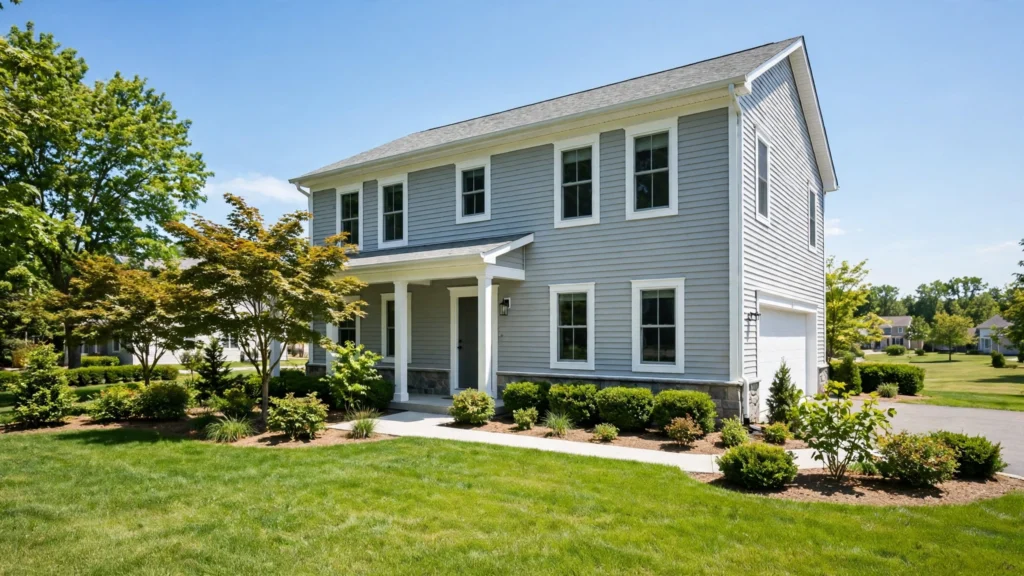
The cost of vinyl siding for a house depends mainly on how much exterior wall area needs to be covered, the quality and profile of the siding, and how much preparation the walls need before the new siding goes on. A small, single-story home with simple, flat walls will usually cost less to side than a larger, two-story home with gables, dormers, bay windows, and many corners — even if the two homes have the same floor area inside. That is because siding is priced by wall area, not by the square footage of the rooms inside the house. Because labor rates, material prices, and home shapes vary so much across the United States, there is no single national price that fits every house. The most reliable way to budget is to work through the cost drivers below, then use the Vinyl Siding Cost Calculator to build an estimate for your own home, and compare detailed written quotes from qualified local installers.
Use the Vinyl Siding Cost Calculator early in your planning. It helps you see how wall area, siding quality, and removal of old siding change the estimate before you invite installers to quote.
House square footage is not wall area
This is the most common source of confusion in vinyl siding pricing, and it is worth getting right before you compare any quotes. The square footage of a house usually means its interior floor area — the living space inside. Vinyl siding, by contrast, covers the outside walls. Those two numbers are related, but they are not the same, and they do not move together in a simple way.
A two-story home has roughly twice the wall area of a single-story home with the same footprint, because the walls are twice as tall. A home with a complex shape — gables, dormers, bump-outs, and bay windows — has more wall area, and more corners and edges to trim, than a simple rectangular home of the same floor area. Tall walls need more siding and more labor, and they may need scaffolding or longer ladders. Windows and doors reduce the area of siding needed, but they add trim work around each opening, which takes time and material of its own.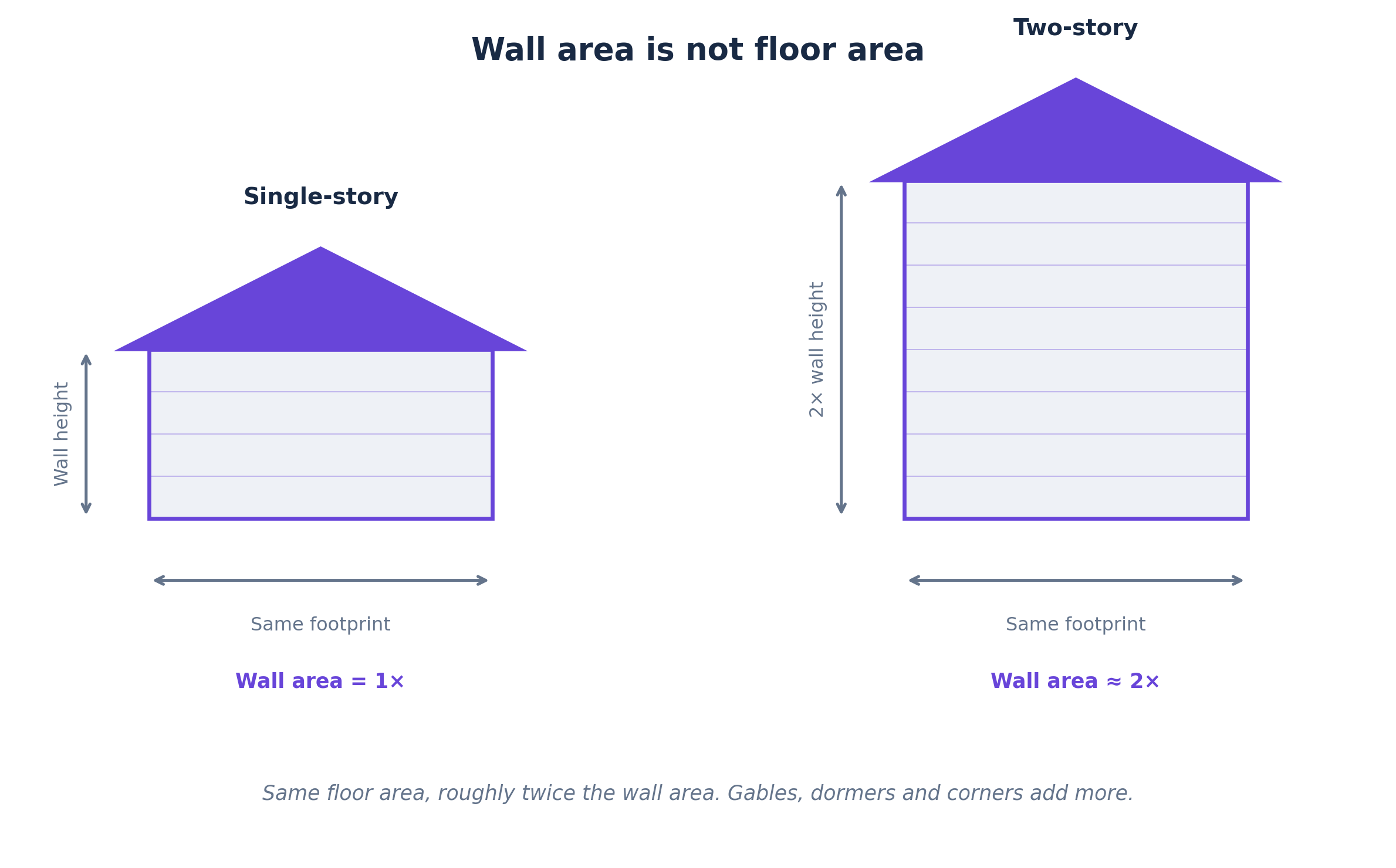
When an installer measures your home, they should measure the exterior walls: the length and height of each wall, minus the larger openings, plus an allowance for gables and for cutting waste. Ask how the wall area was measured, whether gables were included, and what waste allowance was used. A quote that is based on interior floor area alone, without a wall measurement, is a guess, not an estimate.
What a per-square-foot figure includes — and what it leaves out
Homeowners often search for vinyl siding cost per square foot, and that figure can be useful as a rough comparison, but only if you know what it covers. A per-square-foot figure usually means the cost for each square foot of wall area covered, and it may or may not include the siding panels, the trim, the house wrap, the fasteners, the labor, the removal of old siding, and the disposal of waste. Some figures cover materials only. Others cover materials and labor for a straightforward installation on clean, flat walls. Almost none of them cover the full range of extras that a real house may need: repairs to the sheathing underneath, new trim around windows and doors, insulation, soffits and fascia, or work on a second story.
That is why two per-square-foot figures can look very different and both be honest. One may be a materials-only figure for basic siding. The other may be a fully installed figure that includes removal, house wrap, trim, and disposal. Before you compare figures, ask what is included in each one. A useful question is: does this figure include removal of the old siding, house wrap, trim, and disposal, or is it panels and labor only? If an installer cannot answer that clearly, the figure is not comparable with another installer’s figure.
Siding profile, thickness, and quality
Vinyl siding is not one product. It comes in different profiles, thicknesses, and quality grades, and those differences affect both the price and how the finished home looks and holds up.
Profile means the shape of the siding: horizontal lap siding in different exposures, vertical siding, board-and-batten, and shake or shingle styles that imitate wood. A wider lap exposure covers more wall per panel and can change the look of the house, while a narrower exposure, a vertical profile, or a shake style can take more panels and more labor. The profile you choose should suit the style of your home and the look you want, not just the lowest price.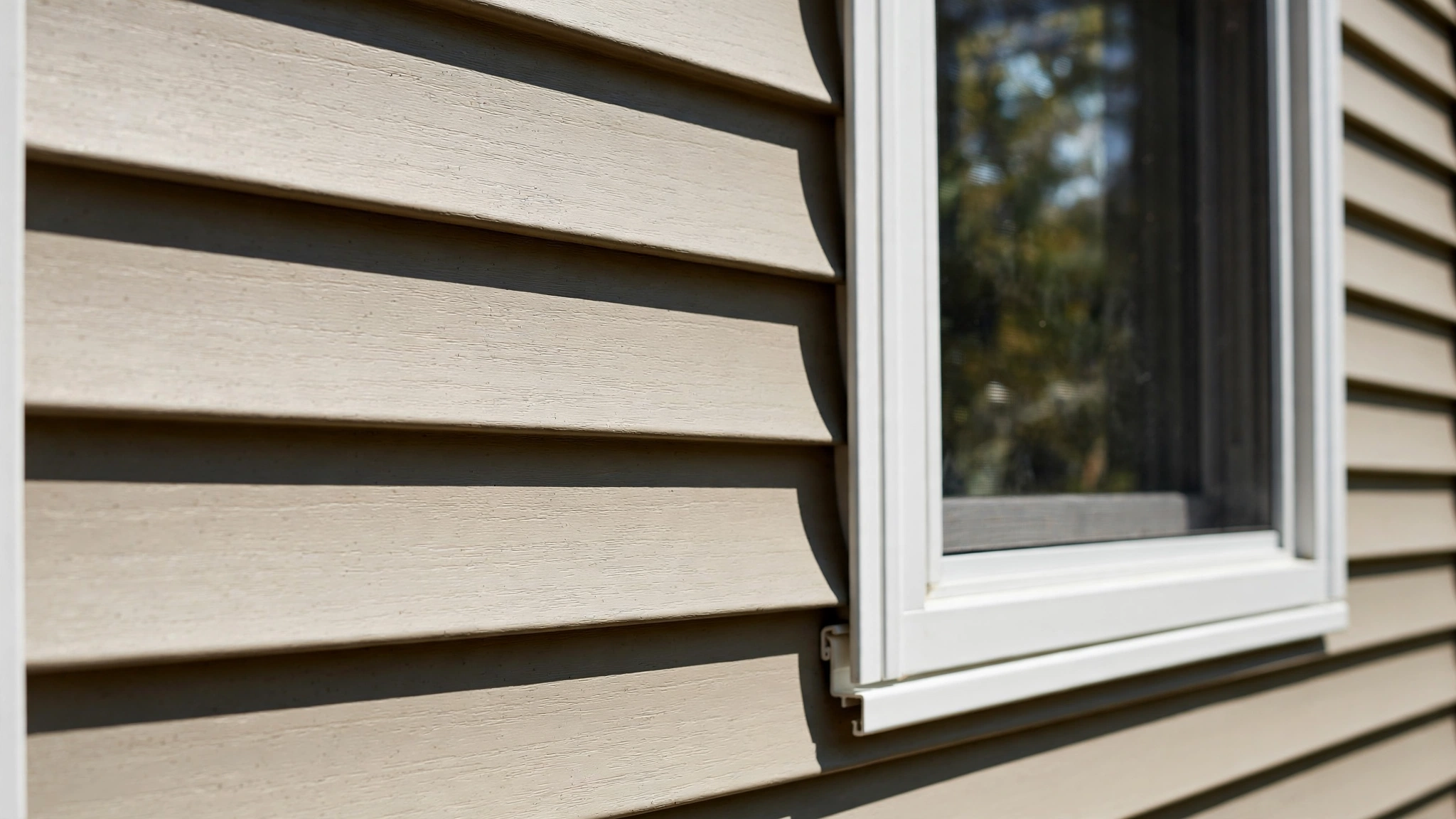
Thickness is measured in mils, and thicker siding is generally more rigid and more resistant to denting and warping. Thinner siding can be more flexible and may show waviness on a wall that is not perfectly flat. Quality also shows in the color: some siding is colored through the panel, so a scratch is less visible, while other siding has a surface color that can show damage more readily. Fade resistance, wind rating, and warranty length also vary by product. Ask the installer to name the exact product, its thickness, its wind rating, and its warranty, and to explain what the warranty covers — the panels, the finish, or both — and for how long.
Trim, corners, soffits, and fascia
Trim is easy to overlook in a budget, but it is a real part of the job. Every outside corner, inside corner, window, door, and wall edge needs a trim piece that is cut, fitted, and fastened. J-channels around windows and doors, corner posts, starter strips, and the trim where the siding meets the roofline all take material and time. A home with many windows and doors, or with decorative trim, will need more of this work than a home with long, plain walls.
Soffits and fascia — the underside of the roof overhang and the board at the edge of the roof — are often done at the same time as the siding, but they are not always included in a siding quote. Ask whether soffits and fascia are included, what material they will be, and whether gutters will be removed and refitted as part of the job. If the gutters stay in place, ask how the installer will work around them. If they are removed, ask who refits them and whether that is in the price.
House wrap, insulation, and what lies underneath
Vinyl siding is a cladding, not a weather barrier on its own. Underneath it, most homes need a house wrap or similar weather-resistive barrier that sheds water and reduces air leakage. If your home already has a sound house wrap, it may be reused. If it is torn, missing, or badly installed, it should be repaired or replaced before the new siding goes on. That work adds material and labor, but it protects the walls behind the siding.
Insulated vinyl siding has a foam backing bonded to the panel. It can add stiffness and a small amount of insulation, and it can help the siding sit flatter on the wall. It usually costs more than uninsulated siding, and the insulation value it adds is modest compared with wall insulation itself. Do not choose insulated siding as a substitute for proper wall insulation. Ask the installer what the foam backing actually adds, and whether the wall itself needs insulation work before the siding is fitted.
What lies underneath the old siding matters too. Once the old siding comes off, the installer may find damaged sheathing, rot, insect damage, or water staining that was hidden for years. That damage needs repair before new siding goes on, and it cannot be priced accurately until it is seen. Ask the installer how hidden damage will be handled: will they stop and show you, will they price the repair separately, and is there an allowance in the quote for a small amount of sheathing repair? A quote that assumes perfect walls underneath is optimistic, not dishonest, but you should know what happens if the walls are not perfect.
Removing old siding and preparing the walls
Removing old siding is a separate job from fitting new siding, and it should be priced separately in the quote. The old siding must be taken down carefully, especially if it is brittle, painted with old paint, or attached in a way that could damage the sheathing. Waste must be collected, loaded, and disposed of in line with local rules. If the old siding is fiber cement, wood, or another material, disposal may need different handling than vinyl.
Preparation also includes checking the walls for flatness. Vinyl siding follows the shape of the wall behind it, so a wavy wall will show through as wavy siding. Shimming, furring, or repairing uneven areas takes time, but it is what makes the finished job look straight. Ask the installer what preparation is included, whether the walls will be checked for flatness, and how uneven areas will be dealt with.
Labor and installation work
Labor is usually the largest part of a vinyl siding job after the siding itself, and it varies with the shape and height of the home. A single-story home with long, flat walls and good access is faster to side than a two-story home with gables, dormers, and many corners. Working at height needs scaffolding or safe ladder work, and that takes longer and needs more care. Weather matters too: vinyl siding expands and contracts with temperature, so it must be fastened with room to move, and it should not be fitted in a way that pins the panels tight. An installer who rushes the fastening can leave panels that buckle in heat or rattle in wind.
A thorough installer will also allow time for the details: cutting panels accurately around windows and doors, fitting trim neatly, leaving the right gaps for expansion, and checking that panels are level and aligned. Those details are what separate a neat job from one that looks uneven up close. When you compare quotes, check that the labor covers the full installation, the trim, the soffits and fascia if included, and a final walk-through with you to check the finish.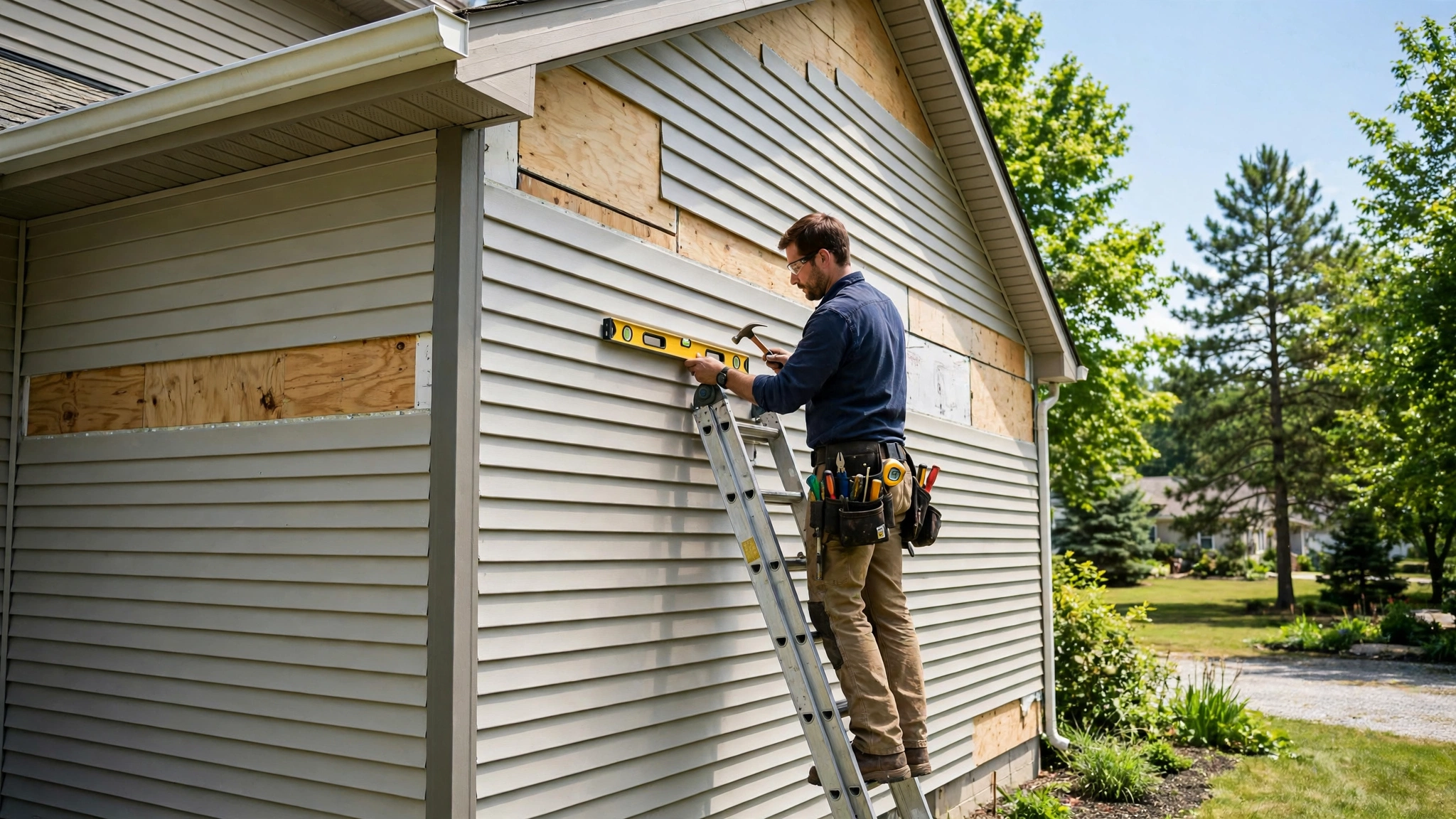
Additional costs to budget for
Beyond the siding, trim, and labor, several items can add to the total. Permits are required in some areas for siding work, particularly if sheathing or structural work is involved, and permit fees vary by locality. Scaffolding or lift hire may be needed for a tall home. Repairs to sheathing, framing, or flashing found once the old siding is off are often priced separately. New shutters, vents, light fixtures, or house numbers that need to be removed and refitted can add small amounts that add up. And if the siding work is part of a larger project — new windows, new gutters, or new insulation — those should be quoted separately so you can see what the siding itself costs.
What can push the cost up — and what can keep it down
Several factors commonly raise the cost of vinyl siding: a larger wall area, a second story, a complex home shape, a premium profile or thicker siding, insulated siding, extensive trim, removal of old siding, repairs to the sheathing underneath, and work at height. A simple, single-story home with flat walls, sound sheathing, and a basic lap profile will usually be at the lower end of the range for its size.
A few choices can keep the project simpler without cutting corners. Choosing a standard lap profile in a common color is usually less expensive than a specialty profile or a custom color. Keeping the trim straightforward, where it suits the home, reduces labor. And making sure the walls are sound and the house wrap is in good order before the siding goes on avoids the cost of stopping the job to repair hidden damage. What should not be cut is the preparation: house wrap, flashing, and proper fastening are what keep water out and keep the siding looking straight for years.
How to compare installer quotes
Do not compare quotes on the headline total alone. Ask each installer for an itemized written quote that names the siding make, product, profile, thickness, and color, the wall area measured, the trim included, the house wrap, the removal and disposal of old siding, the soffits and fascia if included, the permit if required, and the making-good. Check that each quote covers the same scope — a cheaper quote that leaves out removal, trim, or house wrap is not cheaper, it is incomplete.
Useful questions to ask every installer: How did you measure the wall area, and does it include gables? What product, profile, and thickness are you quoting, and what is its warranty? Is removal and disposal included, and what happens if you find damaged sheathing? Is house wrap included, and is the siding insulated or uninsulated? Are soffits, fascia, and gutters included? How will the siding be fastened to allow for expansion? How long will the work take, and what access do you need? A good installer will answer these directly and in writing.
Planning checklist before you book
- Ask for the exterior wall area, measured wall by wall, not the interior floor area.
- Note the number of stories, gables, dormers, windows, and doors.
- Choose a profile and color that suit the home, and ask for the exact product name and thickness.
- Confirm whether removal, house wrap, trim, soffits, and fascia are included.
- Ask how hidden damage to the sheathing will be handled and priced.
- Confirm who arranges any permit, and what it costs.
- Agree what making-good, cleanup, and disposal are included in the price.
- Use the Vinyl Siding Cost Calculator to build an estimate for your home before you compare quotes, so you can spot a quote that is missing a major item.
FAQs
Q: How much does vinyl siding cost for a house?
A: It depends on the exterior wall area, the number of stories, the shape of the home, the siding profile and quality, and how much preparation and removal work is needed. There is no single national price. Use the Vinyl Siding Cost Calculator to build an estimate for your home, then compare itemized quotes from qualified local installers.
Q: Is vinyl siding priced by house square footage or wall area?
A: It is priced by exterior wall area. House square footage usually means interior floor area, which is not the same as wall area. A two-story home has roughly twice the wall area of a single-story home with the same footprint, and a home with gables and dormers has more wall area than a simple rectangular home of the same floor area.
Q: What does a per-square-foot vinyl siding price include?
A: It depends on the figure. Some per-square-foot figures cover materials only, others cover materials and labor for a straightforward installation, and a fully installed figure may also include removal, house wrap, trim, and disposal. Ask what is included before you compare figures.
Q: How much does it cost to install vinyl siding?
A: The installed cost depends on the wall area, the siding product, the trim, the removal of old siding, and the labor for your home’s shape and height. Use the Vinyl Siding Cost Calculator for an estimate based on your home, then compare itemized written quotes.
Q: Does vinyl siding need house wrap underneath?
A: Yes, in most cases. Vinyl siding is a cladding, not a weather barrier on its own. A house wrap or similar weather-resistive barrier underneath sheds water and reduces air leakage. If the existing wrap is torn or missing, it should be repaired or replaced before the new siding goes on.
Q: Is insulated vinyl siding worth it?
A: Insulated vinyl siding has a foam backing that can add stiffness and a small amount of insulation, and it can help the siding sit flatter. It usually costs more than uninsulated siding, and the insulation it adds is modest compared with wall insulation. Ask the installer what it adds for your home before deciding.
Q: How long does it take to install vinyl siding on a house?
A: It depends on the size and shape of the home, the number of stories, the amount of trim, and whether old siding must be removed first. Ask each installer for a written schedule that includes removal, preparation, installation, and a final walk-through.
Conclusion
Vinyl siding cost for a house comes down to wall area, not floor area, and to the quality of the siding and the preparation underneath it. The profile, thickness, trim, house wrap, removal of old siding, and the shape and height of the home all affect the final price, and the cheapest quote is only good value if it covers the whole job. Work through the cost drivers above, build an estimate with the Vinyl Siding Cost Calculator, and compare itemized quotes from qualified installers who can show you how they measured your walls and what is included in their price. That is how you budget for siding that looks straight, sheds water, and lasts — rather than for a price that leaves out the work that matters.
