
- Home
-
Plan your next home project
Explore cost calculators by service.
Roofing Calculators
View allRoof Replacement Cost CalculatorArchitectural Shingle Roof Cost CalculatorNew Roof Installation Cost CalculatorRoof Repair Cost CalculatorAsphalt Shingle Roofing Cost CalculatorMetal Roofing Cost CalculatorRoof Coating Cost CalculatorTile Roofing Cost CalculatorSlate Roofing Cost CalculatorFlat/Low-Slope Roofing Cost CalculatorTPO Roofing Cost CalculatorEPDM Roofing Cost CalculatorModified Bitumen Roofing Cost CalculatorSkylight Installation/Replacement Cost CalculatorRoofing Cost Per Square FootClay Tile Roof Cost CalculatorTile Roof Cost CalculatorRoof Inspection Cost CalculatorWood Shake/Shingle Roofing Cost CalculatorRoof Decking/Sheathing Cost CalculatorRoof Underlayment Cost CalculatorFlashing Repair/Replacement Cost CalculatorRoof Vent Installation Cost CalculatorStanding Seam Metal Roof Cost CalculatorRoof Underlayment Replacement Cost CalculatorSkylight Replacement Cost CalculatorChimney Flashing Repair Cost CalculatorConcrete Tile Roof Cost CalculatorSlate Roof Cost CalculatorPlumbing Calculators
View allPipe Installation/Replacement Cost CalculatorPipe Repair Cost CalculatorLeak Repair Cost CalculatorDrain Cleaning Cost CalculatorSewer Line Repair Cost CalculatorSewer Line Replacement Cost CalculatorWater Main Installation/Repair Cost CalculatorWater Heater Installation/Replacement Cost CalculatorTankless Water Heater Cost CalculatorToilet Installation/Replacement Cost CalculatorSink/Faucet Installation Cost CalculatorShower/Tub Plumbing Cost CalculatorGarbage Disposal Installation Cost CalculatorSump Pump Installation Cost CalculatorWater Softener Installation Cost CalculatorRepiping Cost CalculatorGas Line Installation/Repair Cost CalculatorPlumbing Project Cost CalculatorPlumber Cost CalculatorWater Heater Replacement Cost CalculatorTank Water Heater Cost CalculatorWater Heater Repair Cost CalculatorClogged Drain Repair Cost CalculatorTrenchless Sewer Repair Cost CalculatorMain Water Line Replacement Cost CalculatorPipe Leak Repair Cost CalculatorWhole House Repiping Cost CalculatorToilet Installation Cost CalculatorBurst Pipe Repair Cost CalculatorFaucet Replacement Cost CalculatorToilet Replacement Cost CalculatorGarbage Disposal Replacement Cost CalculatorGarbage Disposal Installation Cost CalculatorSink Installation Cost CalculatorSump Pump Replacement Cost CalculatorBathtub Plumbing Cost CalculatorShower Plumbing Cost CalculatorFaucet Installation Cost CalculatorGas Line Installation Cost CalculatorGas Line Repair Cost CalculatorPlumbing Inspection Cost CalculatorPEX Repiping Cost CalculatorHVAC Calculators
View allAC Compressor Replacement Cost CalculatorFurnace Installation Cost CalculatorCentral AC Installation Cost CalculatorAC Replacement Cost CalculatorFurnace Installation/Replacement Cost CalculatorAC Repair Cost CalculatorFurnace Repair Cost CalculatorHeat Pump Installation/Replacement Cost CalculatorHeat Pump Repair Cost CalculatorBoiler Installation/Replacement Cost CalculatorMini-Split Installation Cost CalculatorBoiler Repair Cost CalculatorDuctwork Installation Cost CalculatorDuct Repair Cost CalculatorDuctwork Replacement Cost CalculatorHVAC System Installation Cost CalculatorHVAC Replacement Cost CalculatorThermostat Installation Cost CalculatorVentilation Installation Cost CalculatorHVAC Installation Cost CalculatorFurnace Replacement Cost CalculatorHeat Pump Installation Cost CalculatorHeat Pump Replacement Cost CalculatorDuctless Mini Split Cost CalculatorMini Split Installation Cost CalculatorHVAC Duct Cleaning Cost CalculatorSmart Thermostat Installation Cost CalculatorBoiler Replacement Cost CalculatorBoiler Installation Cost CalculatorAir Handler Replacement Cost CalculatorEvaporator Coil Replacement Cost CalculatorHVAC Maintenance Cost CalculatorHVAC System Size CalculatorElectrical Project Cost CalculatorElectrical Calculators
View allElectrical Panel Upgrade/Replacement Cost CalculatorNew Wiring Cost CalculatorWhole-House Rewiring Cost CalculatorOutlet Installation Cost CalculatorSwitch Installation Cost CalculatorLight Fixture Installation Cost CalculatorCeiling Fan Installation Cost CalculatorElectrical Service Upgrade Cost CalculatorGenerator Installation Cost CalculatorEV Charger Installation Cost CalculatorCircuit Breaker Installation Cost CalculatorDedicated Circuit Installation Cost CalculatorOutdoor/Landscape Lighting Cost CalculatorSmoke/CO Detector Installation Cost CalculatorFlooring Calculators
View allHardwood Flooring Cost CalculatorEngineered Wood Flooring Cost CalculatorLaminate Flooring Cost CalculatorVinyl/LVP Flooring Cost CalculatorTile Flooring Cost CalculatorCarpet Installation Cost CalculatorBamboo Flooring Cost CalculatorCork Flooring Cost CalculatorConcrete Flooring Cost CalculatorEpoxy Flooring Cost CalculatorFlooring Replacement Cost CalculatorFloor Refinishing Cost CalculatorFloor Removal Cost CalculatorSubfloor Repair/Replacement Cost CalculatorPainting Calculators
View allInterior Painting Cost CalculatorWhole-House Painting Cost CalculatorExterior Painting Cost CalculatorCeiling Painting Cost CalculatorRoom Painting Cost CalculatorTrim/Baseboard Painting Cost CalculatorDoor Painting Cost CalculatorCabinet Painting/Refinishing Cost CalculatorDeck Painting/Staining Cost CalculatorFence Painting/Staining Cost CalculatorSiding Painting Cost CalculatorGarage Painting Cost CalculatorCommercial Painting Cost CalculatorHouse Painting Cost CalculatorPainting Cost Per Square Foot CalculatorBedroom Painting Cost CalculatorLiving Room Painting Cost CalculatorKitchen Painting Cost CalculatorBathroom Painting Cost CalculatorTrim Painting Cost CalculatorCabinet Painting Cost CalculatorDeck Painting Cost CalculatorFence Painting Cost CalculatorKitchen Cabinet Painting Cost CalculatorDeck Staining Cost CalculatorExterior Siding Painting Cost CalculatorPopcorn Ceiling Removal and Painting Cost CalculatorWallpaper Removal and Painting Cost CalculatorGeneral Construction Calculators
View allNew Home Construction Cost CalculatorStructural Renovation Cost CalculatorGarage Construction Cost CalculatorDetached Structure Construction Cost CalculatorFraming Cost CalculatorStructural Framing Repair Cost CalculatorBasement Build-Out Cost CalculatorMajor Home Renovation Cost CalculatorCommercial Build-Out Cost CalculatorAccessory Dwelling Unit (ADU) Construction Cost CalculatorConstruction Cost Per Square FootNew Home ConstructionCustom Home BuildingHome Addition ConstructionDetached Garage ConstructionShed ConstructionPole BarnWall FramingLandscaping Calculators
View allLandscape Installation Cost CalculatorSod Installation Cost CalculatorArtificial Turf Cost CalculatorLawn Installation Cost CalculatorIrrigation/Sprinkler Installation Cost CalculatorIrrigation Repair Cost CalculatorLandscape Grading Cost CalculatorYard Leveling Cost CalculatorDrainage Installation Cost CalculatorFrench Drain Installation Cost CalculatorMulching Cost CalculatorGarden Bed Installation Cost CalculatorTree Planting Cost CalculatorLandscape Lighting Cost CalculatorHardscaping Cost CalculatorLandscaping Cost CalculatorLandscape Design Cost CalculatorArtificial Grass Cost CalculatorLawn Seeding Cost CalculatorHydroseeding Cost CalculatorLawn Grading Cost CalculatorMulch Installation Cost CalculatorLandscape Rock Cost CalculatorFlower Bed Installation Cost CalculatorTree Removal Cost CalculatorStump Grinding Cost CalculatorShrub Installation Cost CalculatorIrrigation System Cost CalculatorSprinkler System Installation Cost CalculatorSprinkler Repair Cost CalculatorDrainage System Cost CalculatorFrench Drain Cost CalculatorOutdoor Lighting Installation Cost CalculatorRetaining Wall Landscaping Cost CalculatorConcrete Calculators
View allConcrete Driveway Cost CalculatorConcrete Patio Cost CalculatorConcrete Slab Cost CalculatorConcrete Foundation Cost CalculatorConcrete Walkway/Sidewalk Cost CalculatorConcrete Steps Cost CalculatorConcrete Floor Cost CalculatorConcrete Resurfacing Cost CalculatorConcrete Repair Cost CalculatorStamped Concrete Cost CalculatorColored/Decorative Concrete Cost CalculatorConcrete Removal Cost CalculatorGarage Slab Cost CalculatorFootings Cost CalculatorConcrete Cost CalculatorSiding Calculators
View allWood Siding Cost CalculatorSiding Installation Cost CalculatorEngineered Wood Siding Cost CalculatorSiding Replacement Cost CalculatorMetal/Aluminum Siding Cost CalculatorSiding Repair Cost CalculatorVinyl Siding Cost CalculatorStucco Siding Cost CalculatorBrick Veneer Cost CalculatorFiber Cement Siding Cost CalculatorStone Veneer Cost CalculatorSiding Painting Cost CalculatorSiding Cost Per Square FootJames Hardie SidingAluminum SidingSiding RemovalHouse Wrap InstallationWindows & Doors Calculators
View allWindow Installation Cost CalculatorWindow Replacement Cost CalculatorExterior Door Installation Cost CalculatorWindow Repair Cost CalculatorInterior Door Installation Cost CalculatorEnergy-Efficient Windows Cost CalculatorExterior Door Replacement Cost CalculatorBay/Bow Windows Cost CalculatorPatio Door Installation Cost CalculatorSkylight Installation Cost CalculatorSliding Glass Door Cost CalculatorFrench Door Cost CalculatorStorm Door Cost CalculatorGarage Entry Door Cost CalculatorRemodeling Calculators
View allKitchen Remodel Cost CalculatorBathroom Remodel Cost CalculatorBasement Remodel Cost CalculatorAttic Remodel Cost CalculatorWhole-House Remodel Cost CalculatorBedroom Remodel Cost CalculatorLiving Room Remodel Cost CalculatorGarage Conversion Cost CalculatorHome Office Remodel Cost CalculatorLaundry Room Remodel Cost CalculatorInterior Renovation Cost CalculatorAccessibility Remodel Cost CalculatorHome Remodeling Cost CalculatorWhole House Remodel Cost CalculatorSmall Bathroom Remodel Cost CalculatorPrimary Bathroom Remodel Cost CalculatorBasement Finishing Cost CalculatorAttic Conversion Cost CalculatorMudroom Remodel Cost CalculatorCloset Remodel Cost CalculatorOpen Floor Plan Conversion Cost CalculatorInterior Wall Removal Cost CalculatorHome Addition Cost CalculatorRoom Addition Cost CalculatorFencing Calculators
View allWood Fence Cost CalculatorVinyl Fence Cost CalculatorChain-Link Fence Cost CalculatorAluminum Fence Cost CalculatorSteel Fence Cost CalculatorWrought-Iron Fence Cost CalculatorComposite Fence Cost CalculatorPrivacy Fence Cost CalculatorPicket Fence Cost CalculatorPool Fence Cost CalculatorFence Replacement Cost CalculatorFence Repair Cost CalculatorGate Installation Cost CalculatorDecks, Porches & Patios Calculators
View allComposite Deck Cost CalculatorDeck Replacement Cost CalculatorWood Deck Cost CalculatorDeck Repair Cost CalculatorDeck Resurfacing Cost CalculatorDeck Railing Cost CalculatorCovered Deck Cost CalculatorPorch Construction Cost CalculatorPorch Replacement Cost CalculatorScreened Porch Cost CalculatorPatio Installation Cost CalculatorPaver Patio Cost CalculatorConcrete Patio Cost CalculatorCovered Patio Cost CalculatorGutters Calculators
View allGutter Installation Cost CalculatorGutter Replacement Cost CalculatorGutter Repair Cost CalculatorSeamless Gutters Cost CalculatorSteel Gutters Cost CalculatorAluminum Gutters Cost CalculatorGutter Guards Cost CalculatorCopper Gutters Cost CalculatorDownspout Installation/Replacement Cost CalculatorGutter Cleaning Cost CalculatorInsulation & Drywall Calculators
View allAttic Insulation Cost CalculatorWall Insulation Cost CalculatorBasement/Crawlspace Insulation Cost CalculatorSpray Foam Insulation Cost CalculatorBlown-In Insulation Cost CalculatorFiberglass Insulation Cost CalculatorInsulation Removal Cost CalculatorDrywall Installation Cost CalculatorDrywall Replacement Cost CalculatorDrywall Repair Cost CalculatorCeiling Drywall Cost CalculatorDrywall Finishing/Texturing Cost CalculatorFoundation & Waterproofing Calculators
View allFoundation Repair Cost CalculatorFoundation Replacement Cost CalculatorFoundation Crack Repair Cost CalculatorFoundation Stabilization Cost CalculatorPiering/Underpinning Cost CalculatorBasement Waterproofing Cost CalculatorCrawlspace Waterproofing Cost CalculatorExterior Waterproofing Cost CalculatorInterior Drainage System Cost CalculatorSump Pump System Cost CalculatorFrench Drain Cost CalculatorCrawlspace Encapsulation Cost CalculatorGarage & Garage Doors Calculators
View allAttached Garage Construction Cost CalculatorDetached Garage Construction Cost CalculatorGarage Addition Cost CalculatorGarage Conversion Cost CalculatorGarage Door Installation Cost CalculatorGarage Door Replacement Cost CalculatorGarage Door Repair Cost CalculatorGarage Door Opener Installation Cost CalculatorGarage Renovation Cost CalculatorGarage Flooring/Epoxy Cost CalculatorGarage Insulation Cost CalculatorSolar Calculators
View allResidential Solar Panel Installation Cost CalculatorSolar Panel Replacement Cost CalculatorGround-Mounted Solar Cost CalculatorSolar Inverter Replacement Cost CalculatorSolar System Expansion Cost CalculatorSolar Panel Removal & Reinstallation Cost CalculatorSolar Battery Storage Cost CalculatorRoof-Mounted Solar Cost CalculatorPools & Spas Calculators
View allChoose a project. Explore the costs. Plan with confidence. - Browse by City
- About Us
- Contact Us
Flooring
Home > Calculators > Floor Removal Cost Calculator
Floor Removal Cost Calculator
Use this free floor removal cost calculator to estimate what tearing out an old floor costs, from a carpet and pad pull in a single bedroom to tile and thinset demolition across a whole main floor. Enter your floor area, pick the floor type and removal method, set the subfloor and disposal choices, and tick extras such as a dumpster or subfloor repair. You will get a planning estimate split into removal labor, debris disposal, equipment and extras, with budget, standard and premium levels to compare before you call a flooring contractor.
Estimate My Floor Removal CostFloor Removal Cost Calculator
Floor removal cost depends on the old floor, how it was installed, and what happens to the debris. Published 2026 guides put carpet removal at about $0.70 to $1.60 per square foot on HomeGuide, most other floors at $1.50 to $3.50 per square foot on Angi, and tile removal at $2 to $7 per square foot, with Angi reporting a 2026 national average tile removal project of $560.
Choose your floor type to remove, removal method, subfloor type, disposal choice and home age, then tick any extras such as a permit allowance, dumpster rental, furniture moving or subfloor repair. Then enter your ZIP code so we can match you with local professionals if you want a firm quote. This estimate uses national planning averages, not ZIP-specific pricing.
Get Your Free Estimate
Complete the form below to get matched with local flooring contractors for your floor removal project.
How to Read Your Results
Your result shows one headline planning estimate for a standard project, plus a typical range from the Budget total to the Premium total.
Below that you will see three cards. Budget assumes a basic tear-out and a lower labor rate. Standard assumes a licensed flooring contractor and typical access. Premium assumes a specialist demolition crew and difficult access. The breakdown shows labor, disposal and other costs for the standard project, with a line-item table listing quantity, rate and subtotal for every line. Removal labor is priced per square foot by floor type, adjusted for removal method, subfloor type and home age, and disposal is priced per square foot by how heavy the debris is.
Cost Breakdown Explanation
Labor covers the tear-out crew, priced per square foot by floor type and adjusted for method, subfloor and home age, because tile set in thinset on a slab takes far more time than carpet on tack strips. Materials cover demolition supplies — blades, bags and floor protection — priced per square foot. Other costs can include debris disposal and haul-away priced by floor type, removal equipment on machine and dustless jobs, a dumpster rental, furniture moving, subfloor repair once the old floor is out, and a permit allowance. Each extra is priced only when you select it.
Quick Answers
How much does floor removal cost per square foot?
Published 2026 US guides put carpet removal at about $0.70 to $1.60 per square foot on HomeGuide and $1 to $1.50 on Angi, most other floors at $1.50 to $3.50 per square foot on Angi, and tile removal at $2 to $7 per square foot. Use the floor removal cost calculator above for a figure based on your area, floor type and method.
How much does it cost to remove tile flooring?
Angi’s 2026 tile removal data puts professional tile removal at $2 to $7 per square foot, with a 2026 national average project cost of $560 and most homeowners paying $320 to $1,120. A 500 square foot tile floor on a slab, removed with a power scraper and a dumpster, runs about $2,800 to $3,500 at the standard level in this floor removal cost calculator.
Does floor removal include disposal?
Not always. Some quotes bundle haul-away into the per-square-foot rate and others bill it separately, and heavy debris such as tile and concrete often needs a dumpster at $200 to $800 per week on Angi, averaging $380. This floor removal cost calculator prices disposal as its own line only when you select it, so you can see the tear-out with and without it.
Do I need a permit to remove a floor?
Removing an existing floor on its own usually needs no permit. Removal inside a larger remodel, or work that changes structure or floor systems, can need one. This calculator includes a permit and inspection allowance only if you tick it.
How Much Does Floor Removal Cost?
There is no single price for floor removal, because the total depends on the old floor, how it was installed, and how much debris has to leave the house. Two hundred square feet of carpet and pad pulled by hand in a newer home and five hundred square feet of tile and thinset broken off a concrete slab are both called floor removal, but they are priced very differently.
Published 2026 US guides put carpet removal at about $0.70 to $1.60 per square foot on HomeGuide, most other floors at $1.50 to $3.50 per square foot on Angi, and tile removal at $2 to $7 per square foot, with Angi reporting a 2026 national average tile removal project of $560 and most homeowners paying $320 to $1,120. HomeAdvisor puts hardwood removal at $2 to $4 per square foot, and Angi puts subfloor replacement at $3 to $10 per square foot once the old floor is out. That spread is exactly what this floor removal cost calculator is built to untangle.
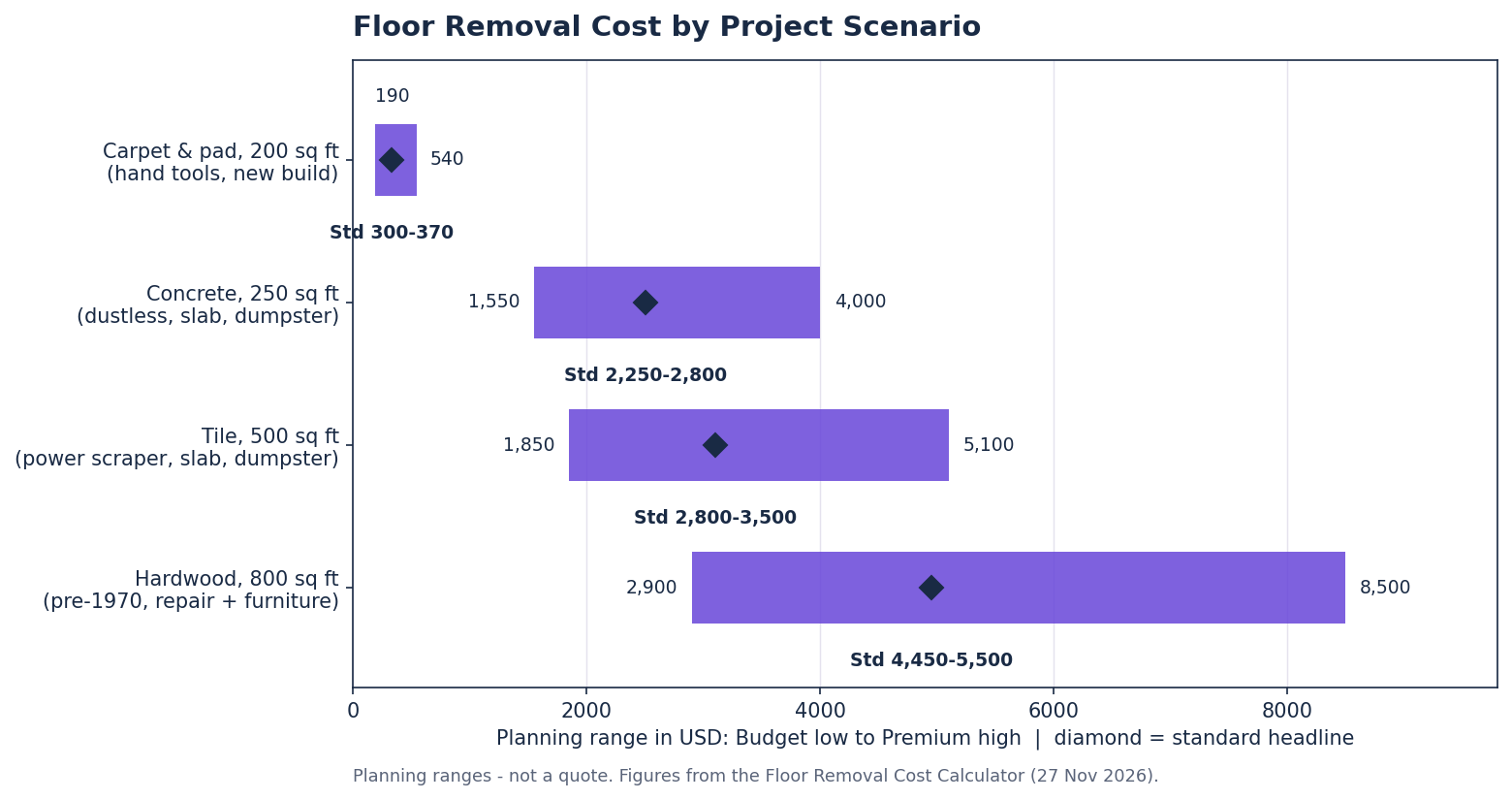
The table at the end of this article shows four example projects calculated by this tool. Use them as reference points, then run your own numbers in the calculator above.
How This Calculator Works
The calculator builds your estimate from the same pieces a flooring contractor would price. It uses planning assumptions rather than live contractor data. Your ZIP code is used only to match you with local professionals and does not change the price.
Floor type: tile, hardwood, carpet, vinyl, laminate and concrete are priced separately, because each one comes up differently — carpet pulls off tack strips, floating laminate unclicks, nailed hardwood pries board by board, and tile has to be broken out of its thinset.
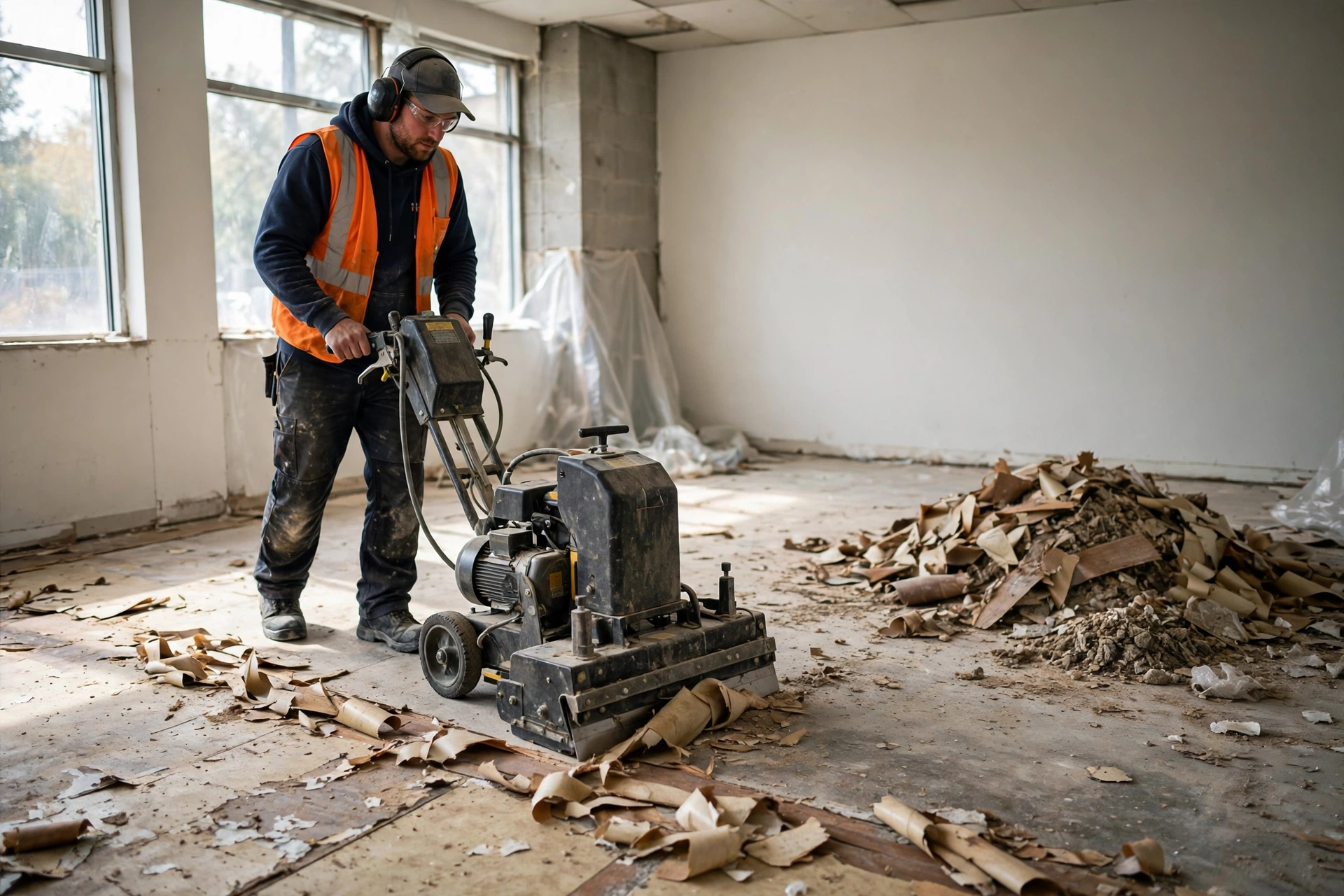
Removal method: hand tools, a power scraper and a dustless removal system are priced separately, because the method changes both the labor rate and the equipment line. Angi puts dust-free tile removal at $3.50 to $7 per square foot.
Subfloor and age: a concrete slab and an unknown or damaged subfloor raise the labor rate, and older homes slow every run down, because fasteners are heavier, adhesives are older, and the floor underneath is more likely to need work.
Disposal and extras: debris disposal is priced per square foot by floor type when selected, and a dumpster, furniture moving, subfloor repair and a permit allowance are each added only when selected, with their own lines.
Levels: Budget, Standard and Premium use different labor rates. They are not one number multiplied by a percentage.
What Drives the Cost of Floor Removal
Floor type: carpet is the cheapest tear-out at about $0.70 to $1.60 per square foot on HomeGuide, while tile at $2 to $7 per square foot on Angi is the most expensive common floor, because thinset has to be broken and scraped, not just lifted.
How the floor was installed: floating floors come up fastest, glued floors take longer, and nailed hardwood at $2 to $4 per square foot on HomeAdvisor sits in between. The same floor type can price very differently depending on its adhesive and fasteners.
Debris weight: tile and concrete are the heaviest debris, so disposal and dumpster fees climb with them. Angi puts a dumpster at $200 to $800 per week, averaging $380.
Subfloor condition: what is under the old floor only shows once it is out, and Angi puts subfloor replacement at $3 to $10 per square foot, so an unknown subfloor is worth an allowance.
Dust control: dustless removal systems cost more per square foot — $3.50 to $7 on Angi for tile — but keep silica dust out of an occupied home.
Materials vs Labor
On most floor removal jobs, labor is by far the largest cost. Demolition supplies are a small line — blades, bags and floor protection — while the crew hours to break, pry, scrape and carry the old floor out are what the quote is mostly buying. Disposal is the second real cost, and it follows the weight of the debris rather than the size of the room. That is why this floor removal cost calculator prices supplies per square foot but lets the floor type, removal method, subfloor and home age drive the labor line, and prices disposal by floor type instead of folding it into one flat rate.
Permits and Inspections
Removing an existing floor on its own usually needs no permit. Removal inside a larger remodel, or work that changes structure, stairs or floor systems, can need a permit and inspection. Older homes sometimes carry local rules about asbestos in old vinyl, tile and adhesives, which can turn a simple tear-out into abatement work. Fees vary widely by city and county. The calculator includes a permit and inspection allowance only if you tick it.
Common Types of Floor Removal Jobs
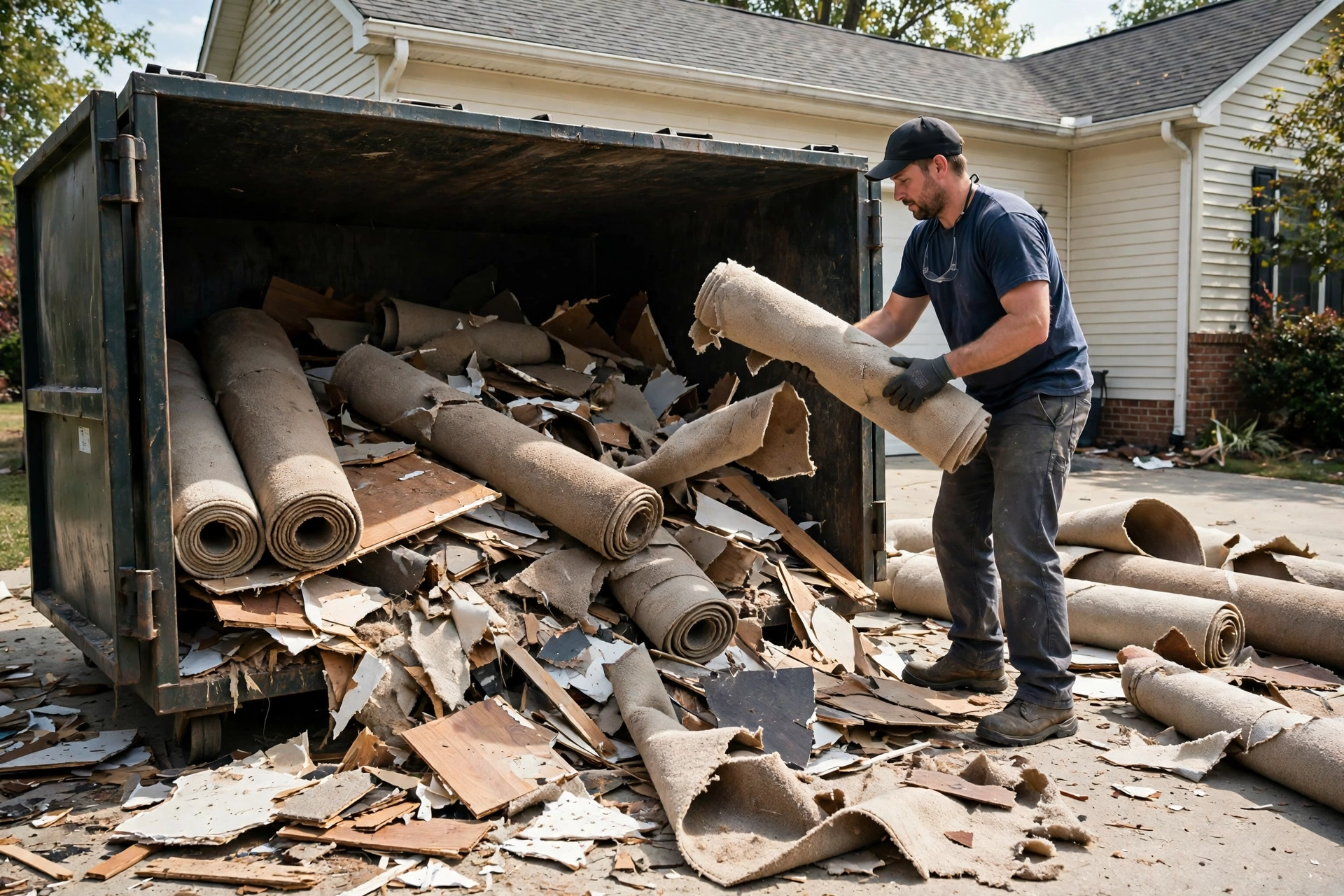
Carpet and pad tear-outs before new flooring goes down.
Tile and thinset demolition in kitchens, bathrooms and entryways.
Hardwood removal where boards are damaged or the layout is changing.
Glued vinyl and laminate strip-outs with adhesive scraping.
Concrete floor removal for layout changes, drains or new slabs.
Repair, Replace or Upgrade?
Remove the old floor when it is worn out, water-damaged, or in the way of a new layout, because most new floors need a flat, sound surface to go down on. Keep and refinish instead when the existing floor is solid hardwood in good structural shape, since refinishing costs less than removal plus a new floor. Go over the top instead when the old floor is flat, dry and firmly attached and the new floor is a floating product rated for it — it can skip the tear-out entirely. Ask any contractor quoting you whether disposal, the dumpster and subfloor repair are included, since those lines explain most of the gap between quotes. Running the same job through this floor removal cost calculator first gives you a checklist to compare those quotes against.
Budget, Standard and Premium Projects
A budget project uses a basic tear-out and a lower labor rate. A standard project uses a licensed flooring contractor and typical access. A premium project uses a specialist demolition crew and difficult access. The three levels use different labor rates. They are not the same number scaled by a percentage. Pick the level that matches the contractor you actually want, not just your budget.
Regional Pricing Differences
Flooring rates vary across the United States. Dense metro areas and regions with high licensing and disposal costs generally cost more than smaller markets, and minimum job charges vary by company. This floor removal cost calculator uses national planning averages and does not adjust the price by ZIP code, so treat the result as a starting budget and compare it with local written quotes for your flooring project.
Example Projects Calculated by This Tool
Project 1 – 500 sq ft tile on slab, power scraper, dumpster
ceramic / porcelain tile floor, power scraper / demo machine, concrete slab subfloor, disposal included, home built 1970-1999, dumpster rental included. Standard removal labor $4.24 per sq ft. Budget $1,850 – $2,300. Standard $2,800 – $3,500 (headline $3,100). Premium $4,100 – $5,100.
Project 2 – 200 sq ft carpet and pad, hand tools, new build
carpet & pad floor, hand tools & pry bars, plywood / OSB subfloor, disposal included, home built 2000 or later, no extras. Standard removal labor $1.10 per sq ft. Budget $190 – $240. Standard $300 – $370 (headline $330). Premium $430 – $540.
Project 3 – 800 sq ft hardwood, pre-1970, repair and furniture
hardwood floor, power scraper / demo machine, plywood / OSB subfloor, disposal included, home built before 1970, subfloor repair allowance and furniture moving included. Standard removal labor $3.14 per sq ft. Budget $2,900 – $3,600. Standard $4,450 – $5,500 (headline $4,950). Premium $6,800 – $8,500.
Project 4 – 250 sq ft concrete, dustless, slab, dumpster
concrete floor, dustless removal system, concrete slab subfloor, disposal included, home built 1970-1999, dumpster rental included. Standard removal labor $6.31 per sq ft. Budget $1,550 – $1,900. Standard $2,250 – $2,800 (headline $2,500). Premium $3,200 – $4,000.
Floor Removal Cost FAQs
How much does floor removal cost per square foot?
Published 2026 US guides put carpet removal at about $0.70 to $1.60 per square foot on HomeGuide and $1 to $1.50 on Angi, most other floors at $1.50 to $3.50 per square foot on Angi, and tile removal at $2 to $7 per square foot. Hardwood removal runs $2 to $4 per square foot on HomeAdvisor. This calculator prices the labor, disposal and equipment for your area, floor type and method.
How much does floor removal labor cost?
Labor is the largest part of a removal bill, because the crew hours to break, pry, scrape and carry the old floor out are what the quote is mostly buying. Angi puts tile removal labor at $2 to $7 per square foot, and carpet sits at the low end because it pulls off tack strips quickly. This floor removal cost calculator prices labor per square foot by floor type, adjusted for removal method, subfloor type and home age.
Which floor is the most expensive to remove?
Tile and concrete are the most expensive common floors to remove. Tile at $2 to $7 per square foot on Angi has to be broken out of its thinset and scraped, and both tile and concrete produce the heaviest debris, so disposal and dumpster fees climb with them. Glued-down floors of any type also cost more than floating ones, because the adhesive has to come up with the floor. This calculator prices each floor type separately so you can compare the same area either way.
Does floor removal include disposal?
Not always. Some quotes bundle haul-away into the per-square-foot rate and others bill it separately, and heavy debris often needs a dumpster at $200 to $800 per week on Angi, averaging $380. That is why this floor removal cost calculator prices disposal as its own line, by floor type, only when you select it. If you plan to haul debris yourself, switch disposal off and the estimate drops to the tear-out alone.
Can I remove the old floor myself?
Carpet, floating laminate and click-lock vinyl are realistic DIY tear-outs for most homeowners. Tile, glued floors and concrete are much harder — they need demo tools, produce heavy debris, and old vinyl, tile and adhesives in pre-1980s homes can contain asbestos, which needs testing before anyone disturbs it. This calculator prices professional removal; if you DIY part of the job, use the line items to see which lines you are taking off the quote.
How long does floor removal take?
A single room of carpet can come out in a few hours. A main floor of tile or hardwood is usually one to three days of work, depending on area, method and how much thinset or adhesive has to be scraped. Dustless systems and subfloor repair add time at the end of the job. The calculator prices the work, not the calendar — ask any contractor quoting you how they handle dust, debris staging and dumpster placement in writing.
Do I need a permit to remove a floor?
Removing an existing floor on its own usually needs no permit. Removal inside a larger remodel, or work that changes structure, stairs or floor systems, can need one. Fees vary by city and county, so this calculator includes a permit and inspection allowance only if you select it.
How can I lower the cost of floor removal?
Remove every planned room in one visit so setup and minimum charges are spread across the job, and move furniture yourself instead of paying for the service. Hauling light debris such as carpet yourself can also save the disposal line, though tile and concrete usually still need a dumpster. Do not skip needed subfloor repair to save money, because new flooring over a damaged subfloor fails early. Get at least three itemized quotes that state whether disposal, the dumpster and subfloor repair are included, since those lines explain most of the gap between quotes.
Related Calculators
Whole-House Remodel Cost Calculator
Estimate the cost of a full-home renovation.
View calculator
Kitchen Remodel Cost Calculator
Estimate the cost of a kitchen remodel.
View calculator
Interior Painting Cost Calculator
Estimate the cost to paint interior walls.
View calculator
Basement Finishing Cost Calculator
Estimate the cost to finish a basement.
View calculator
Bedroom Remodel Cost Calculator
Estimate the cost of a bedroom remodel.
View calculator
Ready to Plan Your Floor Removal Project?
Compare your planning estimate with written quotes from licensed local flooring contractors before you commit to a budget.
This calculator provides a planning estimate only. It is not a quote, bid or guaranteed price. Actual contractor pricing may vary based on location, conditions, material choice, labor market and project complexity. Always obtain written, itemized quotes from licensed and insured professionals before committing to a budget.