Architectural vs 3-Tab Shingles: Best 2026 Cost & Lifespan Comparison
If your roof needs replacing, the architectural vs 3-tab shingles decision is probably the first one you will face — and it is also the one roofers explain worst. Both are asphalt shingles. Both come from the same manufacturers, go on the same way, and look similar from the street at a glance. But one is a single flat layer and the other is a laminated stack, and that difference shows up in the price, the lifespan, the warranty, and the way the roof looks for the next twenty years. This guide compares architectural vs 3-tab shingles on every factor that should drive the decision, with real figures from our calculators, so you can choose with the numbers in front of you.
The short answer: architectural shingles cost about $1.15 more per square foot than 3-tab at standard pricing — roughly $2,800 more on a 2,400-square-foot roof — and in return they last longer (around 20 to 30 years against 3-tab’s 15 to 20), look better, and usually carry a longer warranty. For most homeowners the upgrade is worth it. 3-tab still makes sense when the budget is tight or you plan to sell soon. Neither is wrong; the right choice depends on your budget, your climate, and how long you plan to keep the house.
What 3-tab shingles are
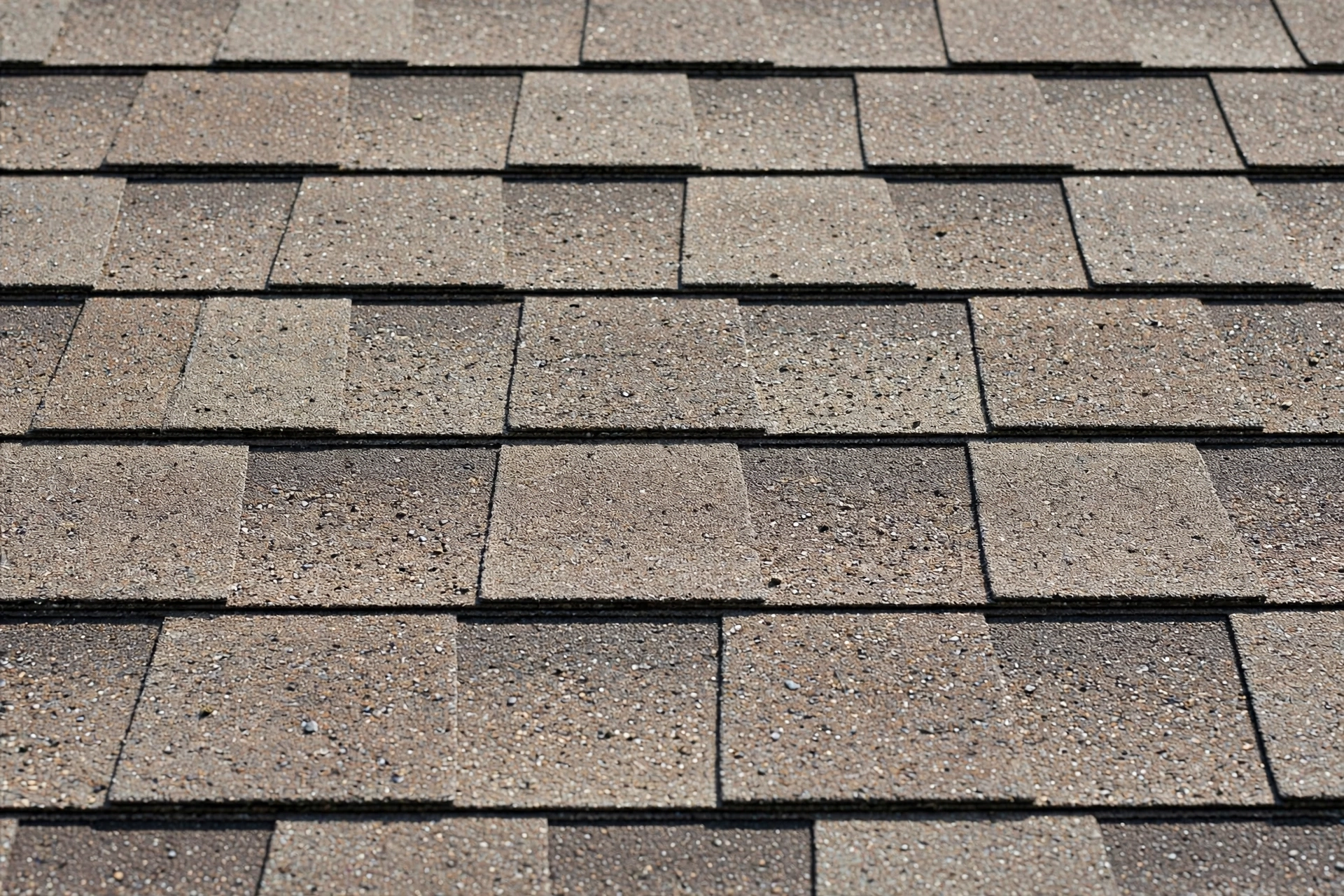
3-tab shingles are the original asphalt shingle: a single flat layer of asphalt-coated fiberglass mat, cut with slots that divide each strip into three tabs and give the roof its uniform, repeating pattern. They are the lowest-priced shingle you can buy, they are light, and any roofing crew knows how to install them — there is nothing complicated about a flat shingle. That simplicity is the whole appeal — and the main reason 3-tab still has a place in the architectural vs 3-tab shingles debate. A 3-tab roof does its job quietly: it sheds water, it covers the deck, and it costs less than anything else up front. What it does not do is impress. The flat profile looks flat, the pattern repeats visibly across the roof, and because each shingle is a single layer, there is less material standing between your home and the weather. Keep that single-layer construction in mind — it is one side of the architectural vs 3-tab shingles comparison, and it explains almost everything that follows.
What architectural shingles are
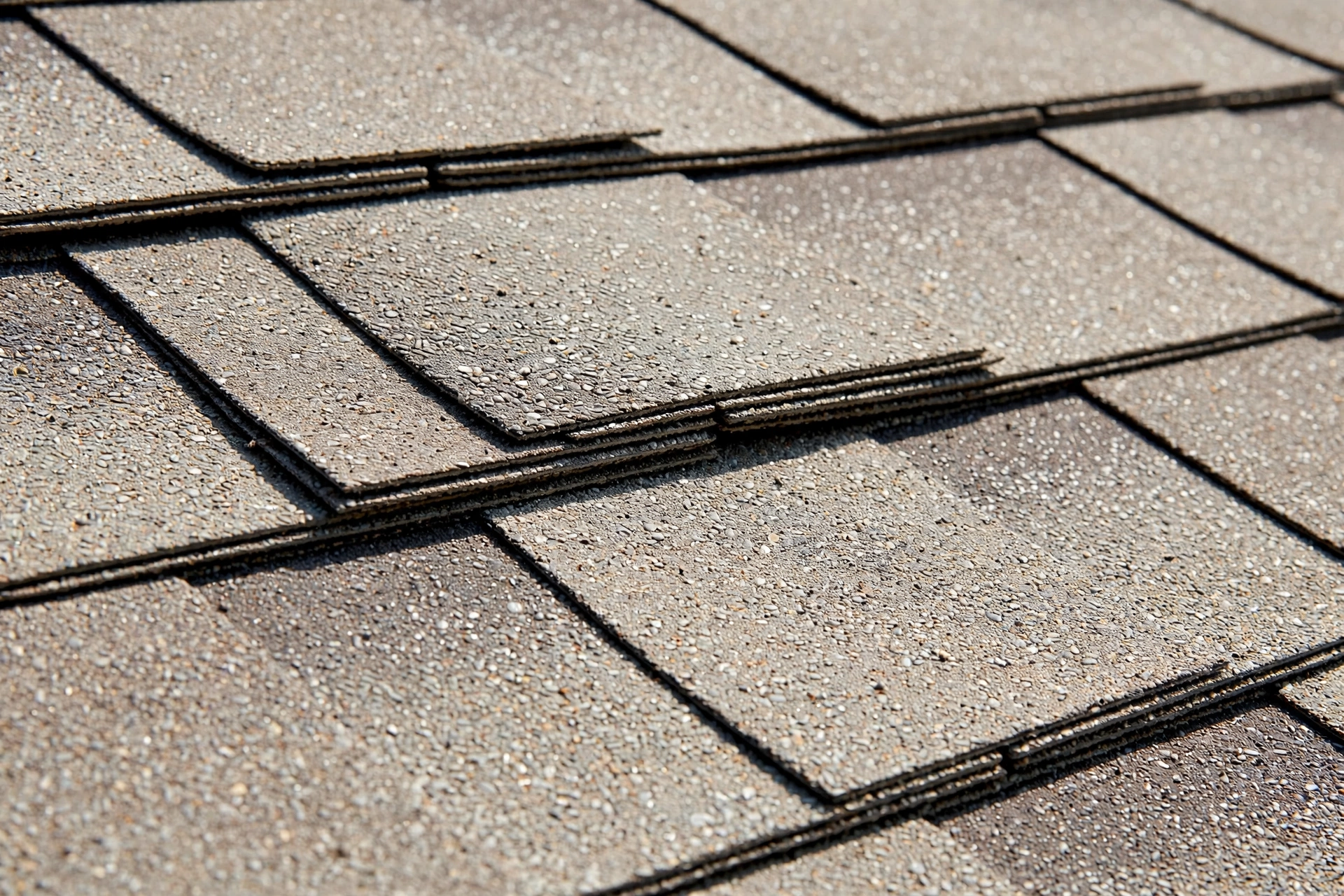
Architectural shingles — also called dimensional or laminated shingles — are asphalt shingles made from multiple laminated layers bonded together. The layering creates a thicker, textured look that mimics wood shake or slate, which is why they are also called dimensional shingles. They are heavier than flat 3-tab shingles and are generally rated for higher winds and longer warranties. That extra weight and rating are the core of the architectural vs 3-tab shingles value argument: you pay more per square foot and get more roof for it. Most manufacturers sell several architectural lines. Standard lines are the most affordable. Heavyweight lines use thicker material and often carry higher wind ratings. Designer lines add deeper shadow lines and more varied color blending for the most slate-like or shake-like appearance. The extra material is not cosmetic only: a laminated shingle is stiffer, heavier, and harder for wind to lift, and the layered edge gives the roof the shadow and depth that 3-tab cannot. With both types defined, the architectural vs 3-tab shingles comparison comes down to five factors: cost, lifespan, looks, wind resistance, and installation.
Architectural vs 3-tab shingles: cost compared
Cost is where most owners start the architectural vs 3-tab shingles comparison, and the gap is real but not dramatic. The figures below come from our two calculators, both priced on the same basis — materials and installation, then the all-in project cost including tear-off, underlayment, flashing, and permits.
| 3-tab | Architectural | |
|---|---|---|
| Materials + install (per sq ft) | $3.30–$5.40 ($4.25 typical) | $4.10–$9.50 ($5.40 standard typical) |
| All-in project cost (per sq ft) | ~$6–$12 | ~$7.50–$11 |
| Standard range, 2,440 sq ft roof example | $6.40–$7.35/sq ft | $7.65–$8.80/sq ft |
| Typical lifespan | 15–20 years | 20–30 years |
| Construction | Single flat layer | Multiple laminated layers |
| Look | Flat, uniform | Textured, dimensional |
| Wind rating | Standard | Generally higher |
| Warranty | Usually shorter | Usually longer |
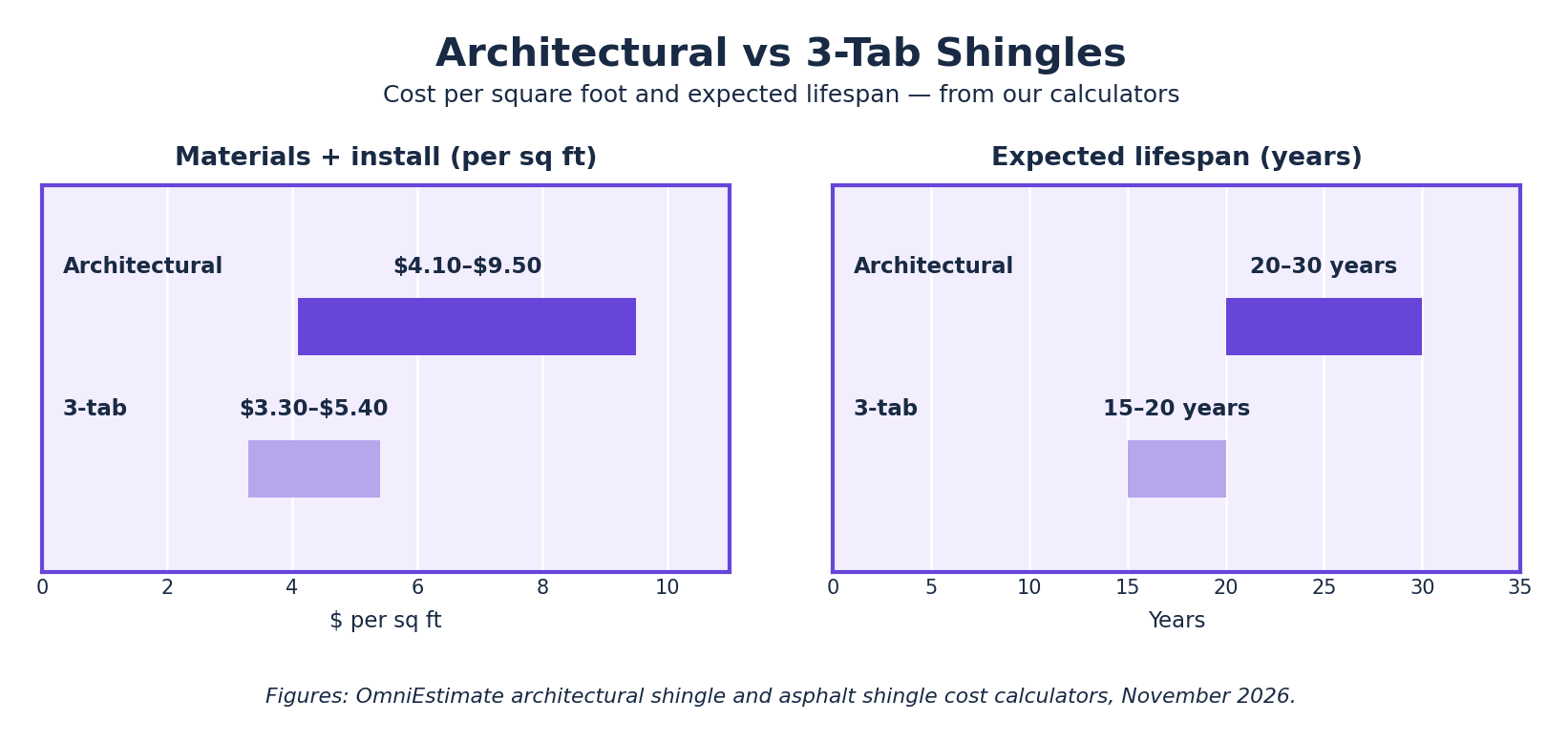
At standard pricing, architectural shingles cost about $1.15 more per square foot than 3-tab shingles installed, or roughly $115 more per roofing square. On a roof with 2,400 square feet of surface, that is about $2,800 more. For that premium you typically get a thicker shingle, a more textured look, and a longer warranty. The worked examples on the two calculator pages show what that means on a whole roof. On the architectural calculator’s worked example — a single-story home with a 2,400-square-foot footprint, converting to about 2,930 square feet of roof — the standard architectural scenario runs about $22,200 to $25,500, heavyweight about $24,700 to $28,400, and a premium designer line about $27,800 to $31,900. On the asphalt calculator’s example — a 2,000-square-foot footprint home with about 2,440 square feet of roof — the standard project budget is roughly $18,700 to $21,500 (with architectural shingles, including tear-off, disposal, and a permit allowance), with a budget range of $13,700 to $15,800 and a premium range of $25,400 to $29,200. On that same 2,440-square-foot roof, the 3-tab standard range of $6.40 to $7.35 per square foot works out to about $15,600 to $17,900 (the per-square-foot range times the roof area). To price your own roof, run the numbers through the Architectural Shingle Roof Cost Calculator and the Asphalt Shingle Roof Cost Calculator with your shingle line, roof size, and slope. Those two worked examples are the cleanest architectural vs 3-tab shingles cost comparison available, because both come from the same calculator family on the same pricing basis.
The per-square-foot gap is only half of the architectural vs 3-tab shingles cost story, though. Because architectural shingles last longer (see below), the extra $2,800 buys years as well as material — and a 3-tab roof that needs replacing five to ten years sooner can cost more over the life of the house than the architectural roof that outlasts it. Two practical notes apply to either choice. First, your roof is bigger than your footprint: the architectural calculator multiplies footprint by about 1.12 for low slopes, 1.22 for moderate, 1.38 for steep, and 1.55 for very steep roofs, so measure the roof surface, not the house. Second, both calculators advise adding 10 to 15 percent contingency for hidden deck damage or code upgrades — the number that surprises owners is rarely the shingle price, it is what the crew finds underneath.
Architectural vs 3-tab shingles: lifespan
Lifespan depends on shingle type, climate, ventilation, and installation quality — but as a general guide, 3-tab shingles tend to last around 15 to 20 years and architectural shingles around 20 to 30 years. That five-to-ten-year edge is the honest summary of the architectural vs 3-tab shingles lifespan question: architectural shingles last longer at both ends of the range, and the gap is about the length of one extra ownership cycle for many families. The architectural calculator puts it the same way: architectural shingles typically last around 20 to 30 years, depending on climate, attic ventilation, roof slope, and installation quality. Hot climates, poor ventilation, and severe storms can shorten that range, while good installation and maintenance help you reach the top of it.
Three things matter more than the headline numbers in any architectural vs 3-tab shingles comparison. First, ventilation: a hot, poorly vented attic cooks shingles from below and shortens the life of either type. Second, installation quality: a badly installed premium shingle will fail before a well-installed basic one, so the crew matters as much as the product. Third, climate: heat, freeze-thaw cycles, and storm exposure wear every asphalt roof faster, and the thicker architectural shingle has more material to give up before it fails. Whatever you choose, get quotes from licensed local roofers with experience in the shingle line you pick, and read the warranty terms before you sign — a “limited lifetime” warranty generally covers manufacturing defects, often with prorated coverage after an initial period, and may require matched accessories or professional installation. It does not mean the roof lasts a lifetime. That warranty reality is easy to miss in the architectural vs 3-tab shingles debate, where the headline lifespan numbers get all the attention.
Architectural vs 3-tab shingles: looks and curb appeal
This is the most visible difference in the architectural vs 3-tab shingles comparison, and for many owners it decides the question on its own. A 3-tab roof is flat and uniform: the repeating tab pattern reads clearly from the street, and there is no shadow or depth to break it up. It looks like what it is — the budget option, installed neatly. An architectural roof is textured and dimensional: the laminated layers create shadow lines and varied thickness across the surface, mimicking wood shake or slate closely enough that most people cannot tell the difference from the ground. Designer lines go further, with deeper shadow lines and more varied color blending.
Does the better look pay? Curb appeal is the one factor in the architectural vs 3-tab shingles comparison where the difference is visible from the street on day one. The architectural calculator is honest about it: architectural shingles can improve curb appeal and buyer confidence compared with an older or worn roof, but the effect on resale value varies by market and condition, so treat a new roof as protection for the home rather than a guaranteed financial return. That is the right framing. Buy the architectural look because you like living under it and because it photographs well when you sell — not because you expect a dollar-for-dollar return at closing. If the house is a rental or a short-term hold, the 3-tab look is perfectly serviceable and the savings are real.
Architectural vs 3-tab shingles: wind and weather
Wind is where the extra material in a laminated shingle earns its keep. Architectural shingles are heavier than flat 3-tab shingles and are generally rated for higher winds, which matters most in storm-prone regions and on exposed sites. Heavyweight architectural lines go further: they use thicker, heavier material than standard lines and often advertise higher wind ratings and longer warranty coverage, and they are popular in windy or storm-prone regions. A 3-tab shingle, being a single flat layer, has less weight holding it down and less material resisting uplift at the edges — it is still a proven roof, but it is the one more likely to lose tabs in a bad storm. That is the practical core of the architectural vs 3-tab shingles wind comparison: weight and lamination against a flat single layer.
Hail is a separate question from wind, and neither standard shingle type is a hail specialist. If hail is your main worry, Class 4 impact-resistant shingles are the upgrade to ask about: they cost more upfront and are designed to withstand hail better, and some insurers offer premium discounts for them — ask your insurer what discount, if any, applies before you pay for the upgrade. In the architectural vs 3-tab shingles wind comparison, the practical advice is simple: if your area sees regular high winds or severe storms, the architectural upgrade — or a heavyweight line — is money well spent; in a sheltered, mild climate, the wind difference drops out of the decision and cost and lifespan take over.
Architectural vs 3-tab shingles: installation and repair
In the architectural vs 3-tab shingles installation comparison, the two are closer than their prices suggest. Both are asphalt shingles, both go on with nails over underlayment, and any experienced roofing crew installs both. 3-tab is slightly simpler and faster: the shingles are lighter, flatter, and easier to align, which is one reason the labor cost is lower. Architectural shingles are heavier and the laminated pattern takes more care to lay out well — a rushed crew can leave a dimensional roof looking uneven, which defeats the purpose of paying for the look. That is worth knowing when you compare bids: the cheapest crew is not the best choice for a designer line.
On repairs, the architectural vs 3-tab shingles comparison is roughly even. A damaged shingle of either type is replaced the same way, by lifting the shingle above it and swapping the broken one out. 3-tab has a small edge in matching: its flat, uniform pattern is easier to blend into an existing roof, while a single new architectural shingle can stand out against weathered neighbors until it ages in. Neither difference should drive the decision — but both are reasons to keep a bundle of spare shingles from the original job, whatever type you choose.
Which should you choose?
Choose architectural shingles if: you plan to stay in the house for ten years or more, you want the longest expected life, your area sees high winds or severe storms, or curb appeal matters to you. Architectural shingles are the better roof on every measure except price, and the roughly $2,800 premium on a 2,400-square-foot roof buys five to ten more years of service, a better look, and a longer warranty. The asphalt calculator’s own verdict is that architectural shingles are worth the extra cost for most homeowners. That verdict matches the numbers in this architectural vs 3-tab shingles comparison: the premium is modest and the extra years are real.
Choose 3-tab shingles if: your budget is tight, you plan to sell soon, the house is a rental, or the roof is on an outbuilding where looks do not matter. 3-tab is a proven, honest roof at the lowest price — it simply lasts less long and looks plainer. In the architectural vs 3-tab shingles debate, 3-tab is often dismissed as the cheap option — but there is no shame in it; a well-installed 3-tab roof beats a badly installed architectural roof every time.
Either way: whichever side of the architectural vs 3-tab shingles comparison you land on, get the line right (standard architectural is the value pick; heavyweight earns its keep in windy regions; designer is for looks), get the ventilation right, and get a crew with proven experience in the shingle you pick. The National Roofing Contractors Association (NRCA) is a good starting point for finding qualified contractors and understanding the standards each system should meet. For the wider picture — how asphalt shingles compare with metal, tile, and other materials — see our roofing materials compared guide and the metal roof vs shingles comparison, and if your home is around 2,000 square feet, the 2000 sq ft roof replacement cost guide breaks down the full project budget.
Frequently asked questions
Which is cheaper, architectural or 3-tab shingles?
3-tab shingles are cheaper. Our calculators put 3-tab at $3.30 to $5.40 per square foot for materials and installation ($4.25 typical) against architectural at $4.10 to $9.50 ($5.40 standard typical). At standard pricing, architectural costs about $1.15 more per square foot, or roughly $2,800 more on a 2,400-square-foot roof.
How much longer do architectural shingles last than 3-tab?
Roughly five to ten years longer. 3-tab shingles tend to last around 15 to 20 years, while architectural shingles typically last around 20 to 30 years. Climate, attic ventilation, roof slope, and installation quality affect both — a well-installed roof of either type outlasts a poorly installed one.
Are architectural shingles worth the extra cost?
For most homeowners, yes. Architectural shingles typically cost a few thousand dollars more on an average roof but offer better durability and appearance — a thicker shingle, a more textured look, and a longer warranty. If you plan to sell soon or have a very tight budget, 3-tab may still make sense.
What is the difference between 3-tab and architectural shingles?
3-tab shingles are a single flat layer with a uniform look and the lowest price. Architectural shingles are laminated in multiple layers, look thicker and more textured, and usually carry a longer warranty, at a higher cost. Architectural shingles are also heavier and generally rated for higher winds. That layered construction is the heart of the architectural vs 3-tab shingles difference.
What is the difference between standard and heavyweight architectural shingles?
Heavyweight architectural shingles use thicker, heavier material than standard lines and often advertise higher wind ratings and longer warranty coverage. They cost more per square foot — $4.80 to $8.00 ($6.20 typical) against standard at $4.10 to $7.10 ($5.40 typical) — and are popular in windy or storm-prone regions.
Does a lifetime shingle warranty mean the roof lasts a lifetime?
No. A “limited lifetime” warranty generally covers manufacturing defects, often with prorated coverage after an initial period, and may require matched accessories or professional installation. Read the warranty terms and ask your contractor what is covered before you sign.
How much does an architectural or 3-tab roof cost for my home?
It depends on roof size, slope, shingle line, tear-off, and your area. Run your numbers through the Architectural Shingle Roof Cost Calculator and the Asphalt Shingle Roof Cost Calculator for budget, standard, and premium estimates, then confirm with written quotes from licensed local roofers.
The bottom line
Architectural vs 3-tab shingles comes down to this: 3-tab costs less and does the job, while architectural costs about $1.15 more per square foot and gives you a longer life, a better look, higher wind ratings, and a longer warranty. For most homeowners, architectural is the better value — the premium is modest, and the roof is a long-term investment. For a tight budget, a rental, or a house you plan to sell soon, 3-tab is a perfectly honest choice. Either way, measure your roof properly, price both options on the same basis, add your 10 to 15 percent contingency, and hire a crew that has installed your chosen shingle many times before. The calculators above will give you the numbers to take into that conversation.
