
TPO vs EPDM Roofing: Best 2026 Cost & Lifespan Comparison
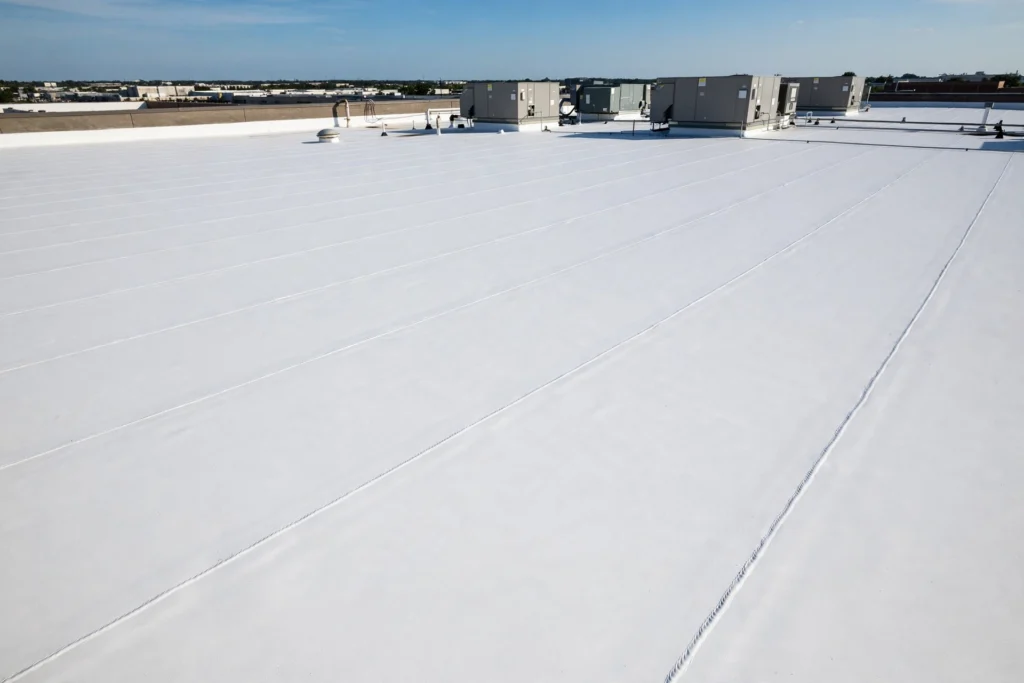
If you own a flat or low-slope roof, the TPO vs EPDM decision is probably the biggest roofing choice you will make — and the two membranes look similar on paper. Both are single-ply, both go on flat roofs, and both cost far less than a pitched-roof replacement. But they differ in ways that matter: what they are made of, how their seams are sealed, how long they last, and what they cost over the life of the roof. This guide compares TPO vs EPDM on every factor that should drive the decision, with real figures from our calculators, so you can choose with the numbers in front of you.
The short answer: EPDM usually costs less and lasts longer — roughly 20 to 30 years against TPO’s 15 to 25 — while TPO’s white reflective surface and heat-welded seams suit hot climates and large roofs better. On a standard 1,500-square-foot roof, EPDM runs about $15,100 to $17,400 and TPO about $16,700 to $19,200. Neither is wrong; the right choice depends on your climate, your roof’s size, and how long you plan to keep the building.
What EPDM is
EPDM (ethylene propylene diene monomer) is a synthetic rubber roofing membrane, usually black, sold in large sheets that can cover most residential roofs with few seams. Seams and flashing are sealed with tape or adhesive. It is flexible in cold weather and is widely used on flat and low-slope roofs. The membrane comes in three thicknesses: 45 mil is a lighter option, 60 mil is the most common choice, and 90 mil is heavier duty, offering better puncture resistance. Black EPDM is standard and costs less, but it absorbs heat; white EPDM reflects more sunlight and may help in hot climates, but it costs more — in our calculator, white adds about 15 percent to material cost. EPDM can be fully adhered with adhesive, mechanically attached with plates and screws, or ballasted — loose-laid and held down by stone or pavers, which adds significant weight the structure must support. Keep these properties in mind — they are half of the TPO vs EPDM comparison.
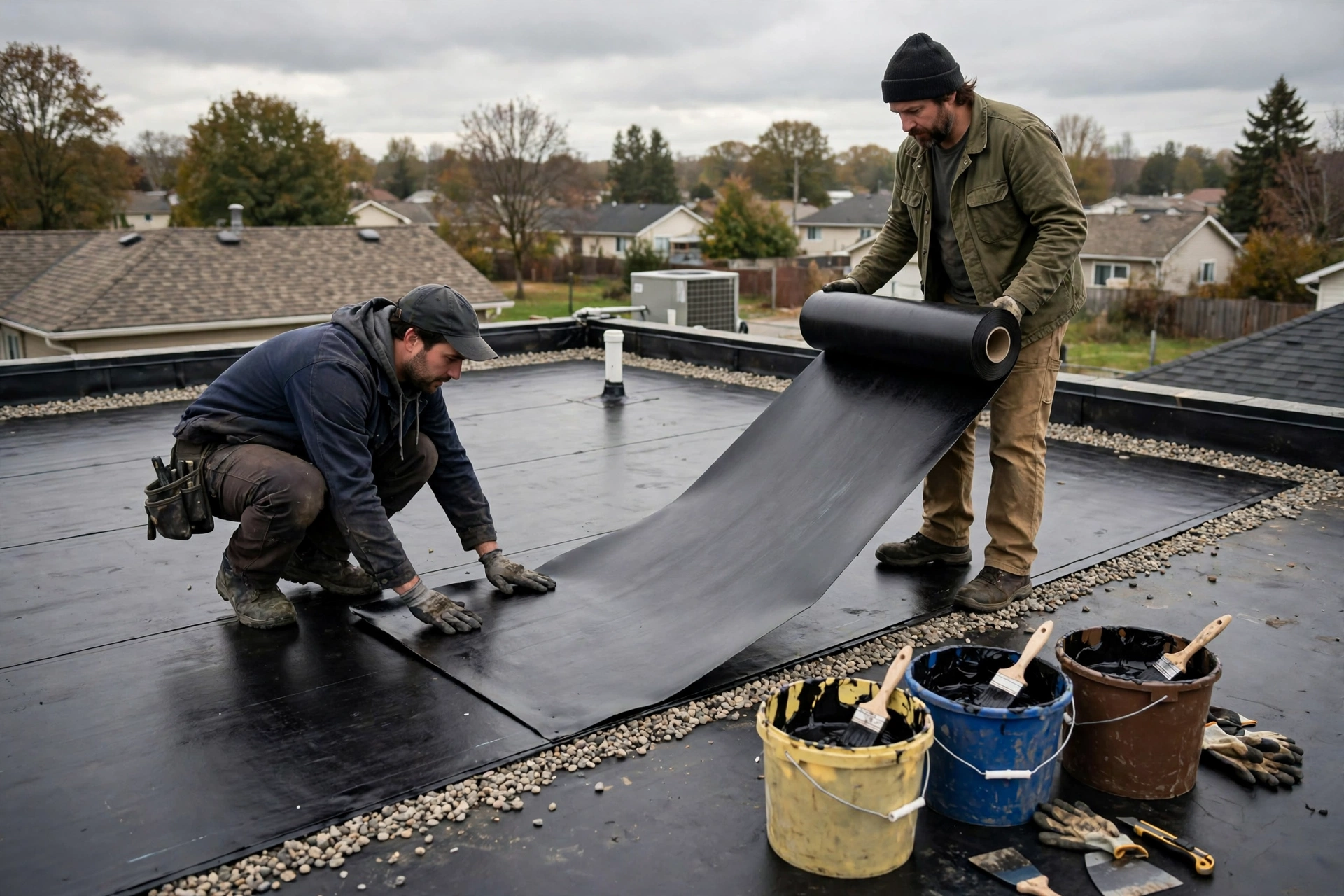
What TPO is
TPO (thermoplastic polyolefin) is a white, reflective single-ply membrane made from a blend of polypropylene and ethylene-propylene rubber. Sheets are laid over insulation and the seams are joined with hot air, which fuses them into a continuous waterproof surface. The most common color is white, which reflects sunlight and can help reduce heat gain in warm climates. It resists UV and ponding water, and it can be installed quickly over large areas, which is why it is widely used on flat and low-slope commercial roofs, warehouses, schools, and modern flat-roofed homes. Like EPDM, TPO comes in 45, 60, and 80 mil, with 60 mil the most common choice. Mechanically attached TPO is fastened to the deck with screws and plates and is usually lower cost; fully adhered TPO is bonded with adhesive, which adds materials and labor but gives a smoother surface — in our calculator, fully adhered adds about 10 percent to materials and 15 percent to labor compared with mechanically attached at the same thickness. With both materials defined, the TPO vs EPDM comparison comes down to five factors: cost, lifespan, seams, climate, and installation.
TPO vs EPDM: cost compared
Cost is where most owners start the TPO vs EPDM comparison, and the gap is real but not dramatic. The figures below come from our two calculators, both priced on the same basis — membrane, materials, and installation, then the all-in project cost including insulation, tear-off, flashing, drains, and permits.
| EPDM | TPO | |
|---|---|---|
| Membrane + materials + install (per sq ft) | $3.50–$6.00 ($4.60 standard) | $4.20–$7.40 ($5.60 standard) |
| All-in project cost (per sq ft) | $8.50–$13 | $9–$14 |
| Standard 60-mil, 1,500 sq ft roof | $15,100–$17,400 | $16,700–$19,200 |
| Budget scenario, 1,500 sq ft | $10,800–$12,500 | $11,900–$13,700 |
| Premium scenario, 1,500 sq ft | $21,100–$24,200 | $23,300–$26,700 |
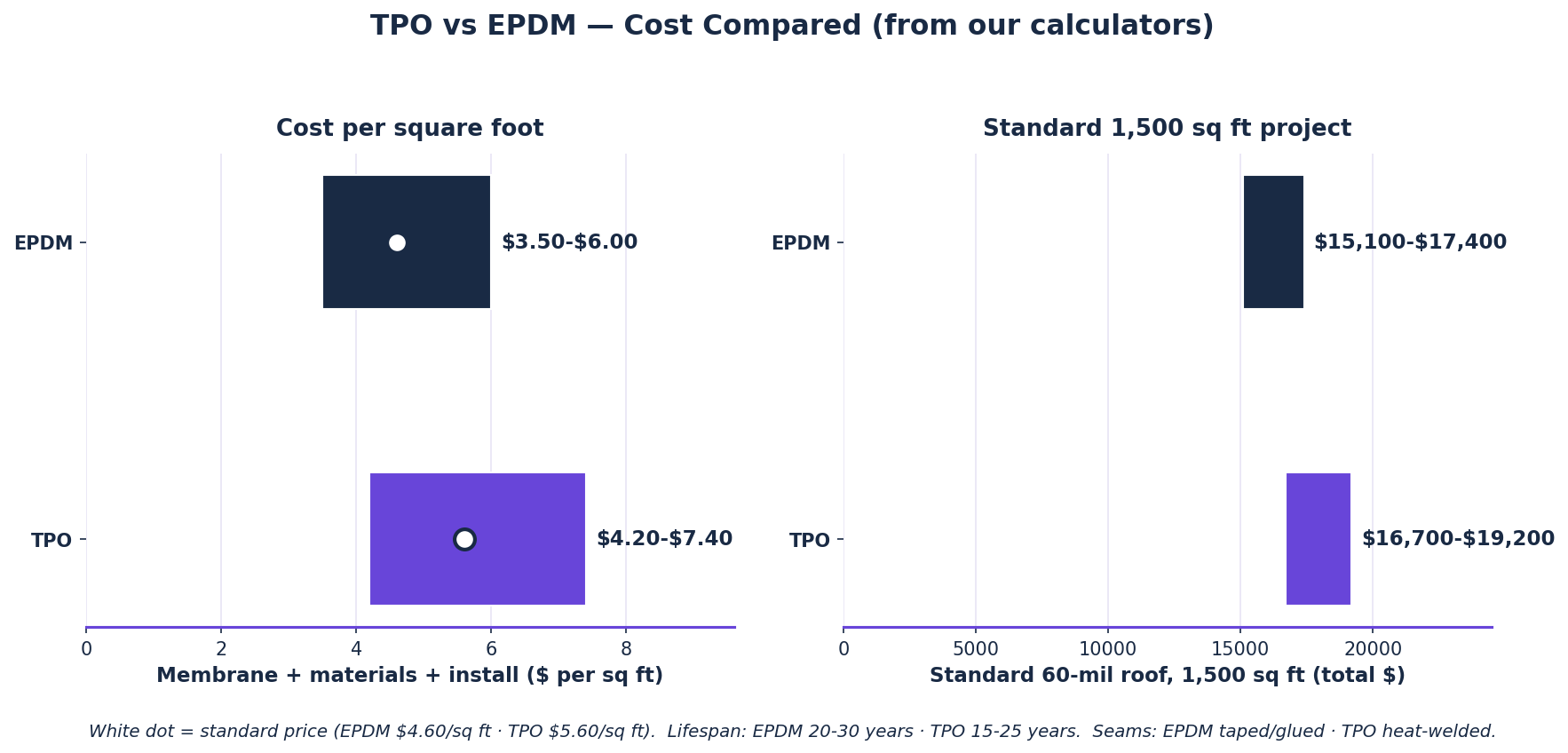
On the membrane itself, the TPO vs EPDM gap is about $0.70 to $1.40 more per square foot for TPO. On a standard 1,500-square-foot project, TPO comes out roughly $1,600 to $1,800 more than EPDM. The gap widens slightly on premium builds, where TPO’s top-tier materials and specialist welding crews cost more. Both calculators note the same caveat: these are planning estimates, not contractor bids, and small roofs cost more per square foot because fixed costs — crew mobilization, dumpsters, details — do not shrink with the roof. To price your own roof, run the numbers through the EPDM Roofing Cost Calculator and the TPO Roofing Cost Calculator with your thickness, attachment method, and roof size.
The per-square-foot gap is only half the TPO vs EPDM cost story, though. Because EPDM’s expected lifespan runs longer (see below), its cost per year of service is lower still — the cheaper membrane that also lasts longer wins on lifetime cost, unless TPO’s reflectivity saves enough on cooling to close the gap. In a hot climate with heavy air-conditioning use, that saving is real and worth weighing; in a mild or cold climate, it rarely is.
TPO vs EPDM: lifespan
Our calculator pages put EPDM’s commonly expected life at roughly 20 to 30 years, depending on thickness, installation, drainage, and maintenance, and TPO’s at roughly 15 to 25 years, depending on membrane quality, installation, drainage, and maintenance. That five-year edge at both ends of the range is the honest summary of the TPO vs EPDM lifespan question: EPDM has the longer expected life, and the gap is about the thickness of one re-roofing cycle over a 50-year building life.
Three things matter more than the headline numbers in any TPO vs EPDM comparison. First, thickness: both membranes last longer at 60 or 80/90 mil than at 45 mil, and thicker membranes are often paired with longer warranties. Second, installation quality: EPDM’s performance depends heavily on clean seams and correct flashing, and TPO’s seams must be welded correctly or leaks follow — a badly installed premium membrane will fail before a well-installed basic one. Third, maintenance: regular inspections and prompt seam and puncture repairs help both roofs reach the longer end of their range. Whatever you choose, get quotes from licensed local roofers with experience in that specific membrane.
TPO vs EPDM: seams
Seams are where flat roofs fail, so the seam difference is the most important technical point in the TPO vs EPDM comparison. EPDM seams are sealed with tape or adhesive — a chemical bond that is proven over decades but depends entirely on clean surfaces and careful application. TPO seams are heat-welded with hot air, which fuses the sheets into a single continuous waterproof layer. A properly welded TPO seam is, in principle, stronger than the membrane around it, because the joint is the same material melted together rather than two surfaces glued.
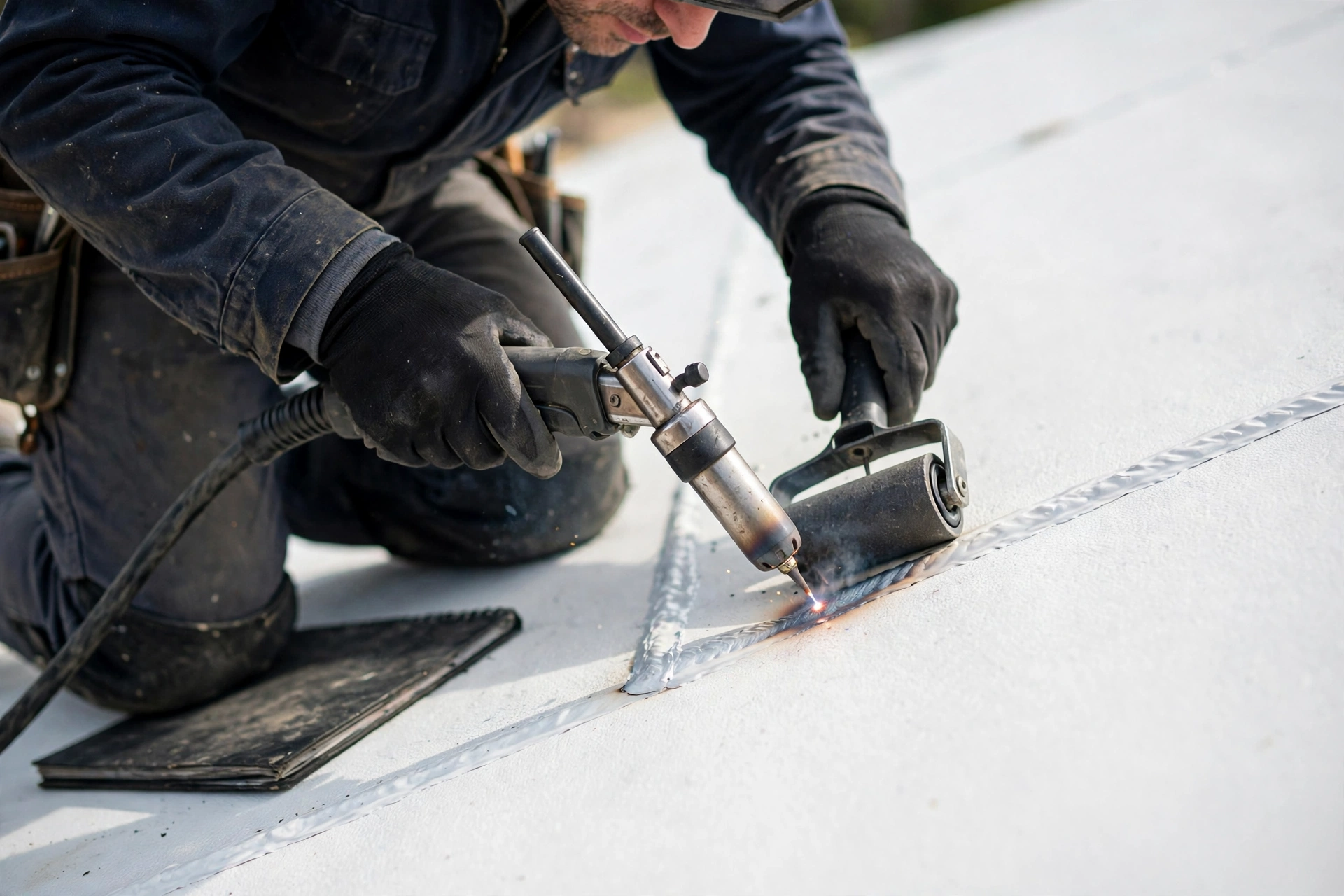
In practice, the TPO vs EPDM seam debate matters less than the installation: both systems work when installed well and fail when installed badly. Heat welding needs a trained crew with the right equipment and consistent technique — a cold weld or a rushed pass leaves a weak seam that looks finished. Tape and adhesive need clean, dry surfaces and the right pressure — contamination or haste leaves the same result. The practical lesson is the same for both: the crew matters more than the chemistry. Ask any contractor how they test their seams — probe-tested welds for TPO, and careful seam inspection for EPDM — and treat a vague answer as a warning sign.
TPO vs EPDM: heat, cold, and climate
This is where the TPO vs EPDM comparison genuinely diverges. TPO’s white surface reflects sunlight, which reduces heat gain in warm climates and can cut cooling costs on air-conditioned buildings. EPDM’s standard black surface absorbs heat, which is a drawback in hot climates but a small advantage in cold ones, where it helps snow melt and reduces heating load slightly. White EPDM closes the reflectivity gap, but at about 15 percent more in material cost.
On the cold side of the TPO vs EPDM comparison, EPDM has the edge: it stays flexible in cold weather, which matters for a membrane that expands and contracts through freeze-thaw cycles. TPO can stiffen in the cold, which makes winter installation harder and puts more stress on seams during cold snaps. Neither difference is decisive on its own, but together they point the same way: TPO for hot, sunny climates; EPDM for cold climates and anywhere the heating bill matters more than the cooling bill. In a mild climate, this factor drops out of the decision and cost and lifespan take over.
TPO vs EPDM: installation and repair
In the TPO vs EPDM installation comparison, TPO installs quickly over large areas, which is one reason it dominates commercial work — a welding crew can cover a warehouse roof faster than an adhesive crew can cover the same area, and speed matters when the building cannot wait. EPDM’s large sheets mean fewer seams on residential-scale roofs, and its adhesive system needs less specialized equipment, which is one reason smaller contractors often prefer it.
On repairs, the TPO vs EPDM comparison favors EPDM slightly. A puncture or a failed seam on an EPDM roof is typically fixed with a patch and adhesive — a straightforward job most roofing contractors can do. TPO repairs need a hot-air welder and a crew that knows how to use it, which narrows the pool of contractors who can do the work well. Neither membrane is hard to maintain, but EPDM’s repair simplicity is a genuine long-term advantage for owners who plan to keep the building for decades.
Which should you choose?
Choose EPDM if: your budget is tight, you want the longest expected life, your climate is cold or mild, your roof is residential-scale, or you value simple repairs. EPDM is the lowest-cost single-ply membrane and the longest-lived of the two — the default choice for most owners, and the one our numbers favor on lifetime cost.
Choose TPO if: your climate is hot and sunny, your building is large or commercial, cooling costs matter, or your roof sees ponding water. TPO’s reflectivity and welded seams are real advantages in those conditions, and they are the strongest reasons to pick TPO in the TPO vs EPDM decision. Its mid-range price buys them without reaching PVC territory. (PVC is the third single-ply option, usually priced above TPO and often chosen where grease or chemicals are present.)
Either way: whichever side of the TPO vs EPDM comparison you land on, get the thickness right (60 mil is the standard choice for both), get the attachment method right for your deck and wind exposure, and get a crew with proven experience in the membrane you pick. The National Roofing Contractors Association (NRCA) is a good starting point for finding qualified contractors and understanding the standards each system should meet. For the wider picture — how single-ply membranes compare with shingles, metal, and tile — see our roofing materials compared guide, and if your project involves a pitched roof rather than a flat one, the roof replacement cost guide and the metal roof cost guide cover those options.
Frequently asked questions
Which is cheaper, TPO or EPDM?
EPDM is cheaper. Our calculators put EPDM at $3.50 to $6.00 per square foot for membrane, materials, and installation ($4.60 standard) against TPO at $4.20 to $7.40 ($5.60 standard). On a standard 60-mil, 1,500-square-foot roof, EPDM runs about $15,100 to $17,400 and TPO about $16,700 to $19,200.
Which lasts longer, TPO or EPDM?
EPDM lasts longer. EPDM roofs are commonly expected to last roughly 20 to 30 years, while TPO roofs are commonly expected to last roughly 15 to 25 years. Thickness, installation quality, drainage, and maintenance affect both — a well-installed 60-mil membrane of either type outlasts a poorly installed one.
Is TPO better than EPDM for hot climates?
Yes, generally. TPO’s white reflective surface reduces heat gain, which can cut cooling costs on air-conditioned buildings. Standard black EPDM absorbs heat; white EPDM reflects more but costs about 15 percent more in material. In hot, sunny climates, TPO’s reflectivity is a genuine advantage.
Are TPO seams stronger than EPDM seams?
TPO seams are heat-welded, fusing the sheets into a continuous waterproof layer, which in principle makes a stronger joint than EPDM’s taped or glued seams. In practice, both work well when installed correctly and fail when installed badly — the crew’s skill matters more than the seam chemistry.
Can TPO and EPDM go on the same roof?
They should not be mixed on the same roof surface. The membranes have different properties, different seam methods, and different flashing requirements. If part of a roof needs replacement, match the existing membrane or replace the full field with one system.
What thickness should I choose, 45, 60, or 80 mil?
60 mil is the most common choice for both TPO and EPDM. 45 mil is lighter-duty and costs less; 80 mil TPO and 90 mil EPDM are heavier duty, with better puncture resistance, and are often chosen for foot traffic or longer warranties. Thicker membranes cost more per square foot.
How much does a TPO or EPDM roof cost for my building?
It depends on thickness, attachment method, insulation, tear-off, and roof size. Run your numbers through the TPO Roofing Cost Calculator and the EPDM Roofing Cost Calculator for budget, standard, and premium estimates, then confirm with written quotes from licensed local roofers.
The bottom line
TPO vs EPDM comes down to this: EPDM costs less, lasts longer, and repairs more simply, while TPO reflects heat and welds its seams into a single sheet. For most owners, EPDM is the better value; for hot climates and large commercial roofs, TPO earns its premium. Either way, measure your roof, price both options on the same basis, and hire a crew that has installed your chosen membrane many times before. The calculators above will give you the numbers to take into that conversation.
