
AC Maintenance Checklist: Filters, Coils, and Seasonal Tune-Ups.
The short answer
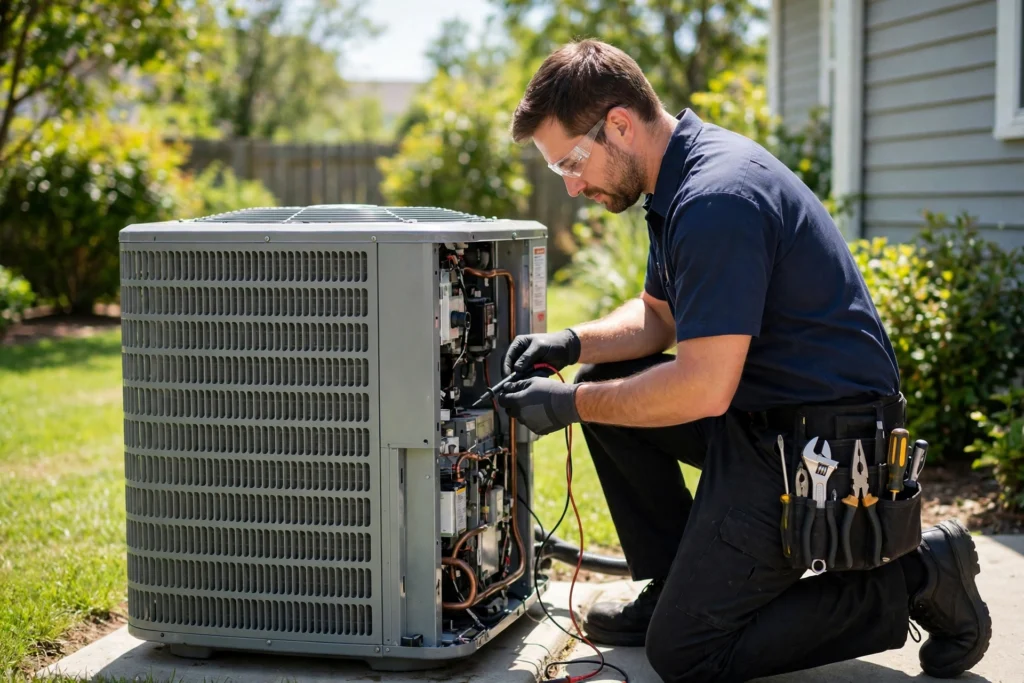
AC maintenance is simple: keep the filter clean, keep the coils clear, keep the drain flowing, and get a professional tune-up once a year. That routine keeps cooling strong, energy bills down, and breakdowns rare — and it keeps most manufacturer warranties valid.
If maintenance reveals your system is done, price its replacement with the AC replacement cost calculator.
The checklist below follows the cooling season — do the spring items before the first hot week, not after.
What neglect costs you
A neglected air conditioner doesn’t usually die dramatically — it fades. Cooling gets weaker, cycles get longer, energy bills creep up, and then one August afternoon the compressor gives out. Most of that decline is preventable.
The pattern is always the same: a clogged filter starves airflow, the evaporator coil ices over, the system works harder to move less air, and parts wear out years early. Every item on the maintenance checklist exists to break that chain at the cheapest possible point.
The AC maintenance checklist
Work through this checklist on the schedule shown. Most items take minutes.
| Task | How often | What to do |
|---|---|---|
| Check and change the air filter | Every 1–3 months | Replace when dirty — a clogged filter is the top cause of poor cooling |
| Clear debris around the outdoor unit | Monthly in cooling season | Keep 2 feet of clearance; trim plants back |
| Clean the condenser coils | Once a year | Gently hose from outside with power off |
| Check the condensate drain | Once a year | Clear clogs before they back up and leak |
| Straighten bent coil fins | As needed | Use a fin comb gently — don’t force them |
| Check the thermostat | Each season | Confirm it reads accurately and responds |
| Inspect visible ductwork | Once a year | Look for disconnected or damaged sections |
| Professional tune-up | Once a year, in spring | Refrigerant, electrical, coils, and drains checked by a technician |

DIY vs calling a technician
Plenty of maintenance is safe DIY. Some jobs need a professional’s tools and certification. When in doubt, call.
| Task | Usually DIY | Call a technician |
|---|---|---|
| Changing the air filter | Yes | Never needed for this |
| Clearing debris around the unit | Yes | Never needed for this |
| Gently hosing condenser coils | Yes, with power off | If coils are badly damaged |
| Thermostat batteries and settings | Yes | If the thermostat itself has failed |
| Anything with refrigerant | Never — certification required | Always |
| Electrical issues | Never | Always |
| Compressor problems | Never | Always |
| Ductwork inside walls or attic | Sometimes, for visible sections | For hidden runs and sealing |
Seasonal timing
Time your maintenance to the cooling season.
- spring — book the professional tune-up before the first hot stretch; check the filter and clear the outdoor unit
- early summer — check the filter monthly during heavy use
- fall — final filter change, clear debris before winter
- winter — keep the outdoor unit clear of heavy snow and ice; don’t wrap it tightly in plastic, which traps moisture
The filter: the 5-minute job that matters most
If you do one maintenance task, make it the filter. It’s the cheapest part in the whole system and the one most responsible for keeping everything else alive.
Check it monthly during cooling season and replace it when it looks dirty — don’t wait for a schedule. Homes with pets, smokers, or allergy sufferers clog filters faster. And buy the right size and rating: a filter that doesn’t fit properly lets unfiltered air bypass it entirely, which defeats the purpose.
One caution: higher MERV ratings aren’t automatically better. A very dense filter can restrict airflow on systems not designed for it. Match the rating to what your system and ductwork can handle — when in doubt, ask your tech at the next tune-up.
Warning signs to act on
- weak airflow from the vents
- warm air when cooling is called for
- short cycling — turning on and off constantly
- unusual grinding or squealing noises
- water pooling around the indoor unit
- ice forming on the refrigerant lines
- a sudden jump in energy bills
Any of these means call a technician — don’t wait for the next scheduled check.
Preparing your AC for winter
When cooling season ends, a little shutdown care pays off next spring. Your outdoor unit is built to sit outside all winter, but neglect during the off-season is how small problems turn into spring surprises.
Start with a final filter change and one last walk around the outdoor unit. Clear fallen leaves, twigs, and grass clippings from around the condenser — trapped organic debris holds moisture against the metal all winter and invites corrosion. Trim back any shrubs or vines that grew in over summer so the unit keeps its two feet of clearance.
Give the condenser coil a gentle rinse with the garden hose before the first freeze, with the power off at the disconnect, so winter grime doesn’t bake on over the months. Straighten any badly bent fins with a fin comb while you’re at it — damaged fins restrict airflow, and you’ll want full airflow on the first hot day of spring.
Resist the urge to wrap the unit tightly in plastic or a tarp. A sealed cover traps moisture inside, which corrodes electrical components and gives rodents a sheltered nesting spot. If you cover the unit at all, choose a breathable mesh top cover that shields the fan opening from falling ice and leaves while letting air circulate.
Inside the house, pour a cup of white vinegar through the condensate drain line to discourage the algae buildup behind so many spring backups, then switch the thermostat over to heating. After heavy snow or ice storms, brush snow off the top of the unit rather than letting it pile up — but never chip at ice with a sharp tool, which can puncture the coil.
Finally, glance at the insulation on the exposed refrigerant lines where they enter the house. If the foam sleeve is cracked or missing, replace it before winter — intact insulation keeps the lines efficient and protects them from the elements. It’s a small job that pays back every cooling season.
Come spring, reverse the routine: remove any cover, clear winter debris, check the filter, and book the tune-up. A unit that slept clean wakes up ready.
What a pro tune-up actually includes
A real tune-up is not a technician glancing at your unit for ten minutes. Here’s what thorough looks like.
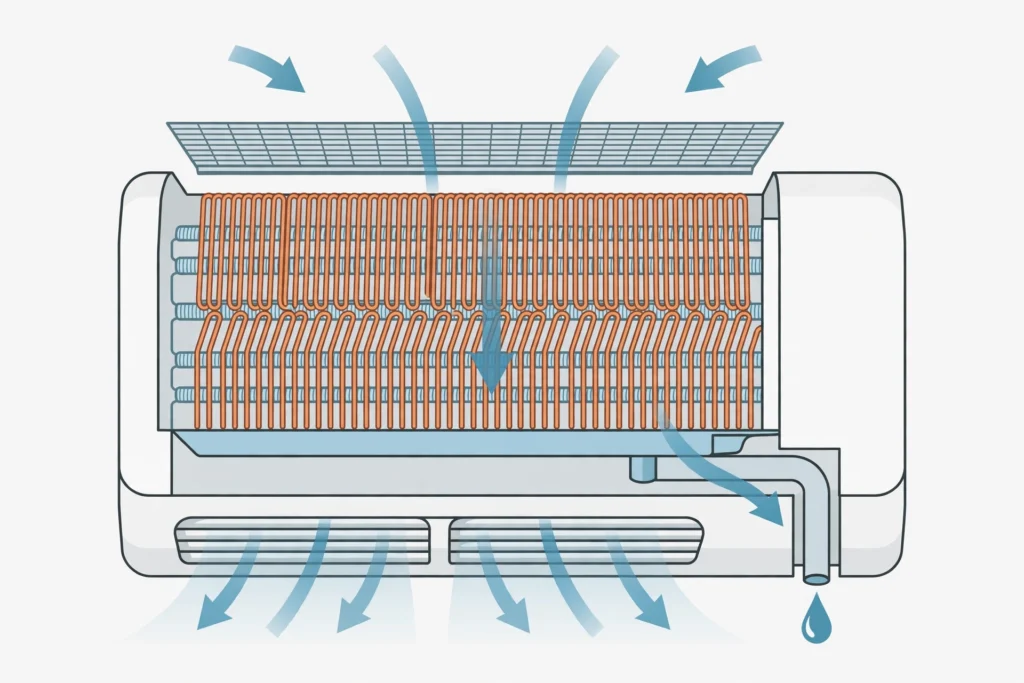
Electrical checks: tightening connections, measuring voltage and current on motors, testing capacitors before they fail. Refrigerant check: pressures and temperatures that reveal leaks or charge problems early. Coil cleaning: the outdoor condenser coil sheds heat — when it’s matted with dirt and debris, the whole system runs hot.
Drain line clearing: the condensate drain clogs with algae and backs up into the house — one of the most common and most preventable service calls. And controls: thermostat calibration and safety-control testing so the system shuts down safely instead of dangerously.
If your tune-up skipped most of that, you bought a sticker, not a service. Ask for the checklist before booking — reputable companies will show you exactly what their visit covers.
Frequently asked questions
How often should I change my AC filter?
Check it monthly and change it every one to three months depending on use, pets, and dust. A clogged filter is the most common cause of poor cooling and frozen coils — and the cheapest problem to prevent.
Do I need a professional AC tune-up every year?
Yes, ideally each spring before cooling season. A technician checks refrigerant, electrical connections, coils, and drains — the things most homeowners can’t or shouldn’t handle. Annual service also keeps most manufacturer warranties valid.
Can I clean AC coils myself?
You can gently hose the outdoor condenser coils from the outside after shutting off power, and keep the area clear of plants and debris. Indoor evaporator coils and anything involving opening panels or handling refrigerant belongs to a professional.
Why is my AC running but not cooling well?
The usual suspects are a clogged filter, dirty coils, low refrigerant from a leak, or a failing capacitor. Check the filter first — if that doesn’t fix it, call a technician rather than letting it run and strain the compressor.
When should I stop maintaining and replace the AC?
When the system is 15 to 20 years old, needs frequent repairs, or a major component fails. Maintenance can’t reverse age — the AC replacement cost calculator can help you budget for what’s next.
How often should I change my AC filter?
Check it every month during cooling season and replace it when it looks dirty. Most homes land somewhere between monthly and quarterly — pets, dust, and allergies push you toward the frequent end. A visual check beats any fixed schedule.
Can I clean the outdoor unit myself?
Yes, the basics are safe: shut off power at the disconnect, clear debris and vegetation around the unit, and gently rinse the coil fins with a garden hose. Don’t use a pressure washer — it bends the fins — and leave anything involving electrical parts or refrigerant to a pro.
Next step
Walk the checklist this weekend — start with the filter, then the outdoor unit. Book the spring tune-up before the hot weather arrives, and don’t ignore the warning signs above. If the system is near the end of its life, run the AC replacement cost calculator linked at the top of this guide to plan ahead. Book the spring tune-up before the rush — the techs are cheapest and most available when nobody’s AC has broken yet.
