
Standing Seam vs Corrugated Metal Roof: Best 2026 Cost Comparison
When homeowners decide on a metal roof, the standing seam vs corrugated metal roof question comes early — and it is the one that shapes the budget most. Both are steel. Both are durable, long-lasting roofs. But one hides its fasteners beneath raised seams and the other shows them, and that single difference ripples through the price, the installation, the maintenance, and the look of the roof for decades. This guide compares standing seam vs corrugated metal roof on every factor that should drive the decision, with real figures from our calculators, so you can choose with the numbers in front of you.
The short answer: corrugated metal costs about half as much as standing seam at typical pricing — $5.80 to $9.40 per square foot against $11 to $19 — and installs faster with exposed fasteners, while standing seam’s concealed fasteners, taller seams, and cleaner look earn it a longer life and less maintenance. For a home you plan to keep, standing seam is usually worth the premium. For a barn, garage, or budget roof, corrugated is hard to beat. Neither is wrong; the right choice depends on your budget, your building, and how long you plan to keep it.
What standing seam metal roofing is
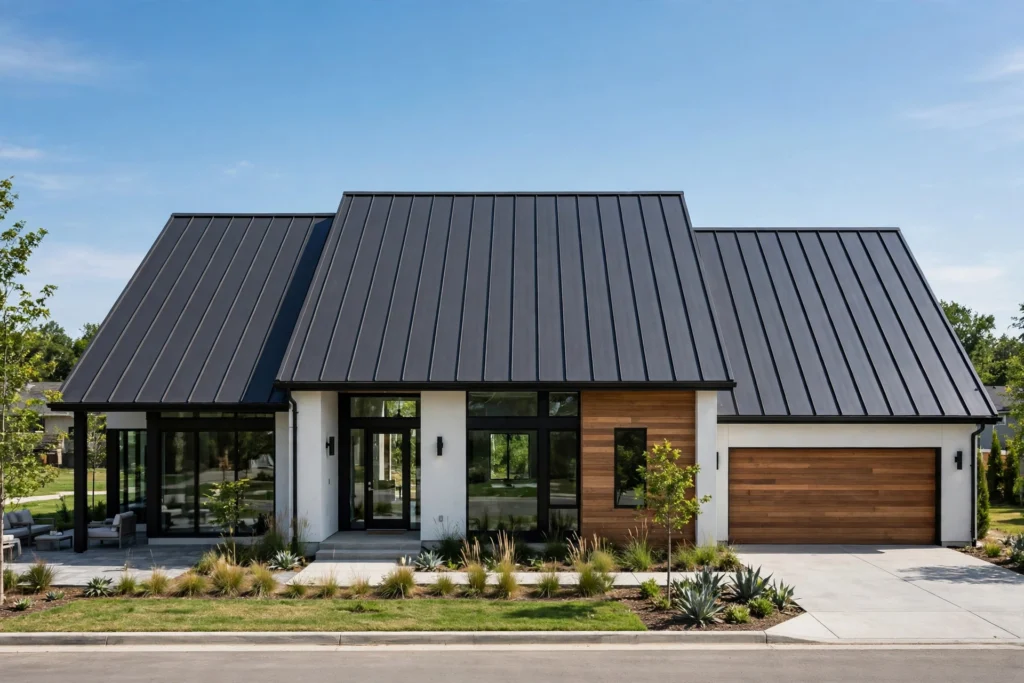
Standing seam roofing uses long metal panels joined by raised seams — vertical ribs that run from ridge to eave. The fasteners are concealed: clips attach the panels to the deck from underneath, and the seams are crimped or mechanically seamed over them. Nothing pierces the panel surface, so there are no exposed screw heads to loosen, leak, or rust. Panels run in continuous lengths, which means fewer joints and fewer places for water to enter. Steel standing seam costs $11 to $19 per square foot for materials and installation ($14.50 typical), including tear-off of one existing layer, ice and water shield at eaves and valleys, underlayment, clips, trim, ridge cap, and fasteners. Aluminum standing seam runs $14 to $24 per square foot ($18.50 typical) and is popular in coastal areas because it resists salt-air corrosion better than steel, though it is softer and more prone to denting. Copper and zinc standing seam cost $22 to $40 per square foot ($29.50 typical) and $17 to $30 ($22.50 typical) respectively, and last longer than steel. Mechanically seamed systems add about 20% to labor compared with snap-lock standing seam. That concealed-fastener construction is the core of the standing seam vs corrugated metal roof difference — it is what you are paying for when you choose standing seam.
What corrugated metal roofing is
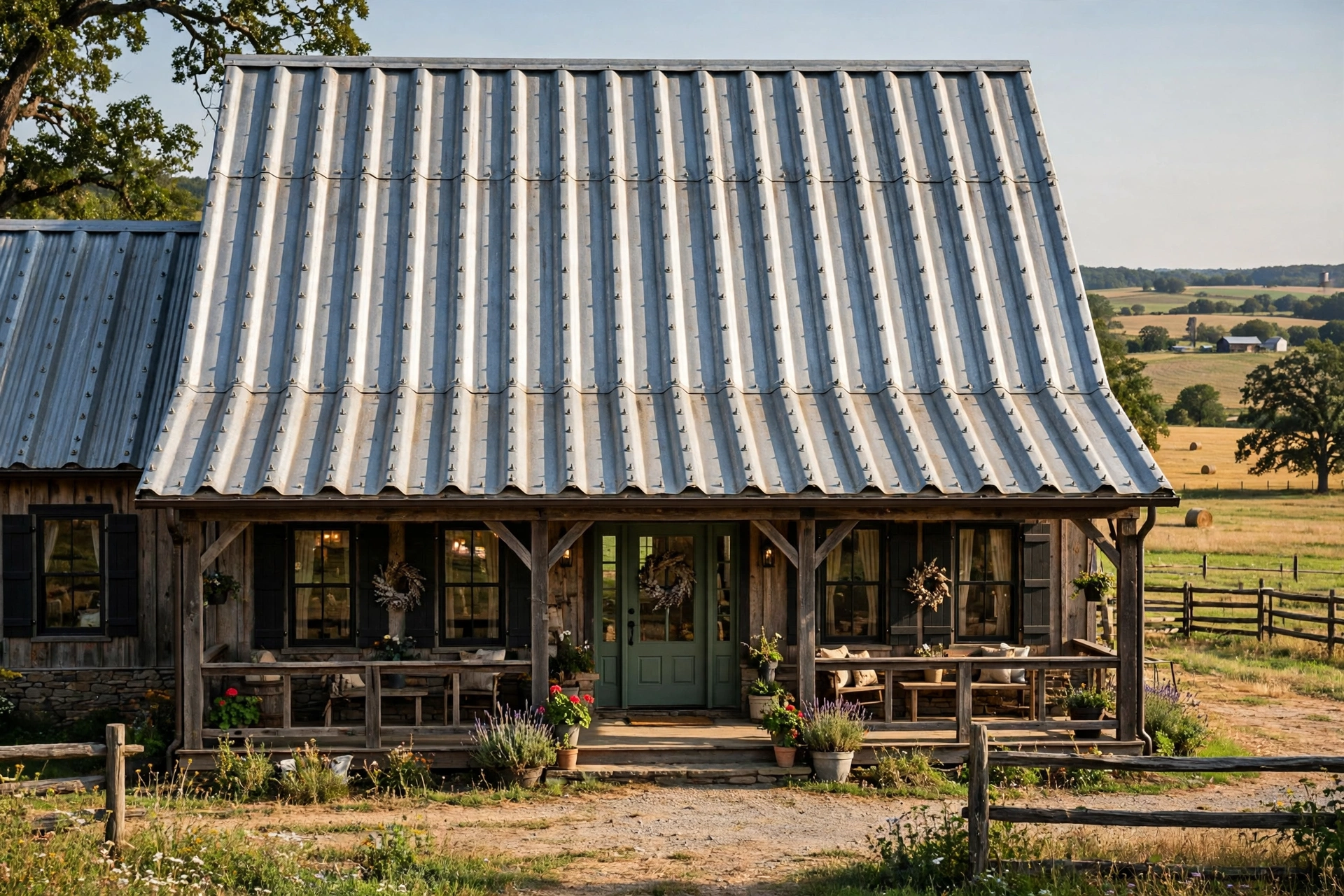
Corrugated metal roofing — also known as R-panel or exposed-fastener roofing — uses panels with a wavy or ribbed profile, screwed directly through the panel face into the deck or purlins. The screw heads are visible on the roof surface, usually with rubber or neoprene washers under them. Steel R-panel / corrugated costs $5.80 to $9.40 per square foot ($7.40 typical) for materials and installation. Our metal roof calculator prices corrugated roofing at $5.80 to $9.40 per square foot, which is about 35 to 40% less than architectural shingles at standard pricing. The panels are lighter and simpler to install than standing seam, and because the profile is so common, almost any roofing crew can install it. The visible fasteners are the trade-off: every screw is a potential leak point as washers age, and the roof needs its fasteners checked and re-tightened periodically. That is the honest summary of the corrugated side of the standing seam vs corrugated metal roof comparison — cheaper, simpler, and faster, with a maintenance bill attached.
Standing seam vs corrugated metal roof: cost compared
Cost is where most owners start the standing seam vs corrugated metal roof comparison, and the gap is wide. The figures below come from our two calculators, both priced on the same basis — materials and installation for a standard steel roof, then the all-in project cost.
| Corrugated (R-panel) | Standing seam (steel) | |
|---|---|---|
| Materials + install (per sq ft) | $5.80–$9.40 ($7.40 typical) | $11–$19 ($14.50 typical) |
| All-in project cost (per sq ft) | ~$10–$21 (steel range) | ~$10–$21 (steel range) |
| Example total, 2,440 sq ft roof | $24,700–$28,400 | $44,200–$50,800 (metal page) / $44,900–$51,600 (SS page) |
| Typical lifespan | 40–70 years (steel) | 40–70 years (steel) |
| Fasteners | Exposed screws | Concealed clips |
| Installation | Simpler, faster | More specialised, slower |
| Maintenance | Periodic fastener checks | Minimal |
| Look | Wavy, utilitarian | Clean, architectural |
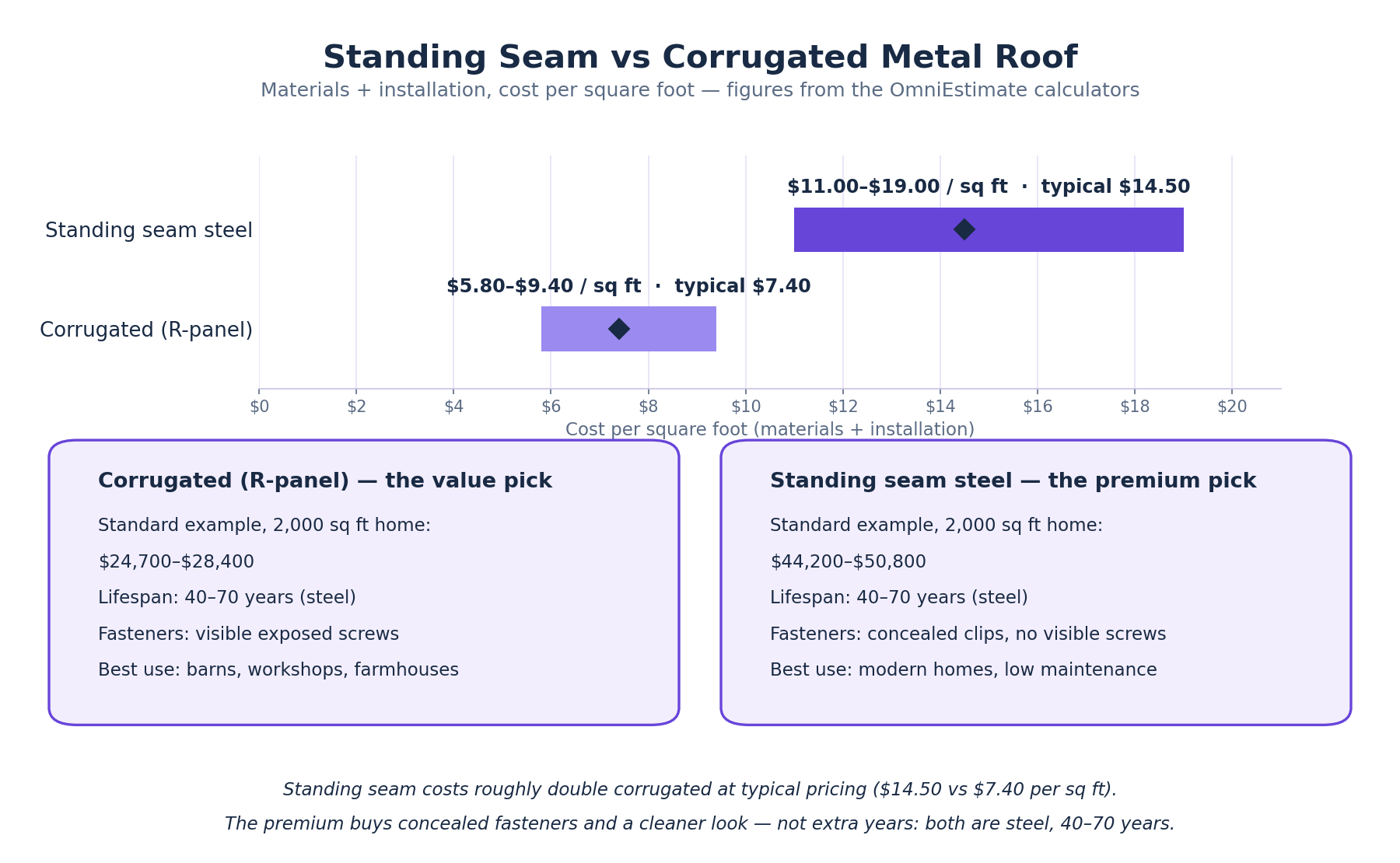
The per-square-foot gap in the standing seam vs corrugated metal roof comparison is about $7.10 at typical pricing ($14.50 against $7.40) — standing seam costs roughly double corrugated for materials and installation. The worked examples show what that means on a whole roof. On a 2,000-square-foot footprint home with about 2,440 square feet of roof, the metal roof calculator prices a standard corrugated (R-panel) roof at $24,700 to $28,400 and a standard standing seam roof at $44,200 to $50,800. The standing seam calculator’s own worked example for the same roof size prices the standard standing seam scenario at $44,900 to $51,600 — slightly higher, because the two pages use different scenario assumptions. The gap between corrugated and standing seam on that roof is roughly $19,500 to $22,400 either way, so the headline conclusion is the same on both pages: standing seam costs about twice as much as corrugated. To price your own roof, run the numbers through the Standing Seam Metal Roof Cost Calculator and the Metal Roof Cost Calculator with your roof size, panel type, and whether you are tearing off an old roof. Those two worked examples are the cleanest standing seam vs corrugated metal roof cost comparison available, because both come from the same calculator family on the same pricing basis.
The per-square-foot gap is only half of the standing seam vs corrugated metal roof cost story, though. Because standing seam lasts longer and needs less maintenance (see below), the extra $19,500 to $22,400 buys years of service as well as a cleaner roof — and a corrugated roof that needs its fasteners replaced or its screws re-sealed every decade carries a maintenance cost that standing seam mostly avoids. Two practical notes apply to either choice. First, your roof is bigger than your footprint: a 2,000-square-foot footprint home has about 2,440 square feet of roof surface once pitch and waste are counted, so measure the roof surface, not the house. Second, both calculators advise adding 10 to 15 percent contingency for hidden deck damage or code upgrades — the number that surprises owners is rarely the panel price, it is what the crew finds underneath.
Standing seam vs corrugated metal roof: lifespan and durability
Our calculator pages put steel roofing’s expected lifespan at 40 to 70 years — that range covers both panel types, because the steel itself is the same. The standing seam vs corrugated metal roof lifespan question is therefore not about the metal, it is about the fasteners. Standing seam’s concealed clips never pierce the panel, so there are no screw holes to widen, no washers to perish, and no exposed fastener heads to rust. Corrugated’s exposed screws are the weak point: the rubber washers under each screw head degrade over time, screws can back out as the metal expands and contracts, and every screw hole is a place water can eventually find. A well-installed corrugated roof still lasts decades — the 40-to-70-year range applies to both — but it needs its fasteners checked and re-tightened periodically, and the screws and washers may need replacing before the panels do. That maintenance difference is the honest summary of the standing seam vs corrugated metal roof durability question: same steel, different fastener story.
Three things matter more than the headline numbers in any standing seam vs corrugated metal roof comparison. First, installation quality: a standing seam roof installed by a crew that does not specialise in it will fail sooner than a well-installed corrugated roof, so the crew matters as much as the panel. Second, coating: the paint or coating system on the steel — Kynar, SMP, or galvanised — decides how the roof handles sun, salt air, and scratches, whatever the profile. Third, gauge: thicker steel (lower gauge number) resists denting and oil-canning better, and is worth specifying on either type. Whatever you choose, get quotes from licensed local roofers with experience in the panel type you pick, and read the warranty terms before you sign — a paint warranty and a workmanship warranty are two different things, and the fastener warranty (if any) is a third.
Standing seam vs corrugated metal roof: looks and curb appeal
This is the most visible difference in the standing seam vs corrugated metal roof comparison, and for many owners it decides the question on its own. A corrugated roof is wavy and utilitarian: the repeating ribs read clearly from the street, the screw heads are visible, and the overall effect is agricultural or industrial — which is fine on a barn, a workshop, or a modern farmhouse, and less fine on a traditional suburban home. A standing seam roof is clean and architectural: the raised seams create strong vertical lines, there are no visible fasteners, and the roof reads as a designed surface rather than a covering. That difference is why standing seam dominates on architect-designed homes and high-end renovations, while corrugated dominates on barns, garages, and budget builds.
Does the better look pay? Curb appeal is the one factor in the standing seam vs corrugated metal roof comparison where the difference is visible from the street on day one. The metal roof calculator is honest about the wider question: a metal roof can improve curb appeal and buyer confidence compared with an older or worn roof, but the effect on resale value varies by market and condition, so treat a new roof as protection for the home rather than a guaranteed financial return. That is the right framing. Buy the standing seam look because you like living under it and because it photographs well when you sell — not because you expect a dollar-for-dollar return at closing. If the building is a barn, a garage, or a rental, the corrugated look is perfectly serviceable and the savings are real.
Standing seam vs corrugated metal roof: installation and maintenance
In the standing seam vs corrugated metal roof installation comparison, the two are further apart than their prices suggest. Corrugated panels are lighter, simpler, and faster to install: the panels screw directly to the deck or purlins, the crew needs no specialist tools, and almost any roofing crew can do it. Standing seam is more specialised: the panels are formed on site or ordered to length, the clips must be placed precisely, and the seams are crimped or mechanically seamed with specialist equipment. Mechanically seamed systems add about 20% to labor compared with snap-lock standing seam. That specialist labour is part of what the standing seam premium pays for — and it is why the cheapest bid is rarely the right one for a standing seam roof.
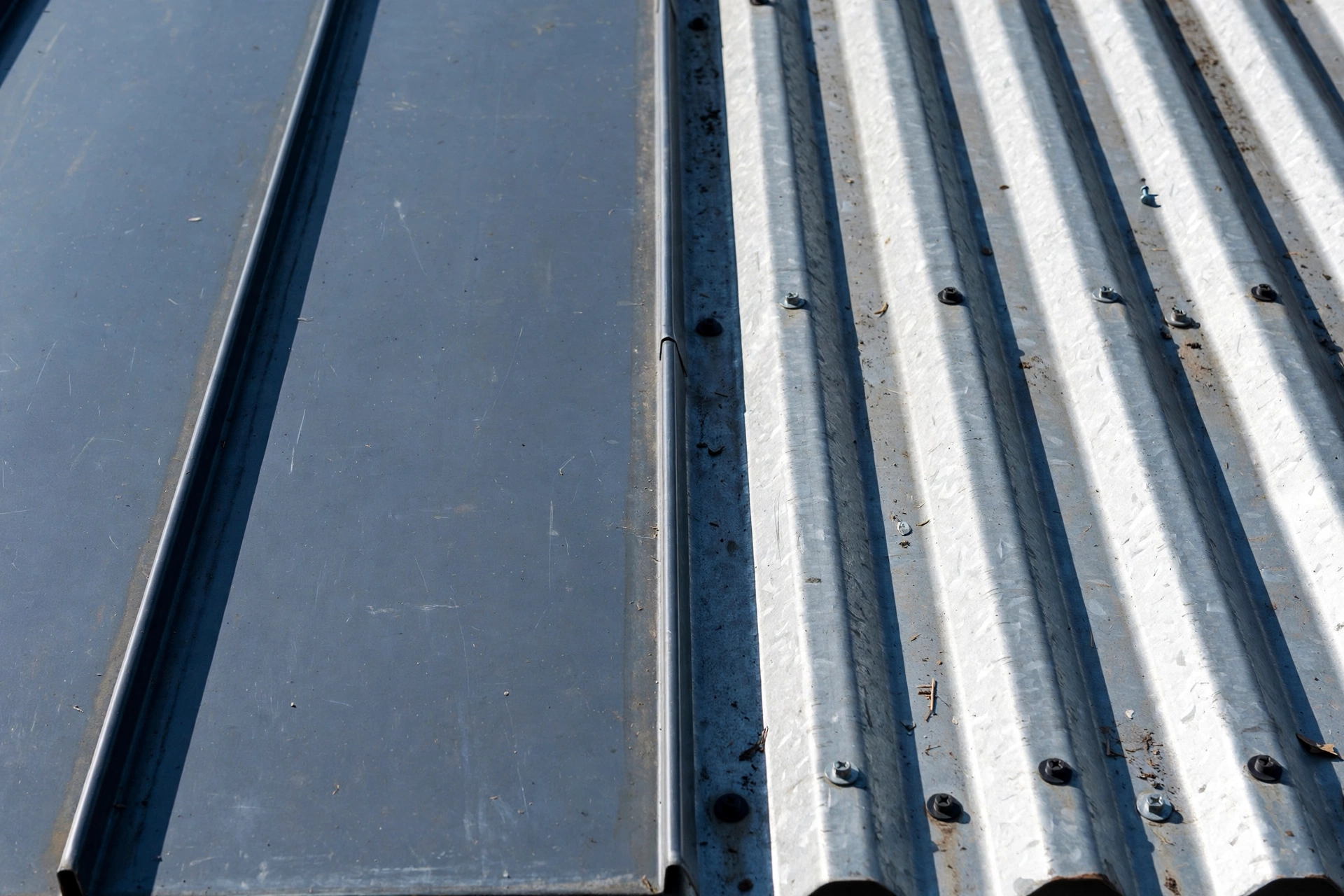
On maintenance, the standing seam vs corrugated metal roof comparison tilts the other way from installation. Standing seam needs very little: no exposed fasteners to check, no washers to replace, and the main maintenance is keeping valleys and gutters clear and checking the sealant at penetrations. Corrugated needs its fasteners checked periodically — screws back out as the metal expands and contracts with temperature, washers perish, and a loose screw is a leak waiting to happen. Neither roof needs the kind of regular attention a shingle roof does, but corrugated’s maintenance is real and recurring, while standing seam’s is mostly a matter of leaving it alone.
Which should you choose?
Choose standing seam if: the roof is on your home, you plan to stay for ten years or more, you want the longest expected life with the least maintenance, or the look matters to you. Standing seam is the better roof on every measure except price, and the roughly $19,500-to-$22,400 premium on a 2,440-square-foot roof buys concealed fasteners, a cleaner look, and a roof that mostly looks after itself. That verdict matches the numbers in this standing seam vs corrugated metal roof comparison: the premium is real, and so is the extra service.
Choose corrugated if: the roof is on a barn, garage, workshop, or outbuilding, your budget is tight, you plan to sell soon, or you want the metal look for the least money. Corrugated is a proven, honest roof at about half the price of standing seam — it simply needs its fasteners watched and looks plainer. In the standing seam vs corrugated metal roof debate, corrugated is often dismissed as the cheap option — but there is no shame in it; a well-installed corrugated roof beats a badly installed standing seam roof every time.
Either way: whichever side of the standing seam vs corrugated metal roof comparison you land on, get the gauge right (thicker steel resists denting better), get the coating right (Kynar or SMP for longevity), and get a crew with proven experience in the panel type you pick. The National Roofing Contractors Association (NRCA) is a good starting point for finding qualified contractors and understanding the standards each system should meet. For the wider picture — how metal compares with shingles, tile, and other materials — see our roofing materials compared guide and the metal roof vs shingles comparison, and if your home is around 2,000 square feet, the 2000 sq ft roof replacement cost guide breaks down the full project budget.
Frequently asked questions
Which is cheaper, standing seam or corrugated metal roof?
Corrugated metal is cheaper. Our calculators put corrugated (R-panel) at $5.80 to $9.40 per square foot for materials and installation ($7.40 typical) against standing seam steel at $11 to $19 ($14.50 typical). At typical pricing, standing seam costs about $7.10 more per square foot — roughly double.
How much longer does standing seam last than corrugated?
Both are steel roofs with the same expected lifespan range of 40 to 70 years. The difference is maintenance, not metal: standing seam’s concealed fasteners never pierce the panel, while corrugated’s exposed screws need periodic checking and their washers degrade over time. A well-maintained corrugated roof lasts decades; a standing seam roof mostly looks after itself.
Is standing seam worth the extra cost over corrugated?
For a home you plan to keep, usually yes. Standing seam costs roughly $19,500 to $22,400 more on a 2,440-square-foot roof, but it gives you concealed fasteners, a cleaner look, and less maintenance over 40 to 70 years. For a barn, garage, or budget roof, corrugated is hard to beat.
What is the difference between standing seam and corrugated metal roofing?
Standing seam uses raised seams with concealed clips — no fasteners pierce the panel surface. Corrugated (R-panel) uses a wavy profile screwed directly through the panel face, with visible screw heads and rubber washers. Standing seam costs about twice as much and needs less maintenance; corrugated costs less and installs faster. That fastener difference is the heart of the standing seam vs corrugated metal roof comparison.
What is the difference between snap-lock and mechanically seamed standing seam?
Snap-lock standing seam panels click together and are faster to install. Mechanically seamed systems are crimped shut with specialist equipment, add about 20% to labor, and give a tighter, more weatherproof seam — worth it on low-slope roofs or in severe weather areas.
Do metal roofs need special maintenance?
Very little. Standing seam needs its valleys and gutters kept clear and sealant at penetrations checked occasionally. Corrugated needs its fasteners checked periodically — screws can back out as the metal expands and contracts, and washers perish over time. Neither needs the regular attention a shingle roof does.
How much does a standing seam or corrugated metal roof cost for my home?
It depends on roof size, slope, panel type, tear-off, and your area. Run your numbers through the Standing Seam Metal Roof Cost Calculator and the Metal Roof Cost Calculator for budget, standard, and premium estimates, then confirm with written quotes from licensed local roofers.
The bottom line
Standing seam vs corrugated metal roof comes down to this: corrugated costs about half as much and does the job, while standing seam costs roughly double and gives you concealed fasteners, a cleaner look, and less maintenance over 40 to 70 years. For most homeowners, standing seam is the better value on a home you plan to keep — the premium is real, but so is the extra service. For a barn, garage, or tight budget, corrugated is a perfectly honest choice. Either way, measure your roof properly, price both options on the same basis, add your 10 to 15 percent contingency, and hire a crew that has installed your chosen panel many times before. The calculators above will give you the numbers to take into that conversation.
