
Kitchen and Bathroom Materials Compared: Cabinets, Counters, and Fixtures.
The short answer
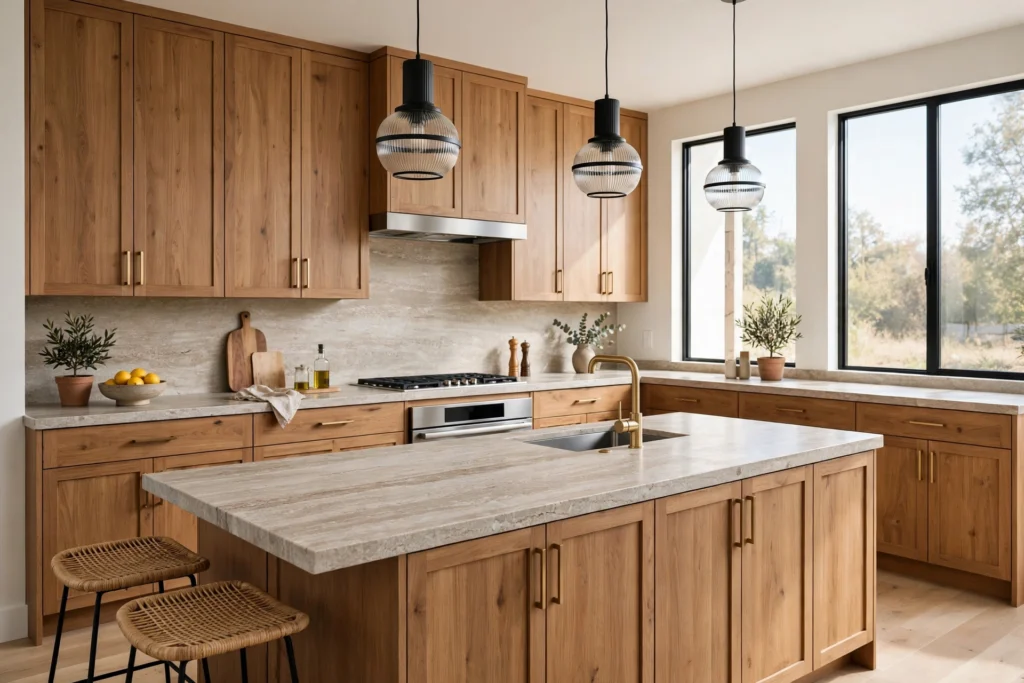
Materials decide how a remodel looks, how long it lasts, and how much maintenance it needs. Cabinets are about construction quality, countertops are about durability versus care, and fixtures are about build quality and finish. Choose for the room’s real conditions — not the showroom. And choose once: ripping out a wrong choice costs far more than the upgrade would have.
Planning a kitchen project? Price it first with the kitchen remodel cost calculator.
The real cost of choosing wrong
Material regret is the most expensive kind. A countertop that stains in month two can’t be returned. Cabinets that swell near the dishwasher can’t be uninstalled without damage. The price difference between the adequate choice and the right choice is almost always smaller than the cost of living with — or replacing — the wrong one.
That’s why this guide focuses on how materials behave in real kitchens and bathrooms, not just how they photograph. A showroom rewards the eye; your home rewards the practical.
Cabinets compared
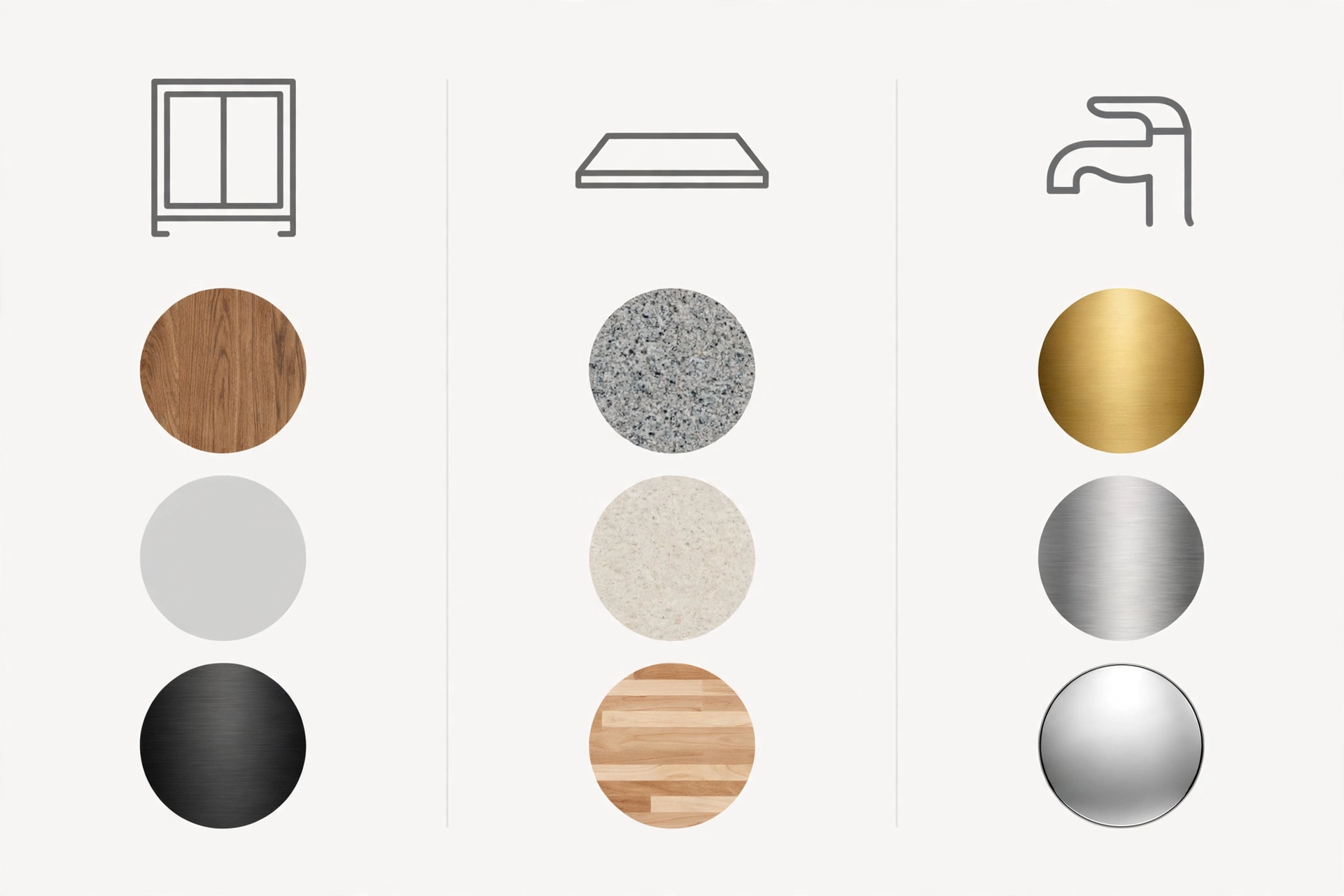
Cabinet quality lives in the box construction, not just the door style.
| Option | What it is | Best for | Watch out for |
|---|---|---|---|
| Stock cabinets | Pre-made sizes, limited finishes | Tight budgets, standard layouts | Filler strips needed for odd spaces |
| Semi-custom cabinets | More sizes and finishes, some modification | Most kitchens — the sweet spot | Lead times longer than stock |
| Custom cabinets | Built to your exact space and spec | Unusual layouts, specific designs | Highest cost, longest wait |
| Plywood boxes | Strong, moisture-resistant construction | Long-term durability | Costs more than particleboard |
| Particleboard / MDF boxes | Budget-friendly, smooth for paint | Painted finishes on a budget | Swells with moisture damage — risky near sinks |
| Solid wood doors | Durable, refinishable | A classic look that lasts | Needs sealing in humid areas |
| Laminate / thermofoil doors | Affordable, easy to clean | Budget kitchens, rentals | Can peel with heat and moisture over time |
Cabinet construction: what actually matters
Two cabinets can look identical with the doors closed and live completely different lives. The difference is in the parts you don’t see.
| Detail | What to look for |
|---|---|
| Box material | Plywood resists moisture; particleboard swells when wet |
| Joinery | Dovetail or doweled joints outlast stapled ones |
| Drawer slides | Full-extension, soft-close ball-bearing slides feel better and last longer |
| Hinges | Soft-close, adjustable hinges keep doors aligned for years |
| Shelves | Thicker shelves (3/4 inch) don’t sag under dishes |
Ask the showroom to open a drawer and pull it all the way out. The glide, the sturdiness, the way it closes — that tells you more than any brochure.
Countertops compared
Every countertop is a trade-off between durability, maintenance, and looks.
| Material | Strengths | Watch out for |
|---|---|---|
| Laminate | Affordable, many patterns | Scratches and burns; seams visible |
| Butcher block | Warm look, renewable surface | Needs regular oiling; stains and cuts show |
| Granite | Very durable, heat resistant | Needs periodic sealing; natural variation |
| Quartz | Durable, low maintenance, consistent | Less heat tolerant than granite |
| Marble | Beautiful, classic | Stains and etches easily — high maintenance |
| Solid surface | Seamless, repairable | Scratches more easily than stone |
Countertop edges and finishes
The slab is only half the decision. Edge profiles and surface finishes change both the look and the maintenance.
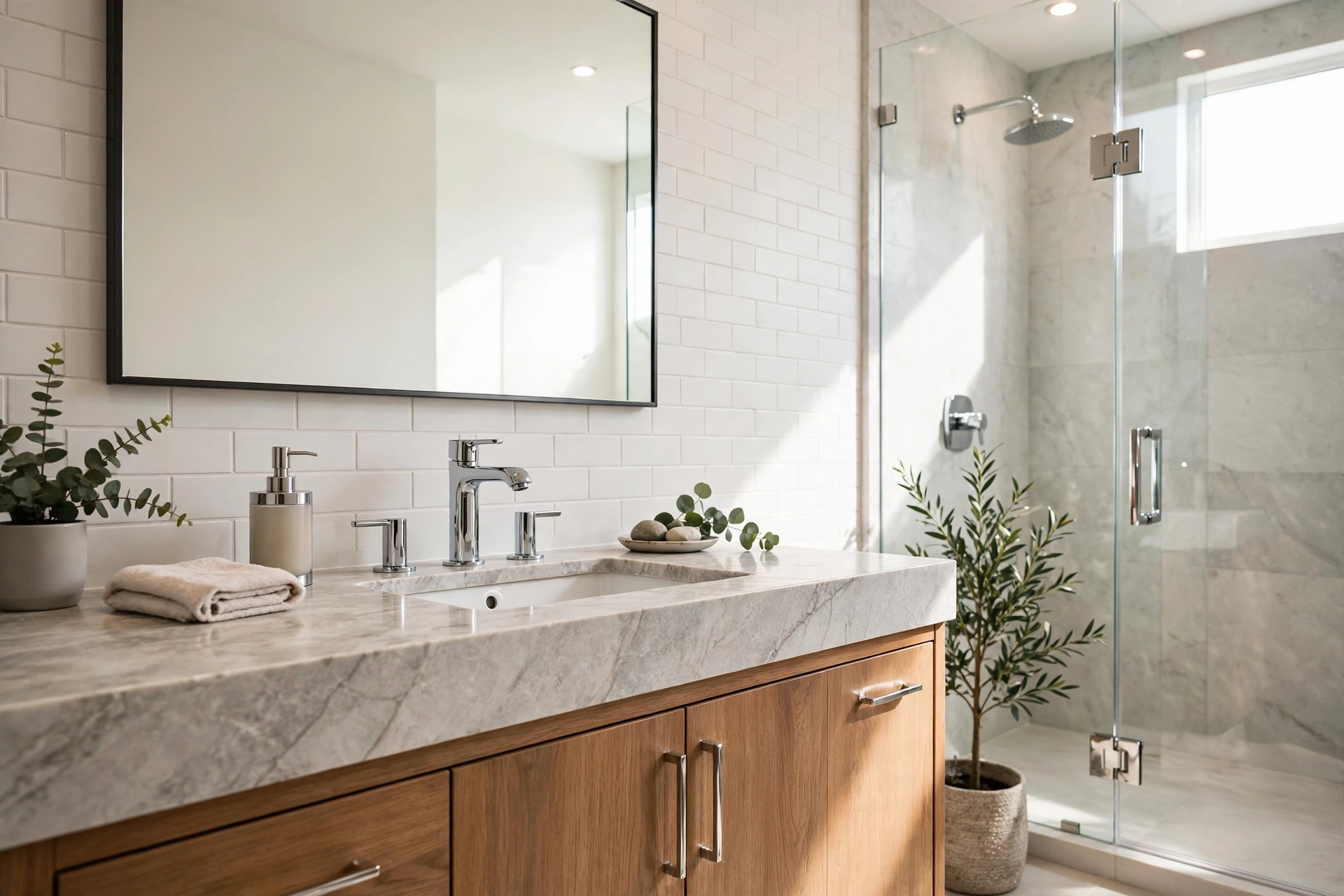
A simple eased edge is timeless and easy to wipe; ornate ogee edges trap crumbs and cost more to fabricate. On finishes, polished stone looks dramatic but shows every smudge — honed or matte finishes hide daily wear far better in a working kitchen. For bathrooms, where water sits on every surface, a honed finish with eased edges is the practical luxury choice.
Fixtures compared
Faucet quality is in the internal construction — and the finish decides the cleaning routine.
| Finish | Strengths | Watch out for |
|---|---|---|
| Chrome | Affordable, easy to clean | Shows water spots |
| Brushed nickel | Hides spots and fingerprints | Costs more than chrome |
| Stainless steel | Durable, matches appliances | Can show smudges |
| Matte black | Striking modern look | Shows soap residue; touch-ups hard to match |
| Brass / gold tones | Warm, premium look | Finish quality varies widely |
Whatever finish you choose, look for solid brass internal construction over zinc or plastic — it lasts far longer, especially in hard water.
Matching materials to the room
- Kitchen priorities — heat, stains, and heavy daily use favor quartz or granite counters and plywood cabinet boxes.
- Bathroom priorities — constant moisture favors sealed stone or solid surface and moisture-resistant cabinet construction
- Coordinate finishes across rooms for a cohesive look, but let each room’s conditions lead.
- Near sinks and dishwashers, moisture resistance beats appearance every time.
Coordinating appliance finishes with fixtures and hardware
Appliances are the visual anchor of most kitchens, so their finish sets the tone for everything else in the room. If your refrigerator, oven and dishwasher are stainless steel, brushed nickel or stainless fixtures will sit comfortably alongside them, while polished chrome can read as slightly cooler and brighter by comparison. Matte black appliances pair naturally with matte black or dark bronze hardware, although a matte black tap can still work with stainless appliances provided the cabinet handles repeat the tap’s finish and tie the scheme together.
A useful rule of thumb is to limit yourself to two metal finishes per room: one dominant and one accent. Three or more competing finishes tend to look accidental rather than curated, and they make future replacements harder to match. Apply the same discipline in the bathroom, where the tap, shower trim, towel bars and cabinet pulls should read as one intentional scheme rather than a collection of samples.
Undertones matter more than colour names. Stainless steel varies between warm and cool casts depending on the manufacturer, and “brushed nickel” from one brand can look noticeably different from another’s. Compare physical samples side by side in your own lighting rather than trusting catalogue photographs, and hold them against your chosen countertop and cabinet door samples at the same time. Brushed and matte finishes are more forgiving than polished ones because their texture breaks up reflections and disguises minor mismatches.
Think about replacement cycles too. Appliances are typically replaced more often than taps, cabinet hardware or worktops, so it pays to keep the permanent layers timeless. Brushed nickel, classic stainless and matte black have all proved their staying power, while highly fashionable finishes can date a kitchen within a few years. If you love a bold finish, confine it to elements that are cheap and easy to change, such as cabinet handles or a splashback, rather than the tap or the appliance suite.
Finally, check how finishes behave in daily use before committing. Polished surfaces show fingerprints and water marks within hours in a busy household, while brushed and matte surfaces hide them far better. Run a damp cloth over a showroom sample, leave a few fingerprints, and see how much effort it takes to restore the finish. A combination that looks flawless under showroom spotlights but demands constant polishing at home is the wrong combination, however well the metals match.
Some pairings that reliably work well together:
- Stainless appliances — brushed nickel or stainless taps and handles for a seamless professional look.
- Matte black appliances — matte black hardware with a brushed nickel or champagne bronze tap as the accent.
- White or panel-ready appliances — almost any finish works; let the countertop set the direction.
- Mixed metals — keep the tap and cabinet hardware in one finish family and let lighting be the accent.
If you are remodelling in phases, decide the finish scheme before you buy the first appliance. Write it down, keep a sample board with the tap finish, cabinet handle, countertop offcut and a paint swatch, and bring it to every showroom visit. A little coordination up front prevents years of small visual compromises.
When samples disagree with each other, trust the combination that is easiest to live with rather than the one that photographs best. The most successful kitchens and bathrooms are not the ones with the rarest materials; they are the ones where every surface, finish and fitting was chosen for the room it actually serves.
Frequently asked questions
What is the most durable kitchen countertop?
Quartz and granite are among the most durable — resistant to scratches, heat, and stains with minimal maintenance. Butcher block and marble look beautiful but need more care and sealing.
Are custom cabinets worth it over stock?
Custom cabinets fit unusual spaces perfectly and offer any finish, but stock and semi-custom cabinets cover most kitchens well at lower cost. The right choice depends on your layout, not prestige.
What cabinet material lasts longest?
Plywood boxes with solid wood doors last longest. Particleboard and MDF can swell with moisture damage, so they’re riskier near sinks and dishwashers.
Which faucet finish is easiest to maintain?
Brushed nickel and stainless steel hide water spots and fingerprints best. Chrome shows spots but cleans easily; matte black looks striking but can show soap residue.
Should kitchen and bathroom materials match?
They don’t need to match, but coordinating finishes (faucets, hardware) across the home looks intentional. Prioritize each room’s needs first — moisture resistance in bathrooms, durability in kitchens.
What countertop is best for a busy family kitchen?
Quartz, for most families — it resists stains and scratches, needs no sealing, and handles daily abuse with just soap and water. If you love natural stone, granite is the tougher choice over marble, which etches and stains too easily for heavy family use.
Are soft-close hinges and drawer slides worth it?
Yes — they’re one of the highest-value upgrades in cabinetry. They prevent slamming damage, keep doors aligned longer, and make the whole kitchen feel better built. The cost difference is small relative to the cabinets themselves, and you’ll use them dozens of times a day.
Next step
Shortlist your cabinet construction, countertop material, and fixture finish using the tables above — then get them quoted as named products, not vague allowances. Visit a showroom and touch everything: open the drawers, feel the edges, run water over the sample. And run the kitchen remodel cost calculator linked at the top of this guide first so you know your budget before showroom visits tempt you past it.
