
Repair or Replace Your AC? Age, Costs, and Warning Signs.
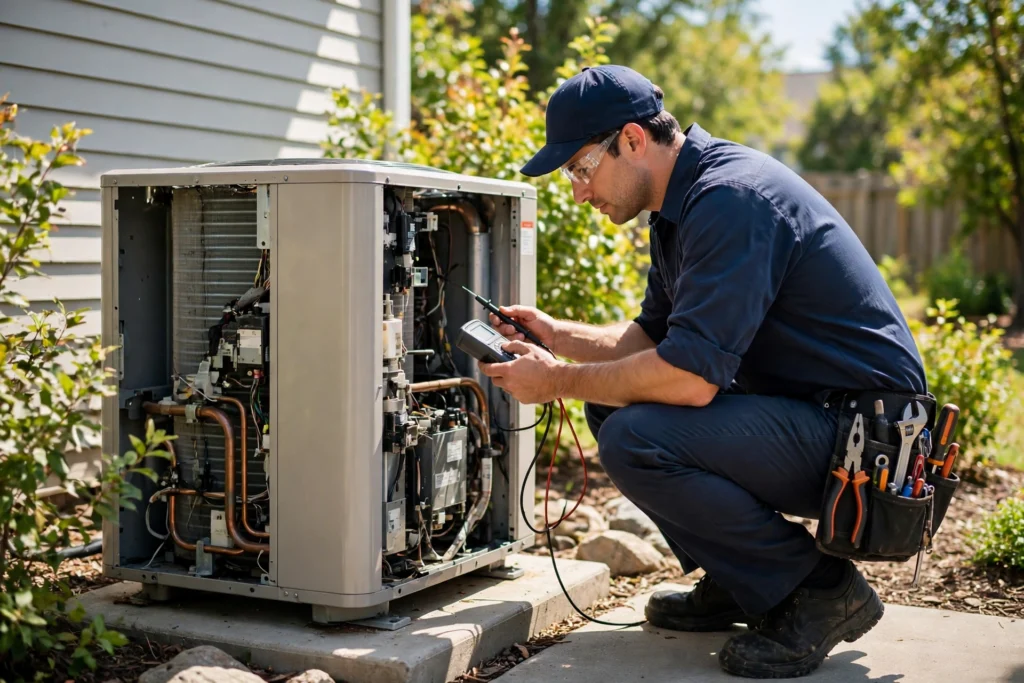
The short answer
Repair wins for a younger system with a single, affordable problem — a capacitor, a thermostat, a minor fix. Replace wins when the unit is old, breakdowns keep coming, or a major component like the compressor has failed. Age is the tiebreaker: most central ACs last 15 to 20 years.
If replacement is on the table, price it first with the AC replacement cost calculator.
The framework below gives you the same decision process a good technician uses — age, condition, and math, in that order.
The repair math that actually works
Technicians use a simple rule of thumb: multiply the repair cost by the age of the unit. If the result is high relative to a new system’s cost, replacement usually wins. A $600 repair on a 12-year-old unit is a very different proposition than the same repair on a 4-year-old one.
The logic is straightforward. Every repair on an old system buys time, not reliability — the next failure is already lining up. On a young system, a repair resets the clock. Age is the multiplier that turns the same dollar figure into a good or bad decision.
Frequency matters too. One repair in five years is maintenance. Three repairs in two summers is a system telling you it’s done. Track your repair history — the pattern is more honest than any single quote.
The decision factors
Run your situation through these factors before you decide.
| Factor | Repair usually wins | Replace usually wins |
|---|---|---|
| Age of the unit | Well under 15 years | 15–20 years or older |
| Frequency of breakdowns | First or rare issue | Repairs every season or two |
| Repair cost vs replacement | Small fraction of a new system | Large fraction of a new system |
| Refrigerant type | Modern refrigerant, no leak issues | R-22 system needing a recharge |
| Energy bills | Stable | Climbing year over year |
| Comfort | Cools evenly, controls humidity | Hot/cold spots, clammy air |

Warning signs your AC is done
These signs point toward replacement rather than another repair.
| Sign | What it tells you |
|---|---|
| Blowing warm air | Compressor or refrigerant issue — potentially major |
| Frequent on-off cycling | System struggling; could be sizing or component failure |
| Grinding or screeching noises | Mechanical wear, often expensive to fix |
| Water leaking around the indoor unit | Drain or coil issue; check promptly |
| Ice on the refrigerant lines | Airflow or refrigerant problem |
| Thermostat never satisfied | System can’t keep up anymore |
| Energy bills climbing | Efficiency has fallen off |
| Unit is 15+ years old | At or past expected lifespan — every repair is borrowed time |
When repair is the smart money
Repair wins when the system is young, the failure is isolated, and the rest of the unit is healthy. A failed capacitor on a 6-year-old system, a clogged drain line, a bad thermostat — these are cheap fixes on equipment with years left.
Repair also wins when you’re selling soon and the system works. A functioning older unit won’t thrill a buyer, but a brand-new system rarely pays for itself in sale price. Disclose honestly, price fairly, and let the next owner choose.
And repair wins when the problem is outside the equipment: leaky ducts, a filthy filter, a thermostat in a bad location. Fixing the real cause beats replacing a system that was never the problem.
What a replacement involves
Knowing the process keeps the project smooth.
- A proper load calculation to size the system — not a rule of thumb
- Choosing the system type and efficiency level
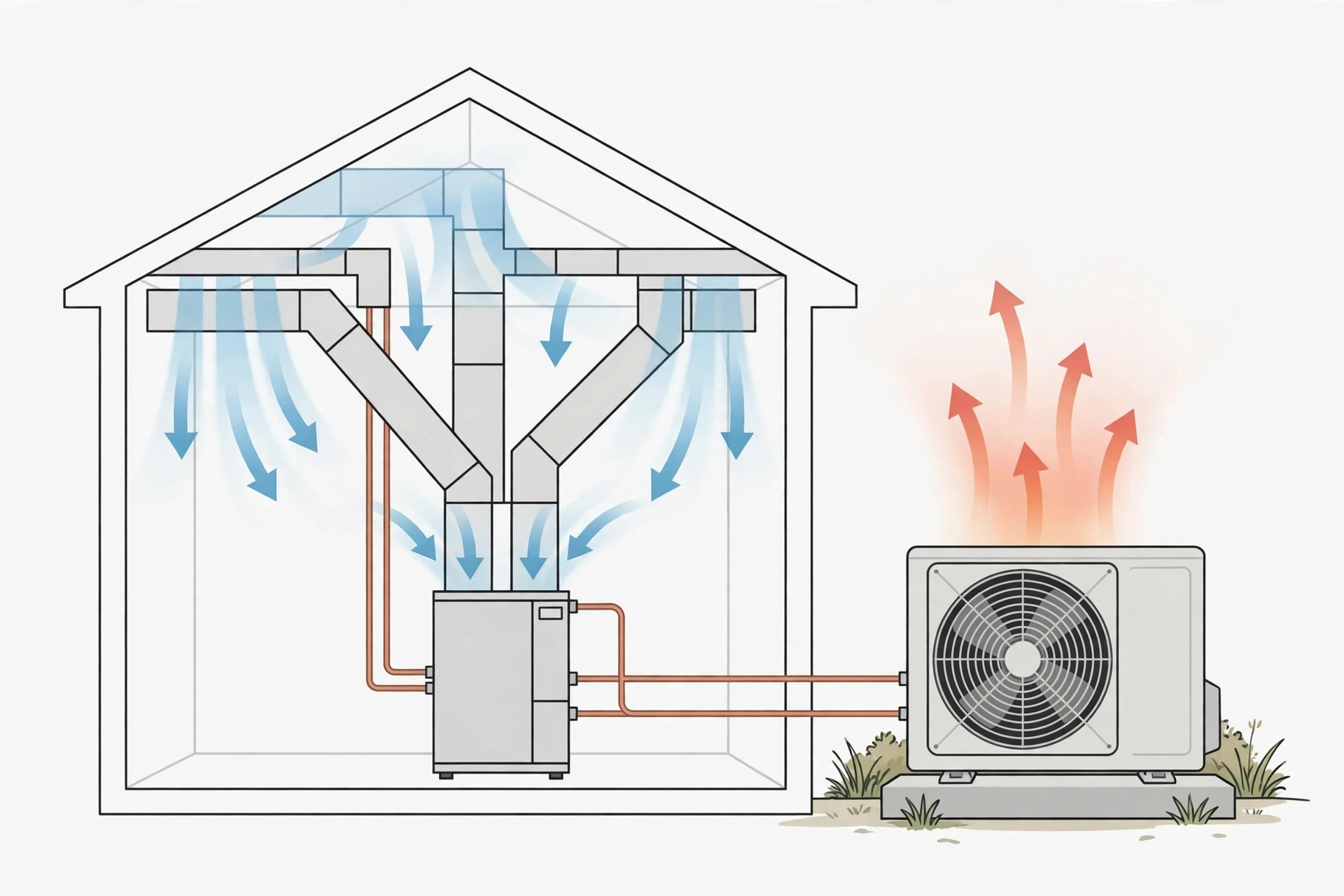
- A ductwork inspection — leaky ducts undermine a new unit
- Electrical panel and disconnect check
- Permits where required
- A written timeline from the installer
- What to ask: warranty terms, what’s included in the quote, and who handles permits
When a repair is the right call
Don’t replace a system over a small problem. These repairs are usually worth doing: a failed capacitor or contactor; a faulty thermostat; a clogged condensate drain; a minor refrigerant leak on a young system with modern refrigerant; a worn fan motor on an otherwise healthy unit. If the unit is young and the fix is small, repair it and keep up with maintenance.
When replacement pays for itself
Replacement wins when the system is old AND inefficient. A 15-year-old unit isn’t just unreliable — it’s expensive to run every single day. Newer systems use far less energy for the same cooling, so part of the replacement cost comes back through lower bills.
Replacement also wins when the repair is major: a dead compressor or a leaking evaporator coil on an old system. These are the two most expensive components, and putting one into a system that’s already past its prime is throwing good money after bad.
Don’t forget the refrigerant factor. Older systems often use refrigerants that are being phased out, which makes recharges expensive and eventually impossible. If your tech mentions refrigerant availability, take it seriously — it’s a countdown clock.
Frequently asked questions
How do I know if my AC needs replacing?
Age is the biggest factor — most central ACs last 15 to 20 years. Add frequent breakdowns, rising energy bills, and repairs that cost a large fraction of a new system, and replacement is usually the smarter move.
Is it worth repairing a 15-year-old air conditioner?
Usually not for major repairs. A 15-year-old unit is near the end of its expected life, so an expensive repair buys little time. Minor fixes like a capacitor or thermostat can still make sense to get through a season.
What is the most expensive AC repair?
Compressor and evaporator coil replacements are typically the most expensive repairs — often a large fraction of a full system replacement. When either fails on an older unit, replacement usually wins.
Should I replace my AC if it uses R-22 refrigerant?
R-22 is phased out and increasingly expensive to recharge. A system that needs a refrigerant recharge on R-22 is a strong candidate for replacement with a modern refrigerant system.
How long does an AC replacement take?
Most straightforward replacements are completed in a day. Jobs involving ductwork modifications, electrical upgrades, or permits can take longer — your installer should give you a timeline in writing before work starts.
How long do air conditioners last?
Most central AC systems last 12 to 15 years with regular maintenance, less without it. Heat pumps in year-round use wear faster. Age alone isn’t a verdict — a well-maintained 14-year-old unit can outlast a neglected 10-year-old one — but past 15, every season is borrowed time.
Should I replace the furnace at the same time as the AC?
Often yes, if both are old. The indoor and outdoor units are designed to work as a matched system — mixing a new high-efficiency outdoor unit with an old furnace leaves efficiency and comfort on the table. If the furnace is young and healthy, though, there’s no need to replace it early.
Next step
Be honest about your unit’s age and repair history using the factors above. If it’s a young system with a small problem, repair it. If it’s old, failing, or on R-22, get replacement quotes — and run the AC replacement cost calculator linked at the top of this guide first so you know your numbers going in. Run the AC replacement cost calculator linked at the top first — knowing the replacement number makes the repair-or-replace math honest.
Get a second opinion before you replace
A replacement recommendation deserves a second look before you commit. Cooling systems are a major purchase, and honest technicians can genuinely disagree about whether a repair is worth doing. A second opinion either confirms the first diagnosis — letting you proceed with confidence — or saves you from replacing a system that still had years left.
Ask the first technician to show you the failure, not just describe it. A good engineer can point to the failed component, explain why it failed, and share the readings that back up the call. Vague answers — ‘it’s just old’, ‘they all go at this age’ — are a reason to get another opinion, not a reason to replace.
Get that second opinion from an independent company, not another technician from the same firm. Ask both companies the same questions: exactly what failed, what a repair would involve and how long it should last, how old the system is and which refrigerant it uses, and what efficiency the proposed replacement offers compared with your current unit. When the answers line up, you can decide with confidence; when they don’t, you know which questions still need answers.
Watch for pressure tactics. A company that demands a decision on the spot, leans on a discount that expires tonight, or won’t put the diagnosis in writing is selling, not diagnosing. A proper replacement quote should be itemised in writing: the equipment model, its efficiency rating, exactly what’s included, the warranty terms, and who handles permits.
Also ask whether repair is genuinely off the table. Replacement is the more profitable job, so some companies recommend it even when a repair would buy years of reliable service. If the system is under twelve years old and the failure is a single component, most straight-talking technicians will say repair is reasonable — and that honesty is exactly what a second opinion tests for.
Finally, check the simple things yourself before anyone arrives. Make sure the thermostat is set to cool, the filter is clean, the breaker hasn’t tripped, and the outdoor unit is clear of debris and vegetation. Plenty of ‘dead’ systems come back to life with a clean filter and a reset breaker — and no honest technician will mind that you checked first.
