The short answer
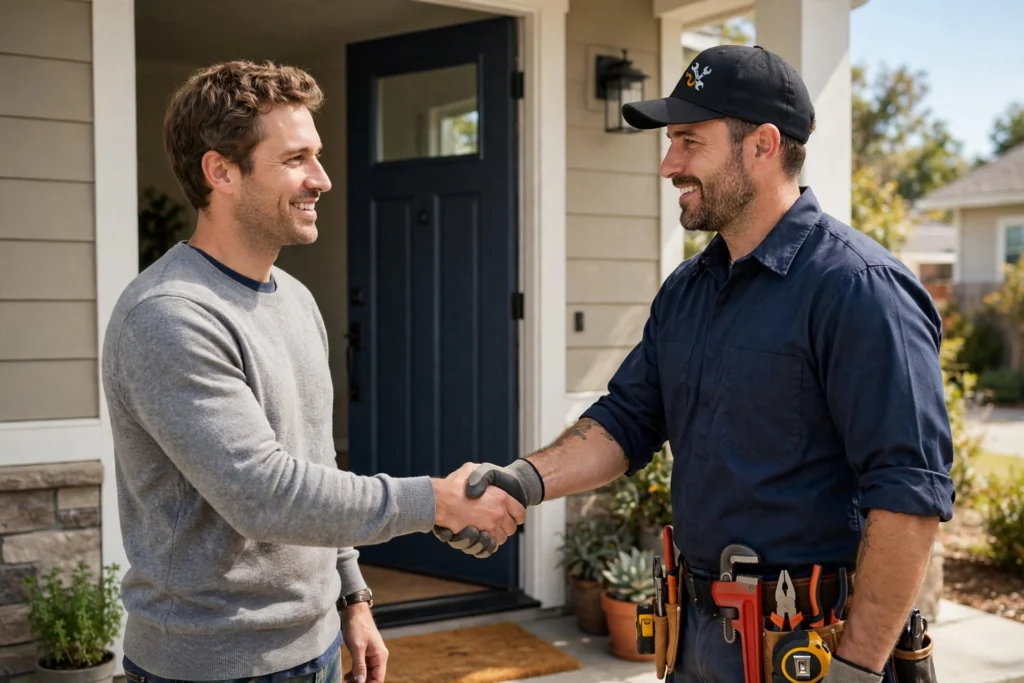
The plumber you choose matters more than the fixture you choose. A skilled plumber with standard parts beats a careless one with premium parts every time. Get at least three written quotes for any significant job, verify licensing and insurance yourself, and never pay in full before the work starts.
Know your numbers for water heater jobs first — run the
water heater replacement cost calculator.
Plumbing mistakes hide inside walls — the plumber you choose matters more than the fixtures you pick.
Why plumber hiring mistakes are expensive
A bad paint job is ugly. Bad plumbing is destructive. A leaking joint inside a wall can rot framing for months before anyone notices. An improperly vented drain gurgles and stinks. A water heater installed without proper venting or safety controls is a hazard, not just an inconvenience.
And plumbing mistakes are expensive to fix because the evidence is hidden. By the time you see the stain on the ceiling, the damage behind it is already extensive. That’s why the cheapest plumber is rarely the cheapest outcome — the real price of plumbing work includes everything it touches.
The good news: great plumbers are easy to spot. They’re licensed, they explain before they wrench, their quotes are specific, and they guarantee the work in writing.
The hiring checklist
Work through these steps for every plumber you consider. Anyone legitimate will expect them.
Plumber hiring checklist
| Step |
What to do |
Why it matters |
| Get three written quotes |
At least three for significant jobs, broken out the same way |
Reveals the real price range and exposes outliers |
| Verify the license |
Check the license number with your state or locality |
Requirements vary — confirm what yours are |
| Verify insurance |
Ask for liability coverage and confirm it |
Protects you if something goes wrong on the job |
| Check reviews and references |
Past customers, photos of completed work |
Consistent complaints about the same issue are a pattern |
| Get everything in writing |
Scope, parts, timeline, warranty, payment terms |
Verbal estimates are not quotes |
| Confirm the labor warranty |
How long the workmanship is covered, in writing |
You need to know who fixes a failed repair |
| Agree a payment schedule |
Deposit for larger jobs, balance on completion |
Never the full amount before work starts |
Licenses and insurance that actually matter
Plumbing is a licensed trade in most states, and the license levels tell you who’s qualified to do what.
Plumbing credentials worth checking
| Credential |
What it proves |
| State plumbing license |
Legally allowed to do plumbing work; verify it’s current |
| Master plumber |
Highest level — can design systems and pull permits |
| Journeyman plumber |
Qualified to do the work under proper supervision |
| Liability insurance |
Protects your property if something goes wrong |
| Workers’ comp |
Protects you if a worker is injured in your home |
Ask for the license number and verify it with your state board — it takes two minutes online. Unlicensed plumbing work can void your homeowner’s insurance and fail inspection when you sell.
Red flags that mean walk away
Any one of these is reason enough to cross a plumber off your list, no matter how good the price sounds.
Red flags, and what they mean
| Red flag |
What it tells you |
| No license, or won’t show it |
They may not be legally allowed to do the work |
| Demands full payment upfront |
Legitimate plumbers never need all the money before starting |
| No written estimate |
Nothing is enforceable without one |
| Cash-only, no receipt |
No paper trail if something goes wrong |
| Bid far below the others |
Something is missing: parts quality, warranty, or insurance |
| No proof of insurance |
You carry the risk if there is damage or injury |
| Won’t provide references |
You can’t check work you can’t see |
| High-pressure “today only” tactics |
A good quote is still good tomorrow |

Comparing quotes line by line
Quotes are only comparable when they describe the same job. Ask every bidder to break theirs down the same way, then compare line by line.
Comparing plumbing quotes line by line
| Line item |
What to check |
| Labor vs materials |
Each shown separately, not one lump sum |
| Diagnostic or call-out fee |
Whether it applies, and whether it is credited toward the work |
| Parts and fixtures |
Brand and model named, not just “new faucet” |
| Warranty terms |
Labor warranty length and what it covers, in writing |
| Timeline |
When the work starts and how long it takes |
| Cleanup |
Who restores the work area afterward |
| Payment terms |
Deposit, milestones, and final payment conditions |
Questions to ask before you sign
- Are you licensed and insured — can I see proof?
- Is this your quote or an estimate — what could change it?
- Who exactly will do the work — you or someone else?
- What parts will you install, and what warranty comes with them?
- What does your labor warranty cover, and for how long?
- When is the final payment due?
The quote conversation
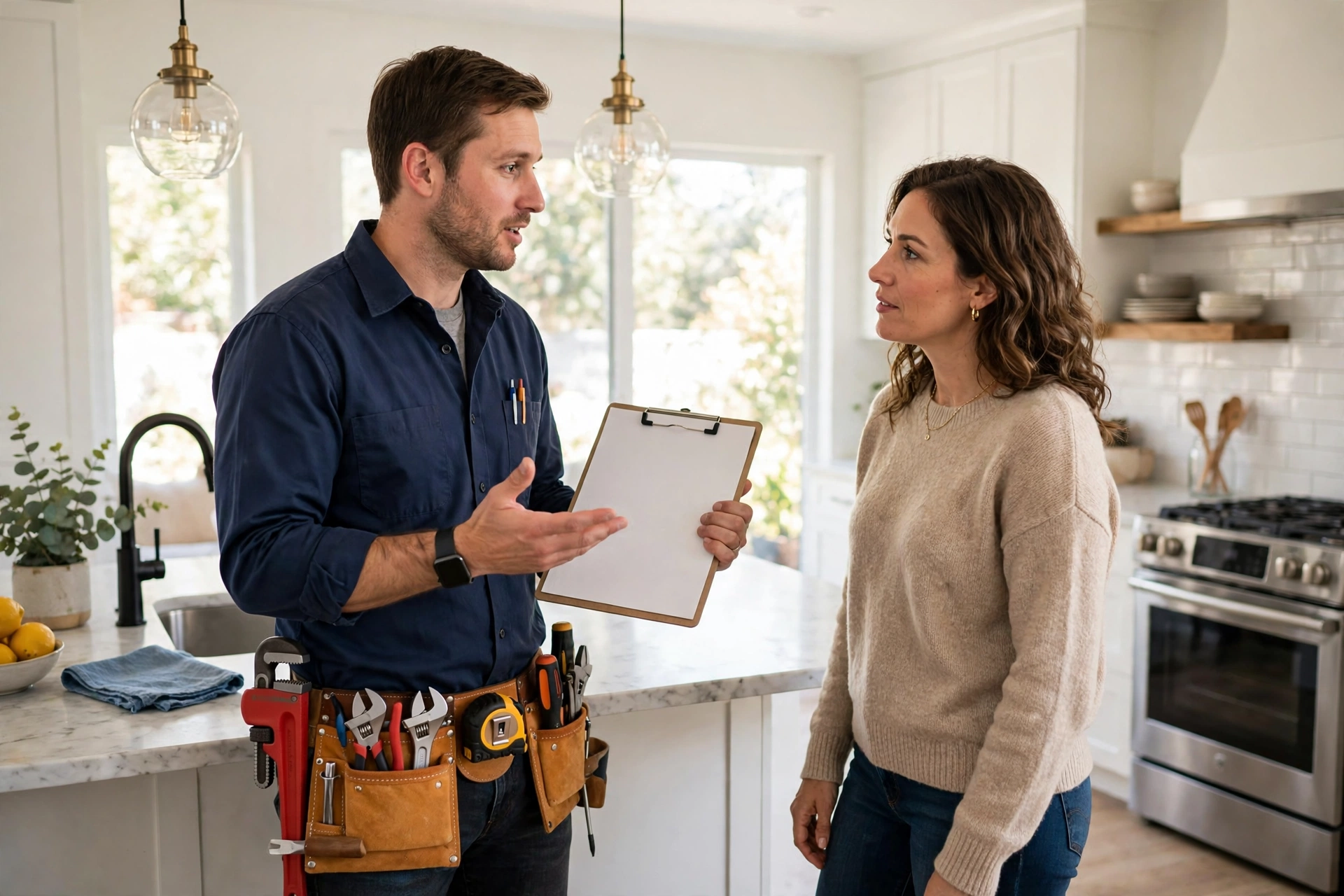
Plumbers quote two ways: flat-rate per job or hourly plus materials. Neither is automatically better — what matters is that the quote is specific. ‘Fix the leak’ with a single number tells you nothing. A good quote names the work, the materials, and what’s excluded.
Ask every bidder the same four questions: what’s included in the price, what happens if you find more damage once walls are open, is the quote firm or an estimate, and what warranty covers the labor. The answers reveal who’s thorough and who’s guessing.
Be suspicious of phone quotes for anything beyond the simplest jobs. A plumber who prices a bathroom rough-in without seeing the space is guessing — and guesses get revised upward once the walls are open.
Emergency plumber calls: when to pay the premium
Some plumbing problems cannot wait for three quotes. A burst pipe flooding the kitchen, sewage backing up into a bathroom, or the smell of gas near a water heater are genuine emergencies — every hour you delay multiplies the damage and the eventual repair bill. In those moments, paying the premium for an emergency callout is the cheapest option you have.
The trick is knowing who to call before the crisis hits. Save the number of a licensed local plumber who offers genuine round-the-clock emergency service — not just an answering service that pages someone back in the morning. Ask in advance what an emergency visit includes and how the callout is charged. A real emergency plumber answers the phone at 2am, gives you an arrival window, talks you through shutting off the water while you wait, and arrives with the parts needed to stabilise the situation.
Not everything that feels urgent is an emergency. A dripping tap, a slow-draining sink, or a toilet that keeps running is annoying but not destructive — those can comfortably wait a day or two for a scheduled visit at standard rates. Use a simple test: is water actively going where it should not, or is anyone unsafe? If the answer is yes, call now and pay the premium gladly. If the answer is no, book a normal appointment and keep your money.
When the emergency plumber arrives, the normal rules still apply. Confirm the licence, agree the price in writing before work starts, and never pay the full amount upfront — urgency is no excuse to skip vetting. Once the immediate crisis is stabilised, treat any permanent fix as a separate job: get it quoted properly, in daylight, with competing quotes if it is a big one.
Frequently asked questions
How many quotes should I get for a plumbing job?
At least three written quotes for any significant job. Three quotes reveal the real price range and make outliers — suspiciously low or high — easy to spot. For a tiny fix, one trusted plumber is fine.
Should a plumber be licensed and insured?
Yes — a valid plumbing license for your state or locality, plus liability insurance. Licensing requirements vary by place, so check what yours requires and verify the license number yourself.
Should I pay a plumber upfront?
A small deposit for larger jobs is normal; full payment before the work starts is not. Pay the balance only when the work is complete and you have checked it. Never pay the final amount for a job you have not inspected.
What should a plumbing quote include?
The scope of work, labor and materials broken out, the specific parts or fixtures to be installed, warranty terms on labor, timeline, and payment terms — all in writing. A verbal estimate is not a quote.
How do I know if a plumbing quote is too high or too low?
Compare at least three quotes line by line. A bid far below the others usually means something is missing — cheaper parts, no warranty, or no insurance. A bid far above should come with a clear explanation of what is extra.
Should I hire a plumber or a handyman for small jobs?
For anything involving supply lines, drains, gas, or water heaters, hire a licensed plumber — the stakes are too high and most jurisdictions require it. A handyman is fine for cosmetic work like caulking or swapping a faucet handle, but not for anything inside the wall or under pressure.
Do plumbers charge for estimates?
Many offer free estimates for planned projects, but expect a diagnostic or trip fee for troubleshooting calls — that’s fair, since diagnosis is skilled work. Ask upfront: is the visit free, and is the fee waived if I hire you for the repair?
Next step
Run the
water heater replacement cost calculator linked at the top of this guide if a water heater is part of your project, so you walk into every conversation knowing your numbers. Then work the checklist above for each plumber, compare the quotes line by line, and sign only when everything is in writing. Start with the water heater replacement cost calculator linked at the top so you know the ballpark before anyone quotes.