
How Much Does a Roof Replacement Cost? Materials, Labor, and Size Explained.
The short answer
A roof replacement does not have one fixed price. The total is driven mainly by how big the roof is, what material you choose, how steep and complex the roof is, how many old layers must be removed, what condition the deck is in, and what is included in the scope — underlayment, flashing, ventilation, and permits. That is why two homes of the same footprint can get very different quotes, and why a single total without a scope breakdown is hard to compare.
Use the roof replacement cost calculator to estimate your own project before you compare quotes.
The figures in this guide come from the roof replacement cost calculator — run it with your own measurements for the most accurate estimate.
What drives roof replacement cost
Five factors decide your quote more than everything else combined.
The biggest cost drivers
| Factor | Why it matters |
|---|---|
| Roof size and pitch | More squares and steeper slopes mean more material and labor |
| Material choice | Architectural shingles vs metal vs tile changes the total dramatically |
| Tear-off layers | Multiple old layers add disposal labor before the new roof starts |
| Decking condition | Rotted decking found during tear-off must be replaced |
| Access and complexity | Valleys, dormers, chimneys, and skylights add flashing labor |
Two identical houses can get very different quotes when their decking condition differs. That’s why phone quotes are guesses — a roofer needs to see the roof.
What drives the cost
Start with size, not with a headline price. Roofers measure in squares, where one square is 100 square feet of roof surface. Roof surface is larger than the home footprint because pitch, overhangs, valleys, and dormers add area. A steep or cut-up roof also takes more time, more safety work, and more waste allowance than a simple, low-pitch roof.
Cost drivers at a glance
| Cost driver | How it affects the price | What to check in your quote |
|---|---|---|
| Roof size and squares | More surface means more material and labor | Roof surface in squares, not just home footprint |
| Material | Different materials differ in material cost, weight, and installation time | Exact product and grade named in the quote |
| Pitch and complexity | Steeper and more complex roofs take longer and need more safety work | Pitch, valleys, dormers, and penetrations listed |
| Layers to remove | Each old layer adds tear-off and disposal work | Number of layers to be removed |
| Deck condition | Rotten or damaged decking must be repaired before new roofing goes on | How deck repair is priced if found |
| Underlayment and flashing | Upgrades here protect valleys, eaves, and penetrations | Underlayment type and flashing scope |
| Ventilation | Balanced intake and exhaust protect the roof system | Ventilation plan, not just new shingles |
| Permits and disposal | Permit and disposal rules vary by location | Permit and disposal included or separate |
Tear-off vs overlay: the big decision
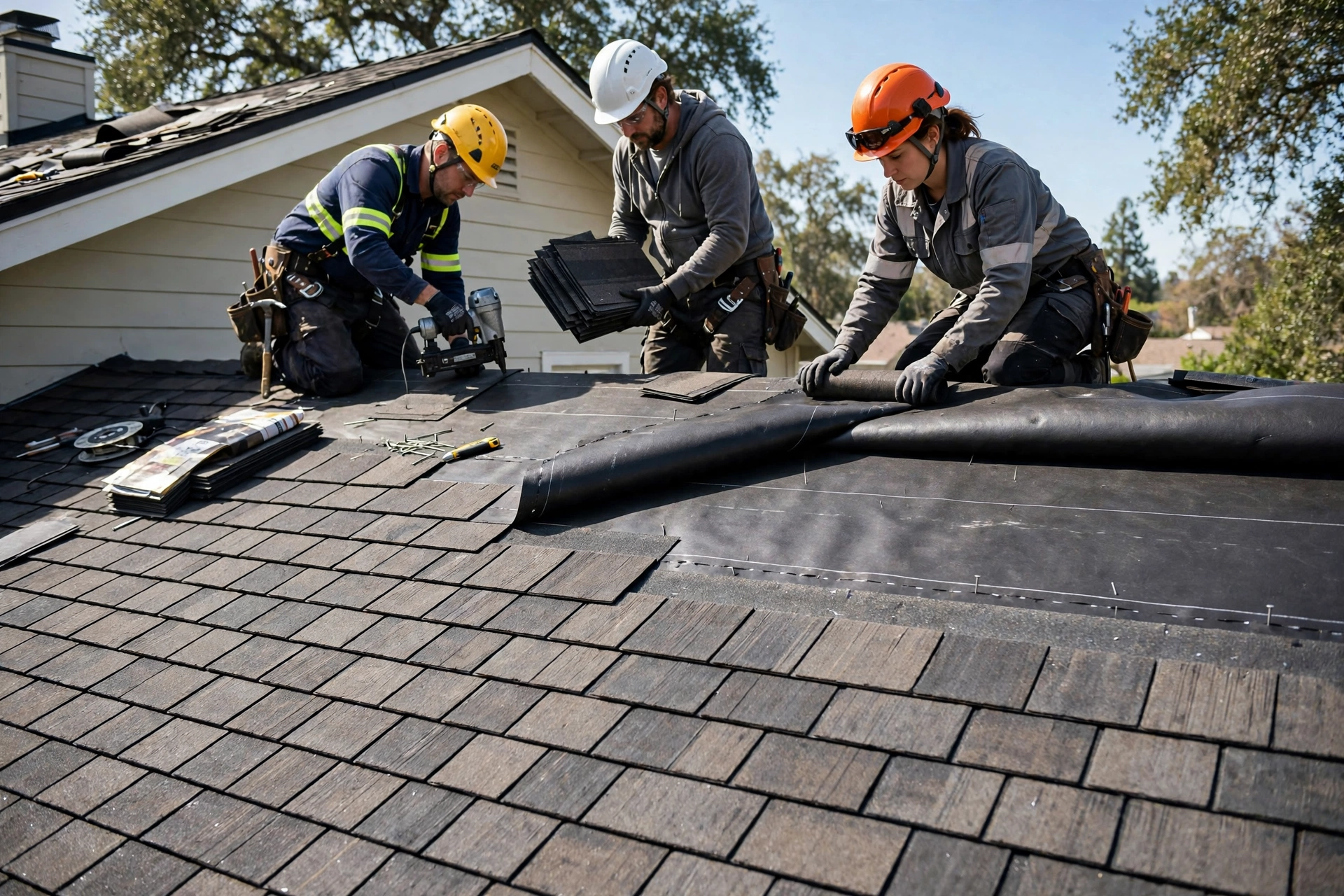
Whether your old roof comes off — or doesn’t — is the biggest structural decision in the project. A full tear-off strips everything to the deck, letting the roofer inspect and repair the wood underneath. An overlay (laying new shingles over old) skips that step.
Overlay is cheaper and faster, and many codes allow one layer over the existing roof. But it hides decking problems, adds weight the structure must carry, and shortens the new roof’s life. Manufacturers often reduce warranty coverage on overlays.
For a roof you plan to keep for decades, tear-off is the better investment. For a roof on a home you’ll sell soon, overlay can be the rational choice — disclose it honestly and price accordingly.
Materials compared
Material choice changes more than appearance. It affects weight, installation method, maintenance, and how the roof handles weather. The table below compares common options in general terms only — it does not give prices, because product grade, roof complexity, and local labor change the total.
Material comparison, in general terms
| Material | What it is | Strengths | Trade-offs |
|---|---|---|---|
| Architectural asphalt shingle | A thicker, dimensional asphalt shingle, the common choice for many homes | Widely available, familiar to install, many colors | Shorter service life than premium materials in general terms |
| Metal roofing | Panels or standing-seam metal systems | Durable and low-maintenance in general terms, good for shedding snow and rain | Higher material and installation complexity than basic shingles |
| Tile roofing | Clay or concrete tile | Long-lasting and distinctive in appearance | Heavy, so structure and installation must suit the load |
| Slate roofing | Natural stone slate | Very long-lasting and distinctive | Heavy and specialist to install and repair |
What a replacement usually includes
A complete replacement is a system, not just new shingles on top. The layers image below shows how the parts fit together: shingles on the outside, underlayment and protective membranes below them, the deck, and ventilation at the ridge and eaves. When you compare quotes, check that each of these is named, not assumed.
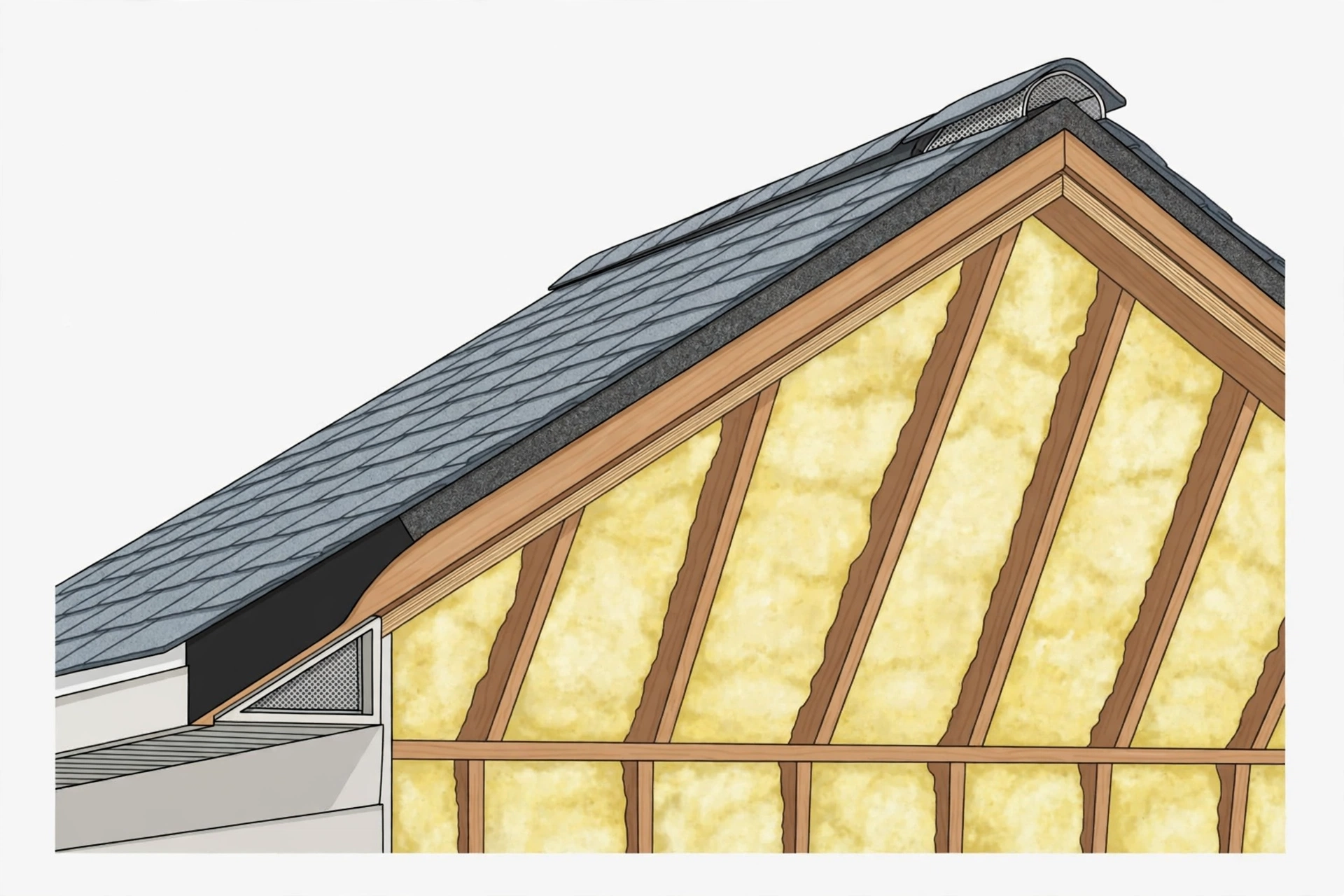
A good scope should name: tear-off and disposal of old layers, deck inspection and any repair pricing, underlayment type, ice and water protection in valleys and at eaves where needed, flashing at chimneys, walls, and penetrations, new vents and ridge ventilation, and permit handling. If a quote is much lower than others, check first whether one of these items is missing, not whether the contractor is simply cheaper.
Worked example from the calculator page
The calculator page gives this worked example, cited here with its own stated specifications only. Do not present these figures as a quote for every home. Specifications: tear-off and disposal of 1 layer of existing shingles; synthetic high-performance underlayment, upgraded from felt; ice and water shield installed in all valleys and eaves; new lifetime pipe boots and aluminium drip edge ventilation. Roof area in that example: 2,400 square feet, or 24 squares.
Worked example ranges, as stated on the calculator page
| Estimate level | Range in that example |
|---|---|
| Budget | $7,800 – $9,500 |
| Standard | $9,800 – $12,200 |
| Premium | $12,800 – $16,500 |
Your own home will differ if its size, pitch, material, layers, deck condition, or scope differ. That is why the guide above matters more than copying one example total. Use the calculator link in the short answer section with your own measurements to get an estimate for your roof, and use it as a starting point for comparing detailed quotes, not as a final price.
How to compare quotes fairly
- Compare scope first, total second: same material, same layers, same underlayment, same flashing, same ventilation, same disposal and permit handling.
- Ask what happens if deck damage is found: is it priced per sheet, per hour, or as an allowance, and will you be told before work proceeds?
- Ask about warranties in writing: product warranty and workmanship warranty are different, and both should be named.
- Ask about timeline and weather plan: how the roof will be protected if work is interrupted, and how debris and cleanup are handled.
- Do not choose on total alone: a lower total that omits underlayment, flashing, or disposal is not the same job as a complete scope.
Timing your roof replacement
Roofers are busiest in late summer and fall, when everyone wants the work done before winter. Scheduling in the shoulder seasons — spring or early summer — can mean faster scheduling and more attentive crews.
Don’t wait for a leak to force the decision. Emergency replacements cost more, limit your contractor choices, and happen on the weather’s schedule instead of yours. If your roof is past 20 years, start getting quotes on your timeline.
And watch the forecast. Shingles need reasonable temperatures to seal properly — most manufacturers specify minimum installation temperatures. A good roofer will tell you when conditions aren’t right rather than pushing through.
Frequently asked questions
How is roof size measured?
In squares, where one square is 100 square feet of roof surface. Roof surface is usually larger than the home footprint because of pitch, overhangs, and roof features.
Does a new roof always need a full tear-off?
Not always. It depends on the number of existing layers, the condition of the roof and deck, and local rules. A contractor should explain why tear-off, or an overlay where allowed, is proposed for your roof.
How long does a replacement take?
It depends on roof size, complexity, crew size, and weather. A straightforward home roof is often completed in days, while larger or more complex roofs take longer. Get a timeline in the written scope, not just a start date.
Should I get more than one quote?
Yes. Compare at least two or three detailed, like-for-like scopes, not just totals, and check material grade, underlayment, flashing, ventilation, warranties, and cleanup in each.
Can I estimate the cost before calling a contractor?
Yes. Use the roof replacement cost calculator linked near the top of this guide with your roof size and choices to get a starting estimate, then compare it with detailed contractor quotes.
How long does a roof replacement take?
Most single-family homes take one to three days for a shingle roof — tear-off one day, installation the next, cleanup after. Larger homes, steep pitches, complex rooflines, and material changes (like switching to tile) extend the timeline. Weather delays are the wild card.
Does homeowners insurance cover roof replacement?
It depends on the cause. Sudden damage from hail, wind, or fallen trees is typically covered; wear and tear and age are not. Document damage with photos immediately, file promptly, and get a roofer’s assessment before the adjuster visits — their report strengthens your claim.
Next step
Measure or estimate your roof surface, note your material preference, pitch, and any known deck or ventilation issues, then use the roof replacement cost calculator linked at the top of this guide to get a starting estimate. Take that estimate and the checklist in this guide into your contractor conversations, so you compare like-for-like scopes, not just totals. Get three itemized quotes on the same scope — the line items will tell you who’s thorough and who’s guessing.
