
How Much Does It Cost to Repipe a House?
Direct answer
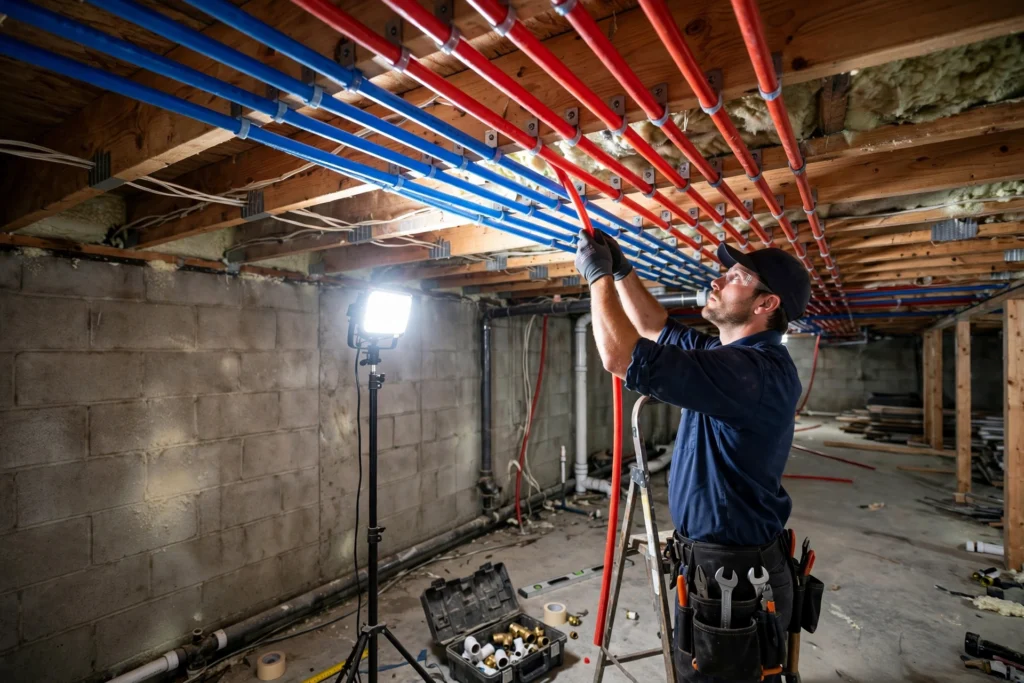
The cost to repipe a house depends mainly on the size and layout of your home, the number of bathrooms and other fixtures, the pipe material you choose, and how easy it is for a plumber to reach the existing pipes. A small single-story home with one bathroom, an accessible basement or crawl space, and short pipe runs will usually cost less than a large two-story home with several bathrooms, a kitchen, a laundry room, and pipes buried inside finished walls. Because labor rates, permits, and home layouts vary so much across the United States, there is no single national price. The most reliable way to budget is to work through the cost drivers below, then use the Whole House Repiping Cost Calculator to build an estimate for your own home, and compare detailed written quotes from qualified local plumbers.
What a whole-house repipe means
A whole-house repipe replaces the water supply pipes throughout a home: the pipes that carry cold water in, and hot water from the water heater, to every tap, shower, toilet, and appliance. The plumber runs new supply lines to each fixture, connects them to the water heater and the main shutoff, and caps off or removes the old pipes. Drain and sewer lines are a separate system and are not normally included.
A repipe is disruptive by nature. New pipes have to reach every fixture, which usually means opening walls and ceilings in several rooms, working in the attic, basement, or crawl space, and then patching and repainting. That restoration work is a real part of the budget, not an afterthought. A quote that covers only the pipes and leaves out the making-good is not a complete quote.
When a repipe may be considered
Most homeowners start thinking about a repipe after a pattern of problems, not a single incident. Repeated leaks in different parts of the house, discolored or rusty water, and low water pressure that does not improve after the fixtures are checked are common triggers. In older homes the original pipes may simply be reaching the end of their useful life: galvanized steel pipes can corrode and narrow from the inside, and some older copper or plastic systems can develop pinhole leaks or joint failures.
A repipe may also be considered during a larger remodel, when walls are already open, or after a serious leak, if the plumber finds the pipework is in poor condition in several places rather than at one isolated joint.
A full repipe is not always the right first step. A single leak, a faulty valve, or a blocked aerator can often be repaired for far less. A qualified plumber should explain what is actually wrong, show you the evidence — corrosion, thinning, or repeated failures at different points — and explain why a repair would be short-term. If one plumber recommends a full repipe and another recommends a targeted repair, ask each to put their reasoning in writing before you decide.
Copper vs PEX
The two materials homeowners most often compare are copper and PEX, a flexible plastic pipe. Neither is always the best choice. The right material depends on your home, your water, your budget, and local code, and a good plumber will explain the trade-offs for your situation.
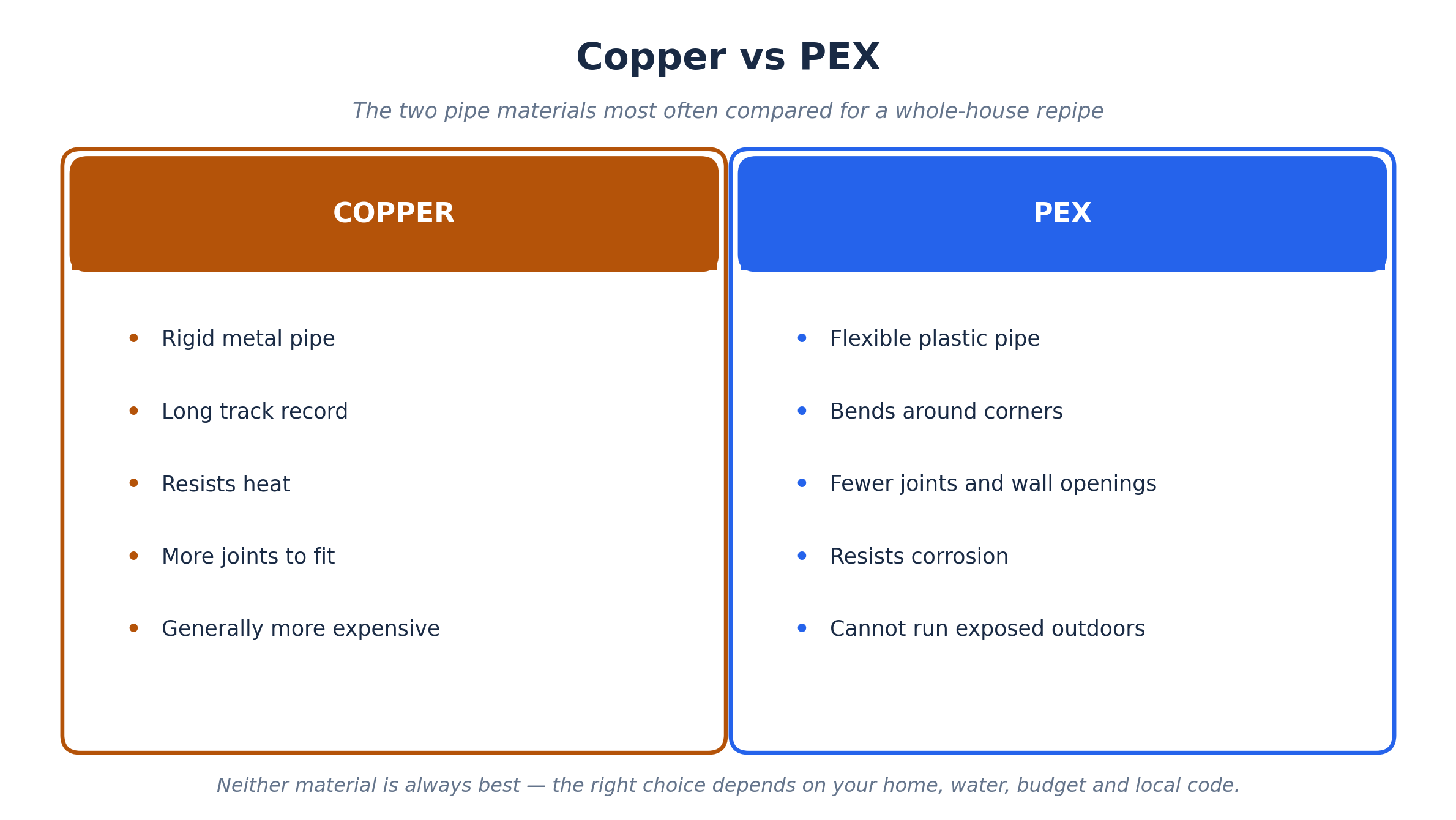
Copper is a rigid metal pipe with a long track record. It is durable, resists heat, and is familiar to most plumbers and inspectors. It is generally more expensive as a material, takes longer to install because each joint must be fitted, and can be affected by very acidic water. It can also burst if water inside it freezes.
PEX is flexible, which is its main practical advantage in a repipe. It can bend around corners and run in long continuous lengths, so it often needs fewer joints and fewer openings in walls and ceilings than rigid pipe. That can mean less labor and less restoration work. It also resists corrosion and mineral buildup, and it is generally quieter. Its trade-offs are different: it cannot be used everywhere — for example, it is not normally run exposed outdoors or in direct sunlight — and it needs the right fittings, installed in line with the manufacturer’s instructions and local code.
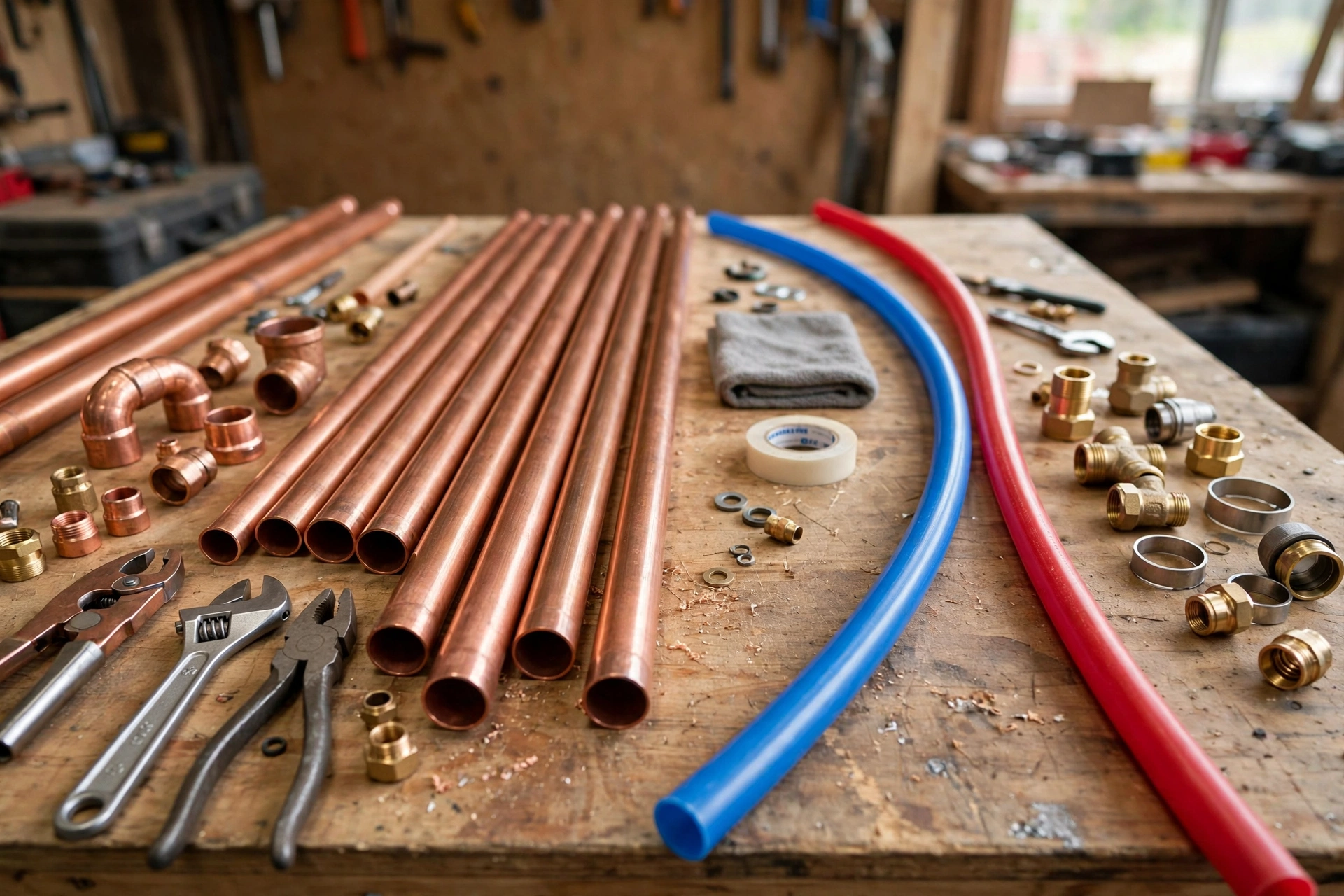
Ask each plumber which material they are quoting, why they recommend it for your home, and whether the price would change if you chose the other material. A quote that does not name the pipe material is incomplete.
Home size, layout, and fixtures
Square footage alone does not determine repipe cost. What matters more is how many fixtures need water and how far apart they are. A home with three bathrooms, a kitchen, a laundry room, and an outdoor tap needs more pipe, more fittings, and more labor than a home of the same size with one bathroom and a kitchen. Each sink, toilet, shower, bath, dishwasher, washing machine, and refrigerator water line is a separate connection.
Layout matters just as much. A compact home where the bathrooms and kitchen are grouped together, with the water heater nearby, needs shorter pipe runs than a sprawling home where fixtures are at opposite ends. A single-story home with an accessible basement is usually simpler than a two-story home where pipes must run up through finished walls to an upstairs bathroom. That is why “how much does it cost to repipe a house by square footage” has no simple answer: two homes of the same size can have very different repipe costs if one has two bathrooms close together and the other has four spread across two floors.
Access: where the pipes run now
Access is often the biggest variable. Pipes running through an unfinished basement, an accessible crawl space, or an open attic are much easier to replace than pipes buried inside finished walls, under a concrete slab, or behind tiled bathroom walls. A plumber who can work from below or above, with room to move, will finish faster and open fewer walls.
Homes built on a concrete slab can be more difficult, because the original pipes may run under the slab. In that case the plumber may run the new pipes through the attic or through walls instead. Older homes can add surprises: plaster that crumbles when opened, or pipework altered by previous owners. A thorough plumber will walk through the home, look at the access points, and explain where they expect to open walls and ceilings before they quote. Ask them to list the access points and the number of openings they expect.
Labor and the work involved
Labor is usually the largest part of a repipe. The work includes planning the new pipe routes, shutting off and draining the existing system, running new supply lines to each fixture, fitting valves and connectors, connecting to the water heater and the main shutoff, pressure-testing the new system, and checking every fixture for leaks and for proper hot and cold flow. A careful plumber will also flush the new system before it is put into use and show you where the new shutoff valves are.
Ask each plumber how long they expect the work to take, whether you will be without water and for how long, and whether the work will be done in stages so you have water overnight. Also ask who will be doing the work — the plumber who quotes, or a crew — and whether the price includes testing and a final walk-through with you.
Drywall, plaster, and restoration
Restoration is where many repipe budgets go wrong. Every wall or ceiling opened to run a new pipe has to be patched, sanded, and repainted, and in some homes that means matching textured ceilings, plaster, or tile. Some plumbers include patching in their price; others include only a rough patch and leave painting and finishing to you or another trade. Both can be reasonable, but they are not the same price, and they should not be compared as if they were.
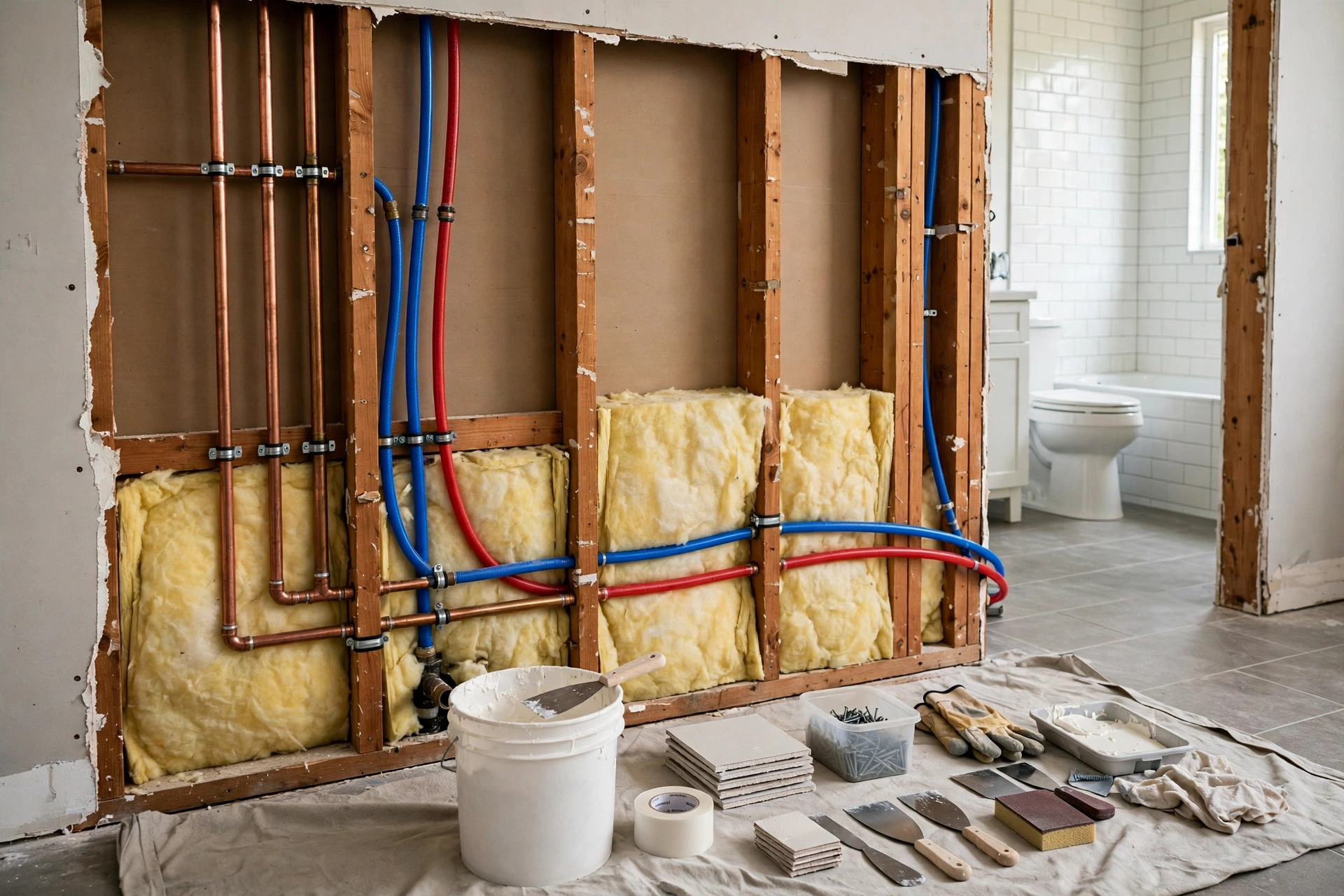
Ask each plumber exactly what restoration is included: how many openings, what kind of patch, whether texture is matched, whether paint is included, and whether flooring or tile that has to be lifted is put back. Also ask what happens to the old pipes. In many repipes they are left in place, capped off, and abandoned, because removing them would mean opening even more walls. That is normal practice, but it should be stated in the quote. And ask about cleanup: a repipe creates dust and debris in several rooms, and the price should cover protecting floors and furniture and leaving the home clean at the end of each day.
Permits, inspections, and water quality
Most areas require a permit or an inspection for a whole-house repipe, because it changes the home’s water supply system. Permit fees vary by locality, and the plumber usually arranges the permit and the inspection as part of the job — confirm that in writing, and ask who pays the fee. An inspection is useful protection: it confirms the work meets local code, the pipe sizes are adequate, and the connections are sound.
Water quality is worth discussing before the material is chosen. Very hard water can leave mineral deposits inside pipes; very acidic water can affect some metals. A plumber who has seen your water and your existing pipes can advise whether the water should be tested and whether a filter, softener, or treatment is worth considering. Also ask whether the new system will include individual shutoff valves at each fixture, which make future repairs much simpler.
What can push the cost up — and what can keep it down
Several factors commonly raise the cost: more bathrooms and fixtures; a larger or more spread-out home; poor access, especially pipes under a slab or inside finished walls; a more expensive pipe material; extensive drywall and paint restoration; and the need for permits, inspections, or water treatment. A home with good access, grouped fixtures, and a short run from the water heater will usually be at the lower end of the range for its size.
A few choices can keep the project simpler without cutting corners. A flexible pipe material can reduce the number of wall openings. Grouping the work with a planned remodel, when walls are already open, can save on restoration. Keeping pipe routes direct, and making sure the plumber has clear access to the basement, attic, or crawl space before work starts, can save time. And agreeing the restoration scope in writing before work starts avoids the most common surprise cost: a plumber who patches, and a homeowner who expected painting to be included.
How to compare contractor proposals
Do not compare quotes on the headline total alone. Ask each plumber for an itemized written proposal that names the pipe material and size, the number of fixtures included, the route the new pipes will take, the number and location of wall and ceiling openings, the restoration included, the permit and inspection fees, and the warranty on the pipes and the work. A cheaper quote that leaves out restoration, the permit, or half the fixtures is not cheaper — it is incomplete.
Useful questions to ask every plumber: Why are you recommending a full repipe rather than a repair, and what evidence supports that? Which pipe material are you quoting, and why is it right for my home and my water? How will you route the new pipes, and where will you open walls or ceilings? What restoration is included, and what is left for me or another trade? How long will I be without water, and will the work be staged? What permits and inspections are included, and what warranties cover the pipes and your work? If a plumber is unwilling to itemize the proposal or explain the route and the material choice, get another quote.
Planning checklist before you book
- Count the fixtures: bathrooms, kitchen sinks, laundry, outdoor taps, and appliance water lines.
- Note the layout: stories, slab or raised floor, basement or crawl space, and where the water heater sits.
- Ask about the condition of the existing pipes and what evidence supports a full repipe.
- Choose the pipe material only after hearing the trade-offs for your home and your water.
- Confirm who arranges permits and inspections, and what they cost.
- Agree in writing what drywall, plaster, paint, and cleanup are included.
- Ask when the water will be off, and whether the work will be staged so you have water overnight.
- Use the Whole House Repiping Cost Calculator to build an estimate for your home before you compare proposals, so you can spot a proposal that is missing a major item.
FAQs
Q: How much does it cost to repipe a house?
A: It depends on the size and layout of your home, the number of fixtures, the pipe material, how easy the pipes are to reach, and the restoration work needed afterwards. There is no single national price. Use the Whole House Repiping Cost Calculator to build an estimate for your home, then compare itemized proposals from qualified plumbers.
Q: How can I estimate the cost to repipe my house?
A: Count your fixtures, note your home’s layout, stories, and access points, then work through the cost drivers in this guide and use the Whole House Repiping Cost Calculator. For a firm price, get itemized written proposals from qualified plumbers who have walked through your home.
Q: Is it cheaper to repipe with copper or PEX?
A: It depends on your home. Copper is generally more expensive as a material and takes longer to install, while PEX is flexible and often needs fewer joints and fewer wall openings. Neither material is always best. Ask each plumber to quote the material they recommend for your home and to explain why.
Q: How long does a whole-house repipe take?
A: It depends on the size of the home, the number of fixtures, and the access. Ask each plumber for a written schedule that includes the pipework, pressure testing, restoration, and the final walk-through, and ask when you will be without water.
Q: Will a repipe damage my walls?
A: A repipe usually requires opening walls and ceilings in several rooms to reach the pipes. Ask the plumber where they expect to open up, how many openings there will be, and exactly what patching, texture matching, and painting are included in the price.
Q: Do I need a permit to repipe a house?
A: Most areas require a permit or an inspection for a whole-house repipe. Confirm with your plumber who arranges it and what the fees are.
Q: Should I repair a leak or repipe the whole house?
A: It depends on the condition of the existing pipes. A single leak can often be repaired. A full repipe is worth discussing when leaks keep appearing in different places, the pipes are corroded or narrowing, or water pressure and quality have deteriorated across the home. Ask a qualified plumber to explain the evidence in writing.
Conclusion
A whole-house repipe is a system replacement, not a single repair. The number of fixtures, the layout of your home, the access to the existing pipes, the material you choose, and the restoration work afterwards all affect the final cost, and the cheapest proposal is only good value if it covers the whole job. Work through the cost drivers above, build an estimate with the Whole House Repiping Cost Calculator, and compare itemized proposals from qualified plumbers who can explain, in writing, why they recommend a repipe, what material they will use, where they will open walls, and what restoration is included. That is how you budget for a water supply system that serves your home reliably for years, rather than for a price that leaves out the work that matters.
