
Interior vs. Exterior Painting: Planning, Prep, and Timing.
The short answer
Interior painting is about finish and detail in a controlled space; exterior painting is about durability against weather, and prep is most of the job. Plan them differently, budget them separately, and never use the wrong paint in the wrong place.
Planning either project? Price it first with the house painting cost calculator.
The comparison below lays out the key differences side by side — use it to plan which project to tackle first.
The prep gap
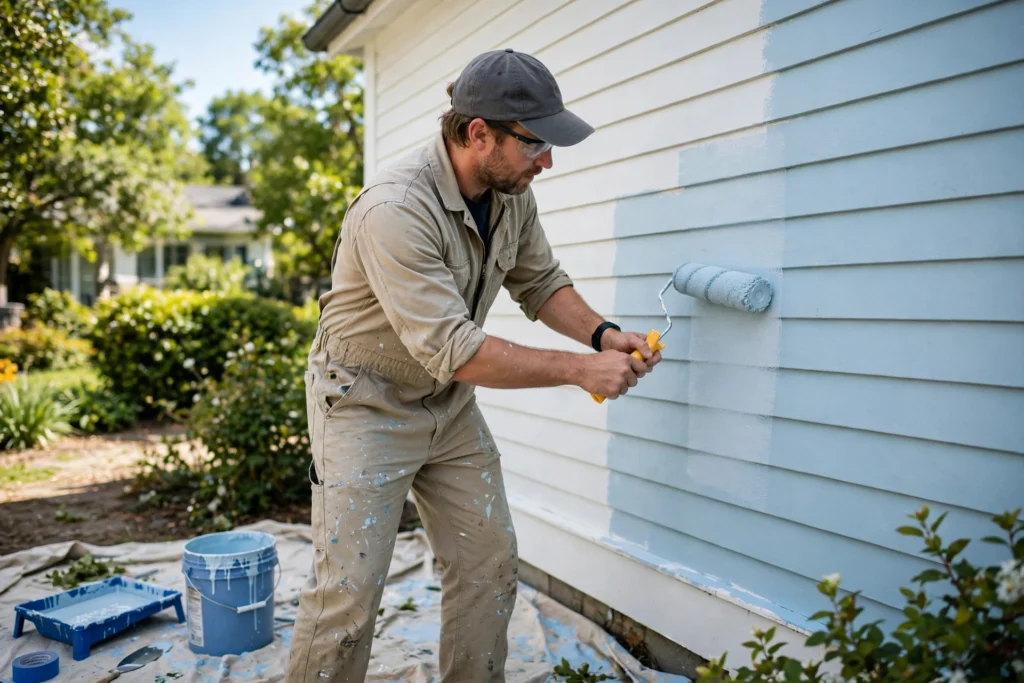
The single biggest difference between interior and exterior painting is what happens before the first coat. Interior prep is mostly about protection — drop cloths, taping trim, filling nail holes. Exterior prep is about survival — scraping failing paint, sanding weathered wood, caulking gaps that let water in, and sometimes replacing rotted trim entirely.
This is why exterior bids run higher for the same square footage and why the cheapest exterior bid is the riskiest. A painter who budgets two days of prep for a weather-beaten exterior is either extraordinarily fast or planning to skip steps. Ask every bidder to walk you through their prep sequence — the detailed answer wins.
Interior prep has its own trap: dust. Sanding drywall patches and trim fills a lived-in home with fine dust that settles everywhere. Good interior painters seal off work areas with plastic, run dust extraction on sanders, and clean daily. Ask about it — the answer tells you whether they’ve worked in occupied homes or only empty ones.
Interior vs exterior at a glance
The two jobs differ in almost every way that matters.
| Aspect | Interior painting | Exterior painting |
|---|---|---|
| Paint type | Interior paint – low odor, scrubbable finishes | Exterior paint – UV and moisture resistant |
| Durability demands | Wear from people and furniture | Weather, sun, and temperature swings |
| Surface prep | Patching, sanding, cleaning | Pressure wash, scrape, repair, caulk |
| Weather dependence | None – paint any time of year | Needs dry weather and moderate temperatures |
| Ventilation and safety | Ventilate rooms; low-VOC paint helps | Ladder and height safety; lead-safe rules for pre-1978 homes |
| Typical timing | Any season | Spring and fall are usually best |
| Finish priorities | Look and washability by room | Protection and longevity first |

Planning the interior job
Inside, the work is in the details.
| Task | Details |
|---|---|
| Choose finish by room | Flat for ceilings, eggshell or satin for walls, semi-gloss for trim and doors |
| Protect the room | Drop cloths, tape trim, remove or cover furniture |
| Repair and sand walls | Fill holes and cracks; sand smooth |
| Prime where needed | Bare drywall, patches, stains, dark-to-light changes |
| Plan ventilation | Open windows; choose low-VOC paint for occupied homes |
| Work in order | Ceilings first, then walls, then trim and doors |

Planning the exterior job
Outside, preparation decides how long the paint lasts.
| Task | Details |
|---|---|
| Inspect and repair | Fix rotted siding and trim before painting – paint won’t save them |
| Pressure wash | Remove dirt, mildew, and chalking so paint bonds |
| Scrape and sand | Remove all loose and peeling paint |
| Caulk gaps | Seal joints around trim, windows, and doors |
| Prime bare surfaces | Bare wood and repairs need primer |
| Pick the weather window | Dry days, moderate temperatures, no rain expected |
| Plan for heights | Ladders, scaffolding, and safe access for upper storeys |
Paint products aren’t interchangeable
Interior and exterior paints are different chemistry for different jobs. Exterior paint has flexible resins that expand and contract with temperature swings, plus mildewcides and UV blockers. Interior paint prioritizes low odor, washability, and a smooth finish — it would crack and fade outdoors within a season or two.
Using interior paint outside is one of the most expensive mistakes in painting: the whole job fails early and has to be stripped and redone. The reverse — exterior paint indoors — is less catastrophic but still wrong: stronger fumes, a less refined finish, and unnecessary cost. Match the product to the exposure.
Within each category, grade matters enormously. Premium exterior paint with high solids covers better and lasts years longer than budget paint, which means fewer coats now and a longer interval before the next repaint. On exteriors especially, the paint itself is the cheapest part of the job — labor dominates — so upgrading the product is the best value in the whole project.
When to paint
- Interior – any time of year.
- Exteriors do best in spring and fall.
- Avoid painting in extreme heat, freezing cold, or before rain.
- Let each coat cure per the paint can’s instructions before recoating.
- For pre-1978 homes, federal lead-safe rules apply when paint is disturbed – hire a certified firm.
Cost and disruption compared
Exteriors usually cost more — more prep, more paint, scaffolding or lift rental, and weather delays that stretch the schedule. Interiors cost less per square foot but disrupt daily life more: rooms out of commission, furniture shuffled, cooking around the work.
Plan accordingly. Schedule exteriors for settled weather seasons and interiors for when you can vacate rooms in sequence. And never let a painter talk you into doing both at once with a single crew unless the schedule genuinely allows it — divided attention means divided quality.
Choosing colours for interior vs exterior
Colour behaves differently inside and outside, so choose it differently too. Indoors, light does most of the talking: the same tin looks warm under evening lamps and cool in a north-facing room, so paint generous test patches on two walls and live with them for a couple of days before you commit. Match the sheen to the room as well as the shade — flat on ceilings to hide imperfections, eggshell or satin on walls for a finish you can wipe clean, and semi-gloss on trim and doors where hands, bumps, and frequent cleaning take their toll. Keep undertones consistent from room to room so the house feels connected rather than patched together. And take comfort in reversibility: a bold colour choice indoors is cheap to undo, because repainting a single accent wall is a weekend job, not a project.
Outside, colour is a longer commitment and a public one, so test it the way it will be seen. Paint sample boards large enough to judge properly, prop them against the house, and look at them in morning, midday, and evening light — a shade that reads crisp at noon can look chalky or garish at dusk. Work with the things you cannot change: the roof, any brick or stone, and the neighbouring houses all set the palette, and many streets and estates have rules on acceptable colours, so check before you fall in love with a shade. Remember the physics too — dark colours absorb more heat and tend to fade faster on sun-struck walls, while very pale colours show dirt and mildew sooner in damp, shaded spots.
Aim for harmony between inside and outside rather than an exact match. Carrying an undertone from the exterior — the warm grey of the siding, say — into the hallway or living room makes the whole property feel considered, and it smooths the visual transition at every doorway and window. Finally, plan for maintenance from the start: high-contrast trim and deep, saturated colours show chips and wear first, so keep a labelled tin of the exact paint for touch-ups, and write down the brand, product line, and colour code somewhere you will still find in five years. Future you will be grateful.
Frequently asked questions
Can I use interior paint outside?
No – interior paint isn’t formulated to handle UV, moisture, and temperature swings. It will peel and fade quickly outdoors. Always use paint labeled for exterior use on outside surfaces.
Can I use exterior paint inside?
It’s not recommended. Exterior paints contain additives for weather resistance that you don’t want off-gassing indoors, and they don’t apply or look as good on interior walls. Use interior paint inside.
What’s the best time of year to paint a house exterior?
Spring and fall are usually best – moderate temperatures and lower humidity help paint cure properly. Avoid painting in extreme heat, freezing cold, or when rain is expected within a day or two.
How long does exterior paint last?
It depends on the surface, climate, and paint quality, but a well-prepped exterior paint job typically lasts many years. South- and west-facing walls wear faster from sun exposure.
Do I need to prime before painting?
Prime bare wood, patched areas, stains, and dramatic color changes. Previously painted surfaces in good condition often don’t need a full prime coat – but spot-prime any repairs.
Can I use interior paint outside if I already have it?
Don’t. Interior paint lacks the flexible resins, UV protection, and mildew resistance that exterior exposure demands — it will crack, fade, and peel quickly outdoors. The money saved on the can is lost many times over when the job fails early and has to be redone properly.
How long should exterior paint last?
A quality exterior job with proper prep typically lasts many years — often 7 to 10 or more on siding in mild climates, less on sun-blasted or moisture-prone surfaces. The prep quality and paint grade decide where in that range you land; maintenance like caulking touch-ups stretches it further.
Next step
Decide whether you’re painting inside, outside, or both – they’re different projects with different prep and timing. Then run the house painting cost calculator linked at the top of this guide for a combined or single-scope starting estimate, and take it into painter conversations so you compare complete scopes, not just totals. Start with the project whose prep you understand best — and price it with the house painting cost calculator linked at the top before anyone visits.
