
Roofing Materials Compared: Cost, Lifespan, and Best Use.
The short answer
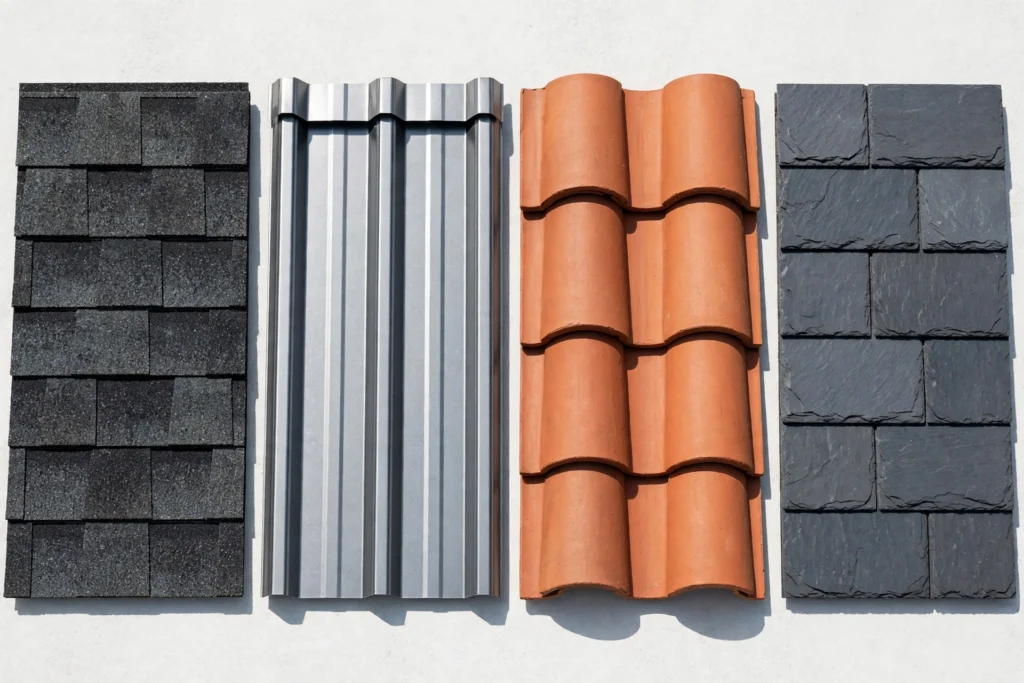
Choosing a roofing material is a trade-off between upfront cost, lifespan, weight, and appearance. Asphalt shingles cost the least upfront and are the most common choice; metal, tile, and slate cost more but last much longer. The right material depends on your budget, how long you plan to stay, your climate, and what your roof structure can carry.
Price your own project with the roof replacement cost calculator:
The right material is the one that fits your budget, your climate, and how long you plan to stay.
There is no best roofing material
Ask five roofers for the best roofing material and you’ll get five answers — usually whatever they install most. The honest answer is that every material is a trade-off between upfront cost, lifespan, weight, looks, and maintenance.
A budget material installed brilliantly outperforms a premium material installed badly. The contractor matters as much as the product — sometimes more. So use this guide to narrow the field, then let a good roofer talk you through what works on your specific roof.
And think in total cost, not sticker price. A roof that costs twice as much but lasts three times as long is the cheaper roof. Divide price by expected years and the ranking often flips.
Roofing materials at a glance
The table below compares the main roofing materials on relative upfront cost, typical lifespan, and best use. Treat these as general guidance — actual prices vary by roof size, pitch, and location, so use the calculator linked above for your numbers.
| Material | Relative upfront cost | Typical lifespan | Best use |
|---|---|---|---|
| Asphalt shingles (3-tab) | Low | 20–30 years | Budget-friendly choice for most homes |
| Architectural asphalt shingles | Low–Moderate | 25–30 years | A step up in looks and durability from basic 3-tab |
| Metal roofing (standing seam) | Moderate–High | 40–70 years | Long life with low maintenance |
| Clay or concrete tile | High | 50+ years | Distinctive look, suits warm climates |
| Slate | Premium | 75–100+ years | A forever roof where the structure can carry it |
| Wood shakes or shingles | Moderate–High | 20–40 years | Natural look where local code allows |
| Synthetic / composite | Moderate | 40–50 years | Slate or tile look at lower weight |
Asphalt shingles: the default for a reason
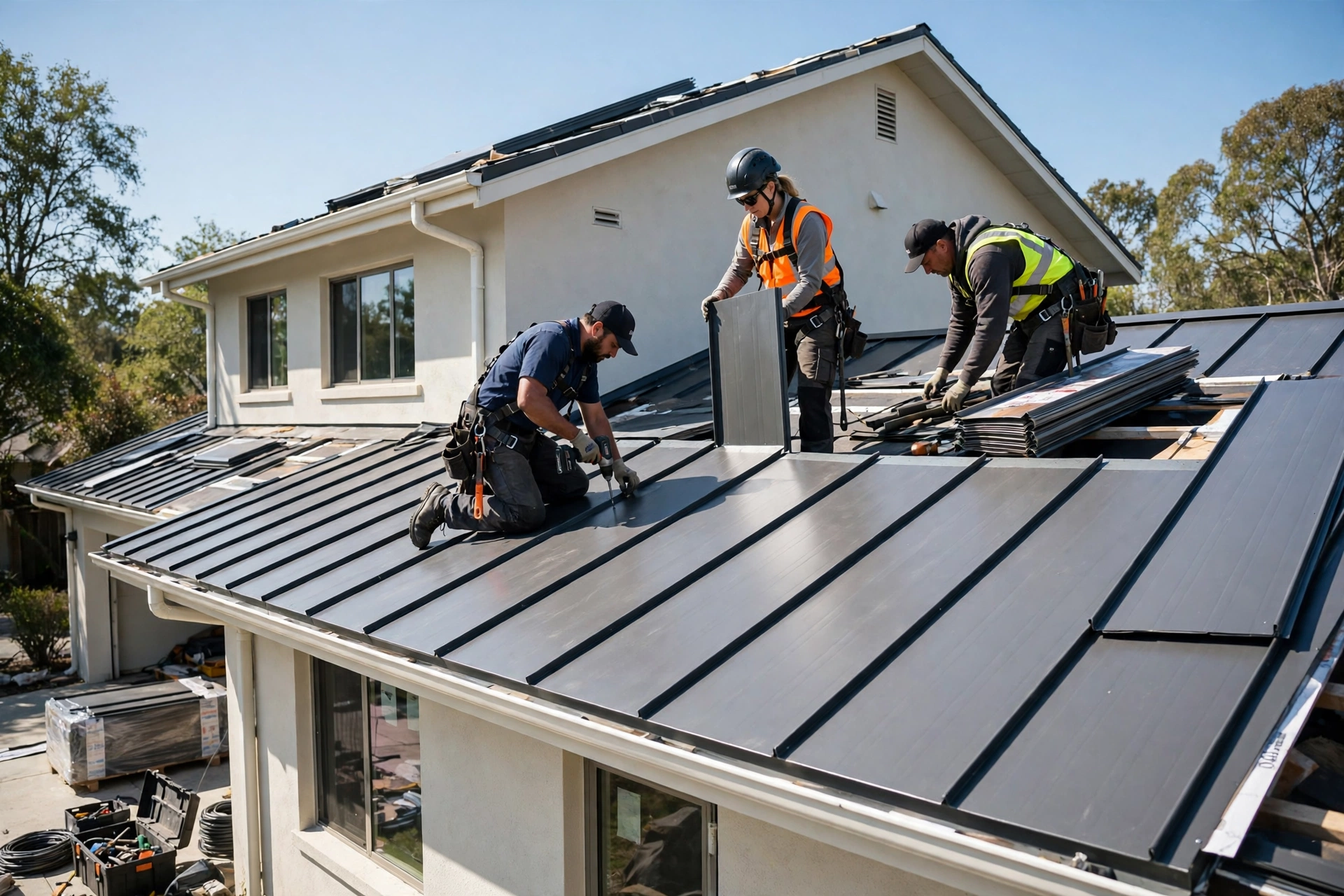
Asphalt shingles cover the large majority of American homes, and it’s not hard to see why: they’re affordable, every roofer installs them, repairs are simple, and they look fine on almost any house style. Architectural shingles — the thicker, dimensional kind — are the sweet spot for most homeowners.
The trade-offs are lifespan and weather vulnerability. Shingles are the shortest-lived mainstream option, and they’re the most vulnerable to wind uplift and hail. In hail country, impact-resistant shingles are worth the upgrade — some insurers even discount premiums for them.
Shingles are also the easiest roof to maintain and repair. A damaged shingle can be replaced individually; flashing and boots are standard parts. That repairability is part of why they stay popular — the maintenance burden is low and every roofer stocks the parts.
Pros and key considerations
Cost and lifespan only tell part of the story. Weight, maintenance, fire resistance, and appearance decide the rest.
| Material | Strengths | Watch-outs |
|---|---|---|
| Asphalt shingles | Lowest upfront cost, easy to install and repair, suits most homes | Shortest lifespan, vulnerable to wind and hail damage |
| Metal roofing | Very long life, low maintenance, sheds snow and rain well | Higher upfront cost, needs experienced installers |
| Clay or concrete tile | Extremely durable, distinctive appearance, fire resistant | Heavy — the roof structure must be checked first |
| Slate | Longest lifespan, natural stone appearance | Premium cost and weight, needs specialist installers |
| Wood shakes or shingles | Natural appearance, good insulation value | Needs maintenance, restricted by fire codes in some areas |
| Synthetic / composite | Lighter than tile or slate, long warranties common | Newer category — check manufacturer track record |
What else affects your total
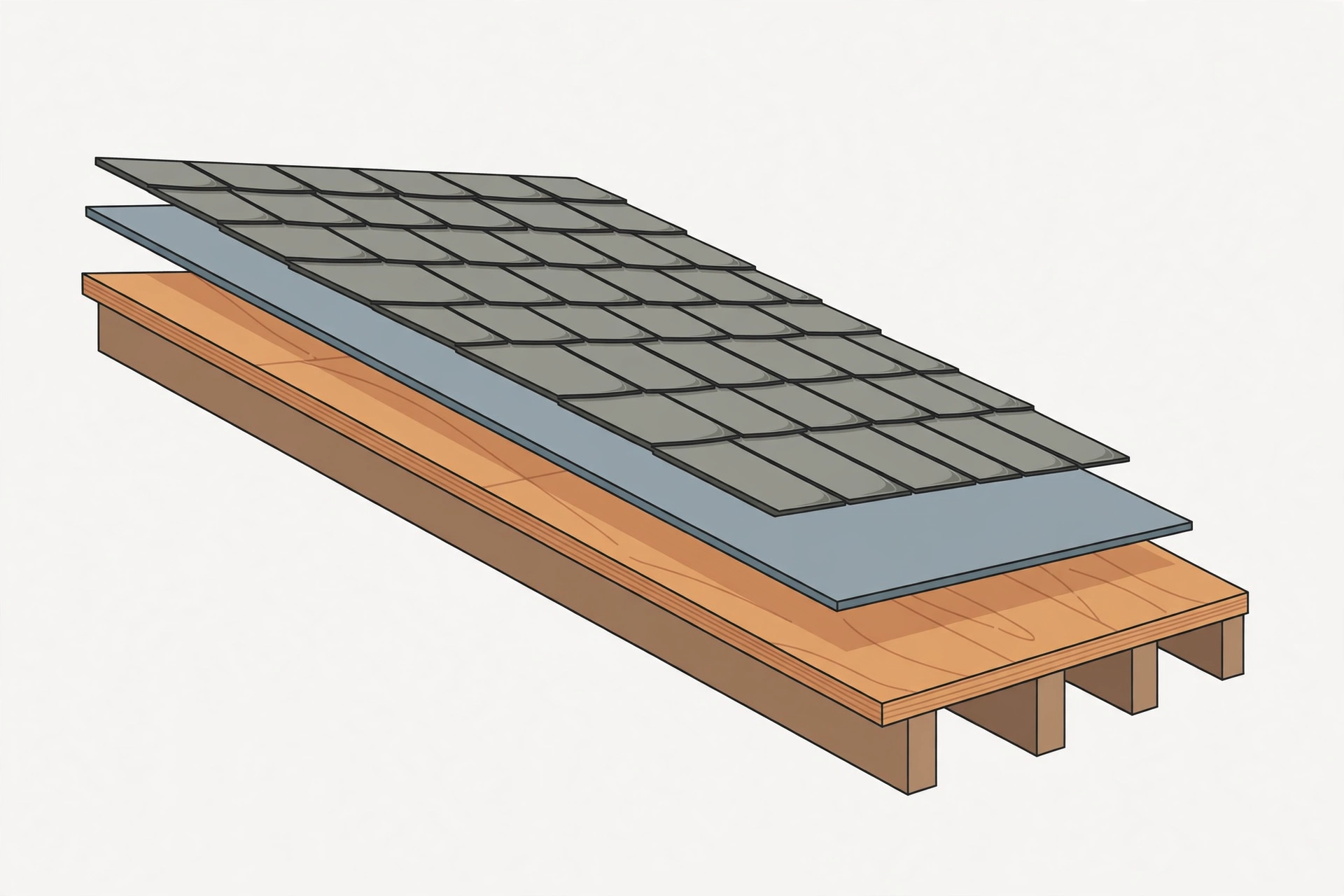
The material is only one line of the quote. These factors move the total for any material you choose.
| Factor | How it affects the price |
|---|---|
| Roof size and pitch | Larger and steeper roofs need more material and labor |
| Tear-off layers | Removing old layers adds labor and disposal cost |
| Underlayment and flashing | Higher-grade underlayment and new flashing add protection and cost |
| Structure for heavy materials | Tile and slate may need structural reinforcement |
| Local labor rates | Installation labor varies by market |
How climate narrows the choice
Climate is the filter that turns four good options into one or two. A material that thrives in Arizona can fail early in Minnesota, and the warranty fine print often says so. Start with your region’s biggest stress — hail, hurricanes, wildfire, heavy snow, or relentless sun — and shortlist the materials built for it.
In hail country, impact-resistant architectural shingles or metal roofing hold up best; standard shingles bruise and crack, and tile can chip. Along hurricane coasts, metal’s interlocking panels and high wind ratings earn their premium, while for shingles the fastening pattern matters as much as the material. In wildfire zones, metal, tile, and slate are naturally fire resistant, while wood shakes may be restricted or banned by local code.
Heavy snow regions reward metal’s snow-shedding surface and slate’s sheer durability, but both demand a structure rated for the load — for tile and slate that often means reinforcement. Hot, sunny climates age asphalt faster through UV and thermal cycling, pushing a shingle roof toward the low end of its lifespan range, while tile’s thermal mass and light-colored metal reflect heat and last longer. Cold climates punish poor ventilation: ice dams lift shingles and rot decks regardless of material, so budget for proper intake and exhaust ventilation with any re-roof.
The takeaway: match the material to the weather it will face for the next few decades, not just the price tag today. A mid-range material suited to your climate usually beats a premium one fighting it.
How to compare quotes
- Ask every quote to name the exact material and product line, not just “shingles” or “metal”.
- Ask what underlayment, flashing, and ventilation are included.
- Ask about tear-off, disposal, and deck repair terms.
- Ask for the workmanship warranty in writing alongside the manufacturer warranty.
- Compare complete scopes, not just totals.
Metal, tile, and slate: the lifetime roofs
Metal, tile, and slate are the buy-it-once roofs. They cost more upfront — sometimes much more — but they last decades longer than shingles, shrug off fire and insects, and need little maintenance beyond occasional inspections.
Each has a catch. Metal is noisy in rain without proper underlayment and can dent in severe hail. Tile is heavy — many homes need structural reinforcement to carry it. Slate is the longest-lived roofing material known, but it’s also the most expensive and requires specialist installers.
These materials make the most sense when you’re staying put. If you’ll sell in five years, you won’t recoup the premium in sale price. If this is your forever home, the lifetime math usually favors going big once instead of re-roofing twice.
Frequently asked questions
What is the cheapest roofing material?
Asphalt shingles are generally the lowest-cost roofing material to buy and install, which is why they are the most common choice on homes. They also have the shortest lifespan of the major materials, so compare lifetime value, not just the upfront price.
What roofing material lasts the longest?
Slate and clay or concrete tile last the longest, often several decades longer than asphalt shingles, with metal roofing in between. Longevity depends on installation quality, climate, and maintenance as well as the material itself.
Is a metal roof worth the extra cost?
For many homeowners it is, because metal roofing lasts much longer than asphalt and needs less maintenance, which can offset the higher upfront price over time. Run your numbers with the roof replacement calculator and compare total cost over the years you plan to stay in the home.
Can I put a new roof over my old shingles?
In many areas one overlay layer is allowed, but it depends on local code, the roof’s condition, and the deck underneath. An overlay saves tear-off cost but can hide deck damage and may shorten the new roof’s life — your contractor should inspect first.
How do I choose the right roofing material?
Match the material to your budget, how long you plan to stay, your climate, and your home’s structure — heavy materials like tile and slate need a roof framed to carry them. Get quotes for at least two material options so you compare real numbers.
How long do different roofing materials last?
As general guidance: asphalt shingles typically 20–30 years, metal roofing 40–70, clay or concrete tile 50+, and natural slate 75–100 or more. Installation quality, ventilation, and climate move every material up or down that range — a well-vented shingle roof outlasts a poorly installed metal one.
Can I install a new roof over the old one?
Sometimes — many codes allow one overlay layer of shingles over the existing roof. But overlay hides decking problems, adds weight, and shortens the new roof’s life. A full tear-off costs more and lets the roofer inspect and repair the deck — for a roof you plan to keep, tear-off is the better investment.
Next step
Shortlist two or three materials that fit your budget and home, note your roof’s approximate size and pitch, then use the roof replacement cost calculator linked at the top of this guide for a starting estimate. Take that estimate plus the checklist in this guide into contractor conversations, so you compare complete scopes, not just totals. Once you’ve narrowed the material, run the roof replacement cost calculator linked at the top with your measurements.
